

The burgeoning demands of artificial intelligence are not merely a computational challenge but a profound energy crisis in the making, requiring an overhaul of global power infrastructure. OpenAI’s staggering $850 billion expansion, for instance, is projected to require energy equivalent to the output of seventeen new nuclear power plants. This immense appetite for power is rapidly outpacing existing capabilities, placing unprecedented strain on electrical grids worldwide and necessitating urgent, large-scale investment in both generation and distribution.
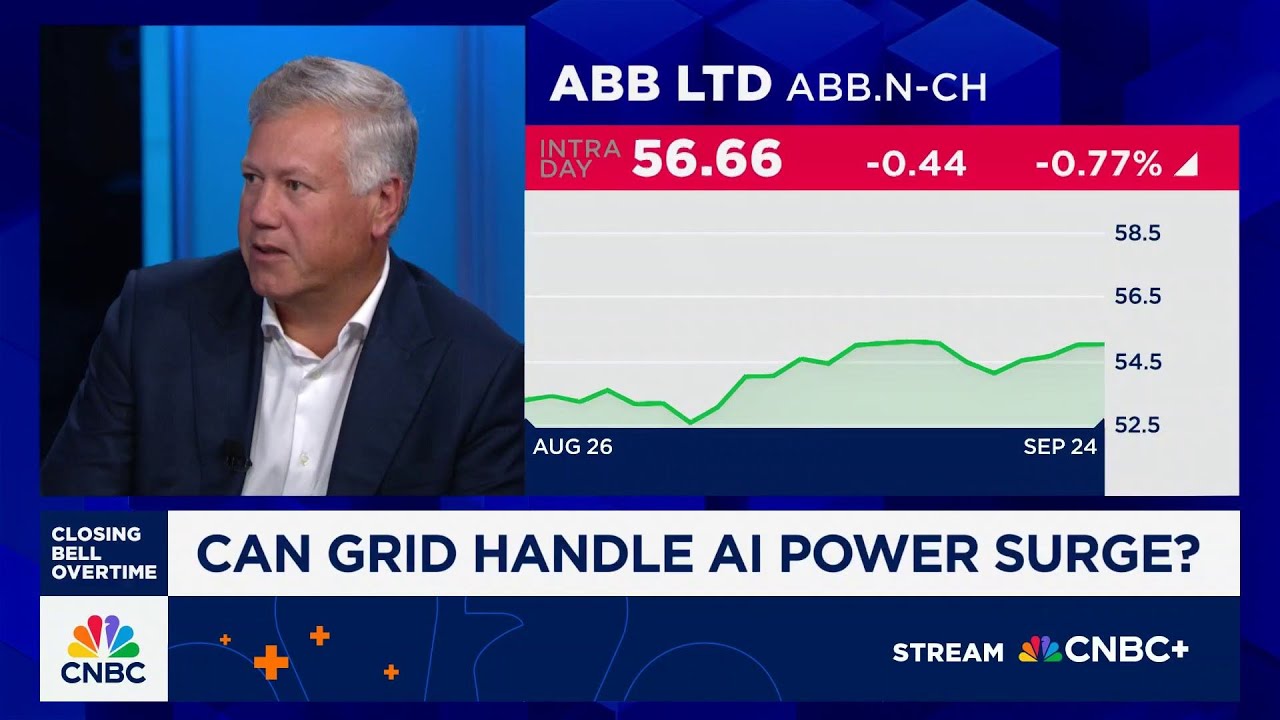
Morten Wierod, CEO of ABB, a multinational pioneer in electrification and automation technologies, recently spoke with CNBC’s “Closing Bell Overtime” team about the critical need to build new power plants to meet this escalating AI demand. The discussion centered on whether current energy grids can sustain the rapid growth of data centers and, crucially, who will bear the financial burden of this massive infrastructural undertaking. Wierod’s insights underscored a pivotal moment in global energy policy and technological development.
ABB, deeply entrenched in both the electrification and automation sectors, is actively involved in integrating diverse energy sources into the grid and optimizing demand-side management for data center buildouts. Wierod highlighted a dramatic shift in energy consumption patterns, noting that from 2010 to 2020, consumption remained relatively flat. However, "since then it's really starting spiking up," a trend he anticipates will continue for the next "10, 15 plus years." This trajectory, he explained, "really puts a lot of stress on the power grid." The challenge extends beyond mere volume; it demands power precisely "at the right time," a feat achievable through advanced automation and balancing mechanisms across various sources, be they nuclear, liquefied natural gas (LNG), or renewables.
A significant portion of current energy infrastructure investment, particularly in the United States, is directed towards LNG. Wierod detailed ABB's involvement across the entire LNG value chain, from fracking and pipelines to terminals and shipping. Even processes reliant on fossil fuels are, at their core, electric, underscoring the universal need for robust electrical infrastructure. The US has emerged as a major focal point for ABB's capital deployment, with a recent $110 million investment announced for new capacity within the country. This reflects a strategic "local for local" approach, where "about 80% what we sell here in United States is produced in the United States," a model that has proven resilient against trade barriers and supply chain disruptions.
The question of whether it is physically possible to erect gigawatt-scale data centers globally within the next five years received a nuanced answer. Wierod affirmed its possibility, attributing it to a current "free capacity in the grid available." However, this capacity is not limitless. He drew an analogy to highways: while there may be ample roads, peak hours inevitably lead to traffic. Similarly, the existing "reserved capacity that sits in the network will run out," particularly during peak demand periods. This impending depletion mandates a proactive approach.
