

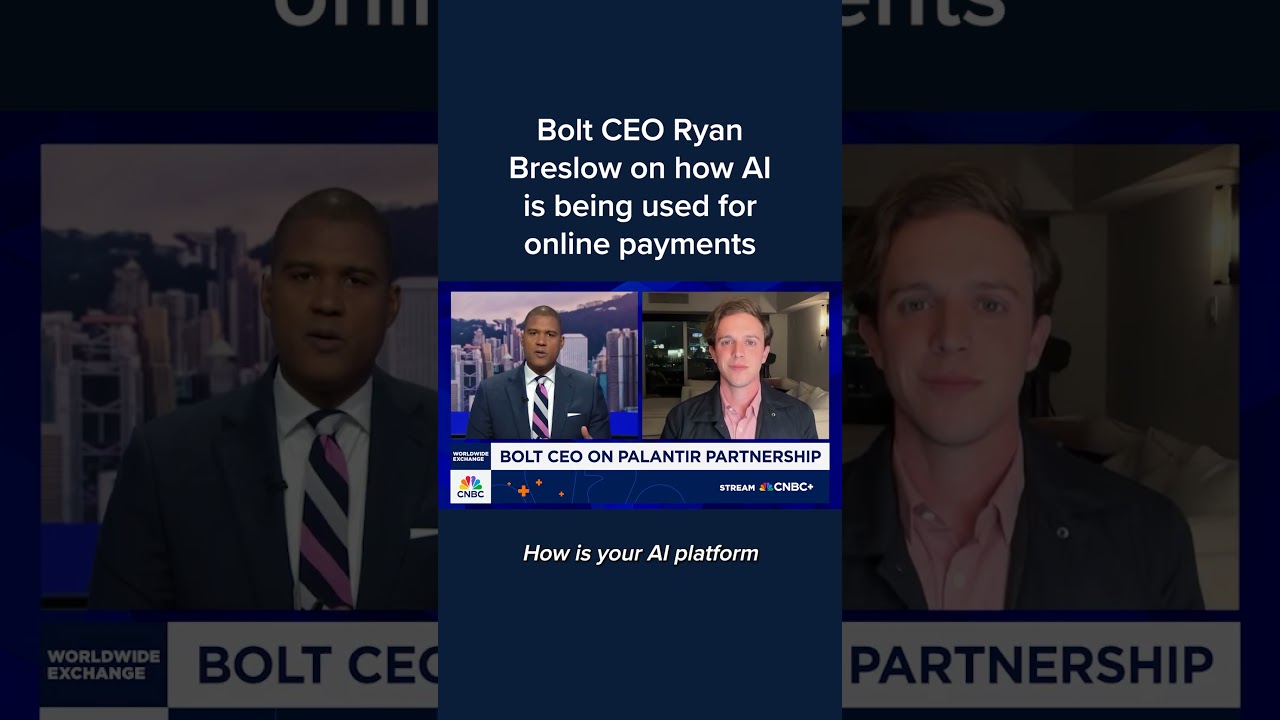
The promise of artificial intelligence in commerce isn't just about futuristic chatbots or hyper-targeted ads; it’s about solving the deeply entrenched, multi-trillion-dollar problem of abandoned shopping carts. This isn't a speculative future, but a tangible, immediate application that Bolt CEO Ryan Breslow articulated in a recent CNBC interview, where he discussed his company's strategic partnership with Palantir and how this collaboration is poised to fundamentally reshape the online payment landscape through advanced AI.
Breslow didn't mince words when describing the current state of e-commerce checkouts. For most online retailers, he highlighted, "Today's checkouts on most, if not all, websites outside of Amazon are static." This lack of dynamism, he argued, creates significant friction, leading to a staggering statistic: "70% of customers are dropping off at the checkout step." He underscored the sheer scale of this inefficiency, calling it "a couple-trillion-dollar problem in the US, tens of trillions globally." It's a colossal revenue drain that has long plagued online merchants, a chasm between browsing intent and successful purchase.
Against this backdrop, Breslow positioned Amazon as the gold standard, noting that the e-commerce giant "has a streamlined, one-click checkout. They have personalization, they have AI, they do all the hard work to make it very seamless for you to check out." The core challenge, as Breslow sees it, is that "the rest of the internet doesn't have that technology." This creates a competitive imbalance, where only the largest players with immense resources can afford the sophisticated infrastructure required for truly frictionless transactions.