


"Investors are fearing that AI is going to eat software and the multiples are going to fall apart," declared Jefferies analyst Brent Thill on CNBC's 'Fast Money.' This stark assessment underpinned a recent segment where Thill joined hosts Melissa Lee and Guy Adami to dissect the significant downturn in application software stocks, exemplified by Monday.com's worst trading day ever, and the broader market's anxieties about artificial intelligence.
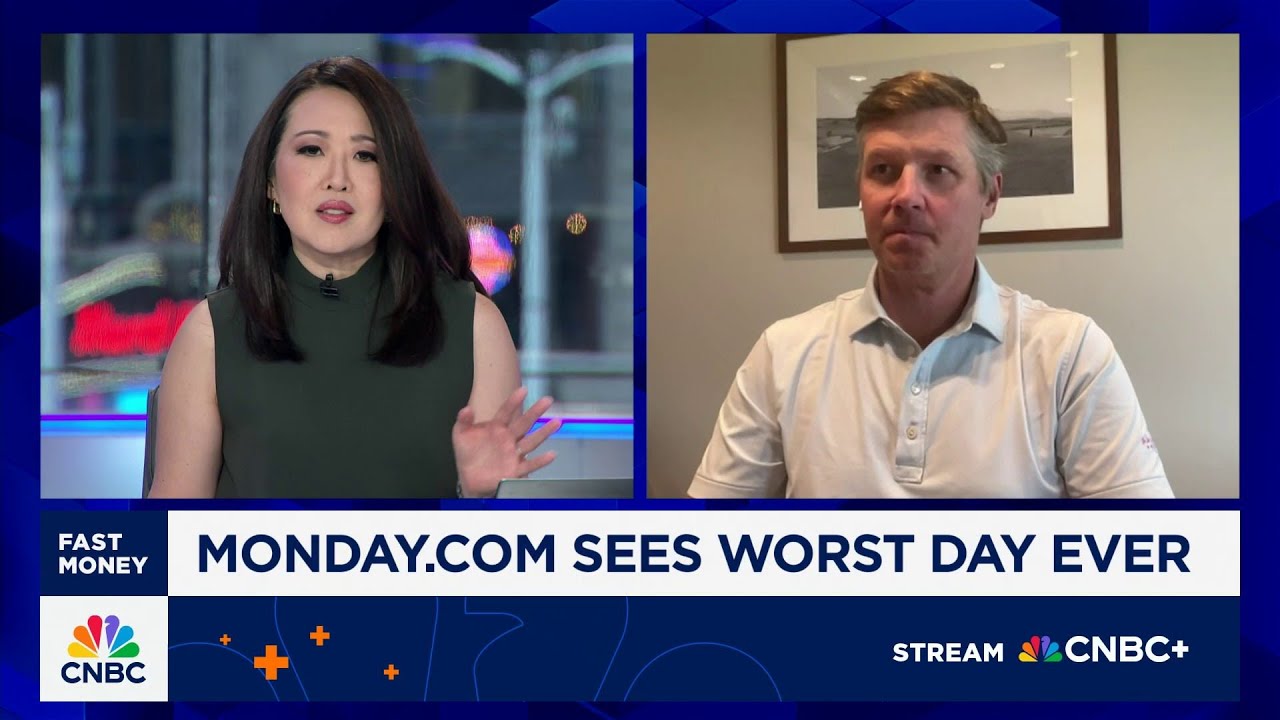
Thill, however, believes this pervasive fear is "overblown." He contends that the market is misinterpreting AI's long-term integration into software, leading to a stark divergence in investor appetite. Currently, capital is flowing almost exclusively into AI infrastructure companies like Nvidia, Oracle, and Microsoft, which provide the foundational compute and cloud services. "Everything else has been wrecked," Thill observed, referring to the widespread declines in application software firms such as Atlassian, Salesforce, HubSpot, and Klaviyo, many of which have seen their stock values plummet over 20% year-to-date.
The prevailing market narrative suggests that AI, particularly generative AI, will simplify complex software functions into mere prompts, rendering traditional application software redundant. This, Thill argues, is a fundamental "misunderstanding of how software is built and maintained." Software applications are intricate systems with deep integrations and specialized functionalities that cannot be easily replicated by a simple AI prompt. Instead, AI will serve as a powerful enhancement, layering intelligence onto existing platforms rather than replacing them wholesale.
This dynamic creates distinct winners and losers. Companies that successfully integrate AI into their offerings will thrive, while those that fail to adapt will inevitably face challenges. The application software sector, despite its current market woes, presents "tremendous buys" for investors willing to look beyond the immediate fear.
Thill pointed to Monday.com and Intuit as examples of robust application businesses that are unlikely to be "run over from AI," suggesting their current valuations reflect an exaggerated fear rather than fundamental weakness. He noted Oracle's impressive backlog growth, highlighting that even legacy infrastructure players are benefiting from the AI build-out, while application companies are currently bearing the cost without yet monetizing their AI integrations. The race between Palantir and C3.ai, with Palantir currently leading, further illustrates the intense competition and selective market favor within the AI-driven landscape. The biggest concern for investors, according to Thill, has been Adobe, as generative AI tools like ChatGPT gain traction in image creation, directly impacting Adobe's core business.