

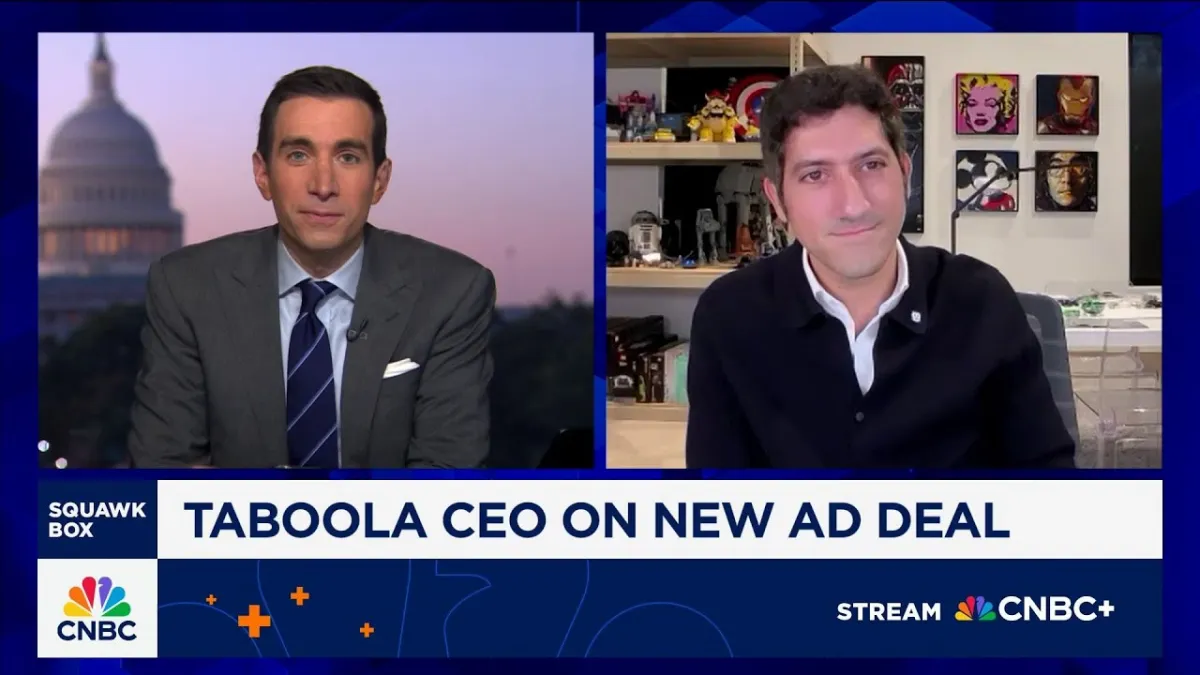
"You can be evil for a long time, Andrew, you know, can be evil for a little bit, but at some point, it's not a good strategy." This provocative statement from Taboola CEO Adam Singolda, delivered during a recent CNBC Squawk Box interview, succinctly encapsulates his belief in the enduring value of trust and authenticity in an era increasingly dominated by artificial intelligence. Far from seeing AI as a force for disintermediation, Singolda champions its role as an accelerant for trusted publishers and a democratizer of performance-driven advertising.
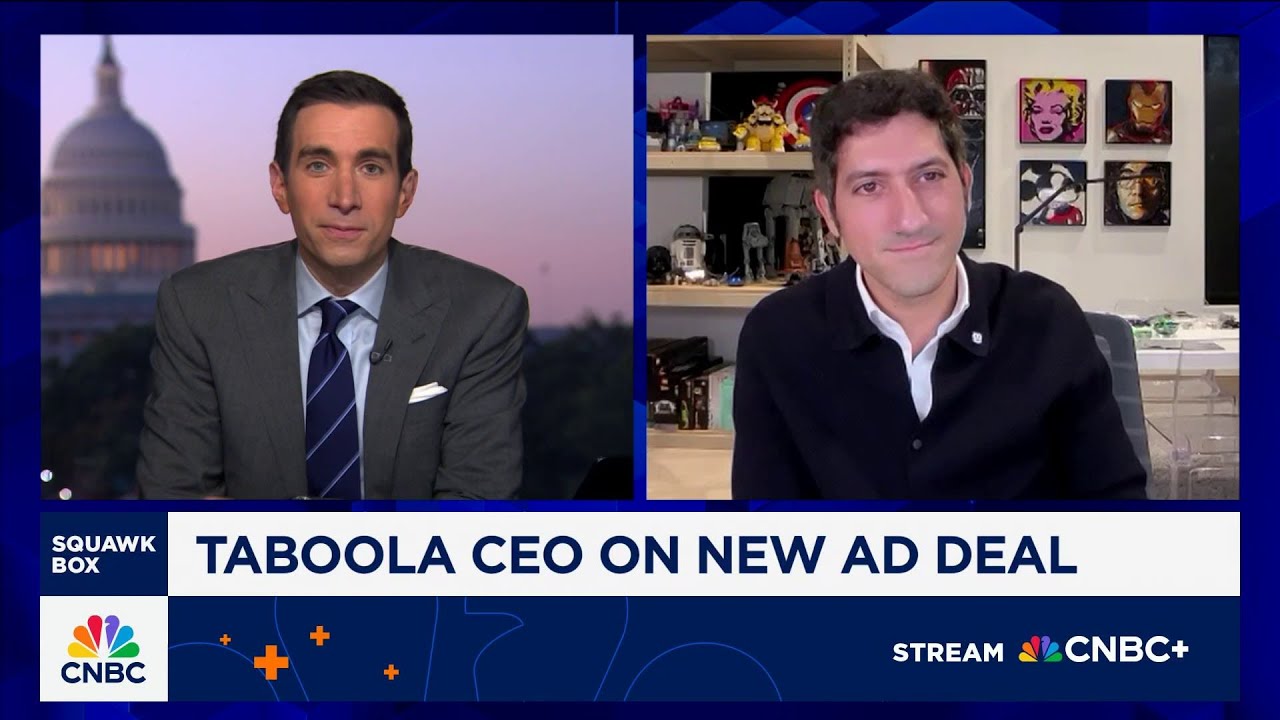
Adam Singolda, founder and CEO of Taboola, recently joined CNBC's 'Squawk Box' to discuss the company's new advertising partnership with Paramount, the ongoing evolution of the ad industry, and the profound impact of AI on the digital landscape. Speaking with Andrew Ross Sorkin, Singolda laid out a vision where high-impact traditional media converges with the measurable performance of the open web, all powered by advanced artificial intelligence.
The core of Taboola's latest strategic move is its collaboration with Paramount, a partnership designed to bridge the historical chasm between brand advertising and direct-response performance. Singolda articulated the prevailing frustration among advertisers with traditional TV spots: "Advertisers are saying, no longer, in terms of tariffs and volatility, are we okay putting ads on TV and hope that it's going to be okay." This sentiment reflects a broader industry shift away from purely impression-based campaigns towards those with clear, measurable outcomes. The new offering, leveraging Taboola's AI-powered technology, "Realize," allows advertisers to extend their high-impact TV campaigns onto the open web, where every click, subscription, and conversion can be meticulously tracked. For broadcasters like Paramount, this offers a crucial opportunity to attract and retain advertising dollars by providing the accountability that digital platforms have long promised for cross-channel campaigns. It transforms television advertising into a more sophisticated, performance-oriented channel, directly addressing the evolving demands of modern marketers.
Singolda draws a compelling parallel to Amazon's success in ad monetization, which he credits with having "educated the market." Amazon effectively demonstrated a direct link between advertising on its platforms and measurable purchases, providing an undeniable metric of success. This model, where an ad leads directly to a purchase on the same platform, offers unparalleled transparency. Taboola's objective is to replicate this clarity and measurability for a much broader spectrum of advertisers and publishers across the open web. This democratization of advanced advertising analytics empowers smaller businesses and diverse industries to leverage TV's power with digital performance marketing's precision, moving beyond the traditional retail model. Instead of limiting performance tracking to e-commerce, this initiative extends it to sectors like healthcare or financial services, where direct product purchases aren't the primary goal, but conversions such as sign-ups, leads, or information requests are equally vital.
The conversation naturally pivoted to the pervasive topic of AI, with Sorkin probing whether platforms like ChatGPT could ultimately disintermediate the open web, rendering traditional advertising and content discovery obsolete. Singolda, however, remains resolutely optimistic. He posits that AI will not diminish, but rather enhance, the value of trusted publishers. "I think it's great not only for consumers, it's great for advertisers," he asserted, explaining that for significant decisions, whether financial, healthcare, or travel-related, consumers inherently seek out reliable, authoritative sources. This is a critical distinction, as the utility of AI for quick information retrieval differs fundamentally from its role in influencing trust-dependent decisions. The human need for credible, vetted information remains paramount when faced with complex choices, a need that established publishers are uniquely positioned to fulfill.