

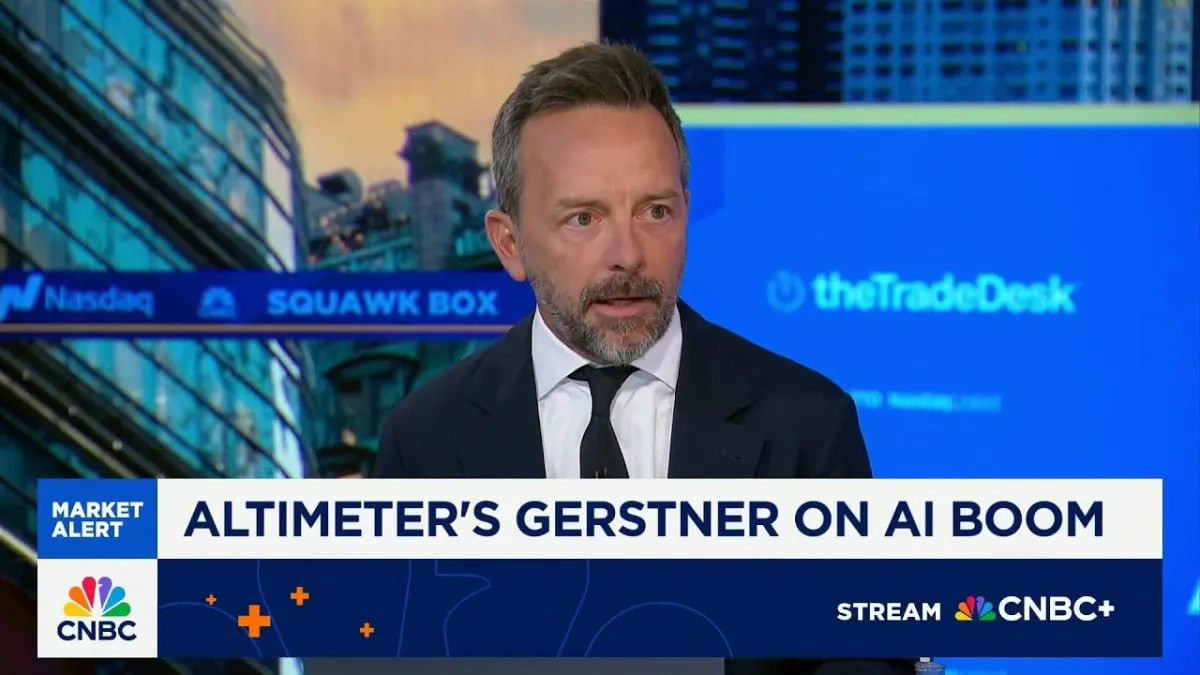
“The phase shift associated with AI is as big as the internet,” declared Brad Gerstner, CEO of Altimeter Capital, during a recent appearance on CNBC’s Squawk Box. This bold assertion set the tone for a wide-ranging discussion with Andrew Ross Sorkin and Becky Quick, delving into the nascent AI market, the specter of a bubble, and the potential winners in this transformative era. Gerstner, whose firm boasts strategic investments in tech giants like Nvidia, Meta, and Microsoft, offered a nuanced perspective on the current landscape, distinguishing between genuine innovation and speculative froth.
The conversation quickly pivoted to the pervasive "AI bubble" fears currently circulating in financial circles. Sorkin noted that even seasoned investors like Paul Tudor Jones have drawn parallels to October 1999, a moment preceding a significant market correction. Gerstner, however, pushed back against the notion of a universal bubble, pointing out that such widespread discussion often precedes a true speculative peak. He cited Nvidia's forward P/E ratio, which, despite its impressive growth, sits at a more moderate 25-30 times earnings, a far cry from the valuations seen in historical bubbles.
Gerstner emphasized that while pockets of irrational exuberance might exist, particularly among early-stage or "meme" AI ventures, this should not obscure the fundamental, generational shift underway. He cautioned against "hand-wringing" over perceived market excesses, drawing a parallel to the internet bust of the early 2000s. Those who focused solely on the dot-com crash, he argued, missed the subsequent two decades of monumental compounding returns from foundational internet companies like Amazon and Google. The current volatility, he suggested, is a healthy manifestation of creative destruction, exacerbated by geopolitical uncertainties like global trade policy shifts.
The question of who will emerge victorious in this AI supercycle elicited a clear bifurcation in Gerstner’s analysis: consumer versus enterprise. In the consumer AI space, he posited a "winner take most" dynamic, akin to the early days of search or social media. Here, platforms with superior engagement and massive user bases are poised for dominance. He highlighted OpenAI’s ChatGPT, with over a billion and a half monthly users and growing engagement, as a clear breakout leader. Meta, despite its metaverse pivot, is also making significant strides in consumer AI, with Gerstner noting impressive cohort engagement numbers that suggest they are now "breakaway in consumer." Google, he implied, faces a formidable challenge in catching up to these frontrunners, though it remains a powerful player.
The enterprise AI landscape, conversely, is shaping up to be a "free for all." Unlike the consumer realm, where network effects often consolidate power, the enterprise sector is characterized by a diverse array of established tech giants and innovative startups vying for market share. Microsoft, Amazon, Google, and Meta are all deeply invested, alongside emerging leaders like Anthropic, known for its Claude Code and Cursor. These players, armed with robust infrastructure and deep customer relationships, are locked in a fierce competition to integrate AI across business functions. Gerstner predicted that while many will contend, only a select few will achieve true market leadership.