

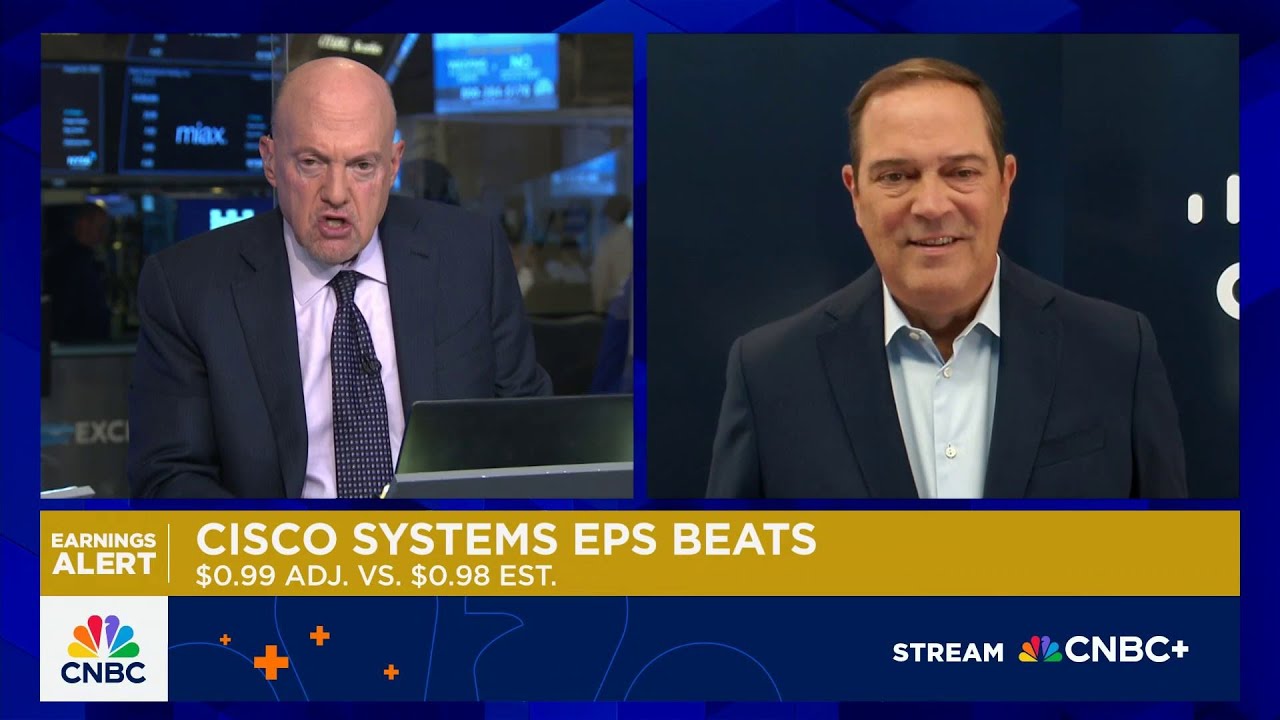
"Most of my peers would suggest that they do expect to be hiring fewer people if we get this right." This stark assessment from Cisco CEO Chuck Robbins on CNBC's 'Squawk on the Street' encapsulates the prevailing sentiment among tech leaders regarding artificial intelligence. Speaking with Jim Cramer and Carl Quintanilla, Robbins detailed Cisco's robust Q4 performance, but more significantly, offered insights into how AI is not just reshaping product roadmaps but also influencing the future of the workforce.
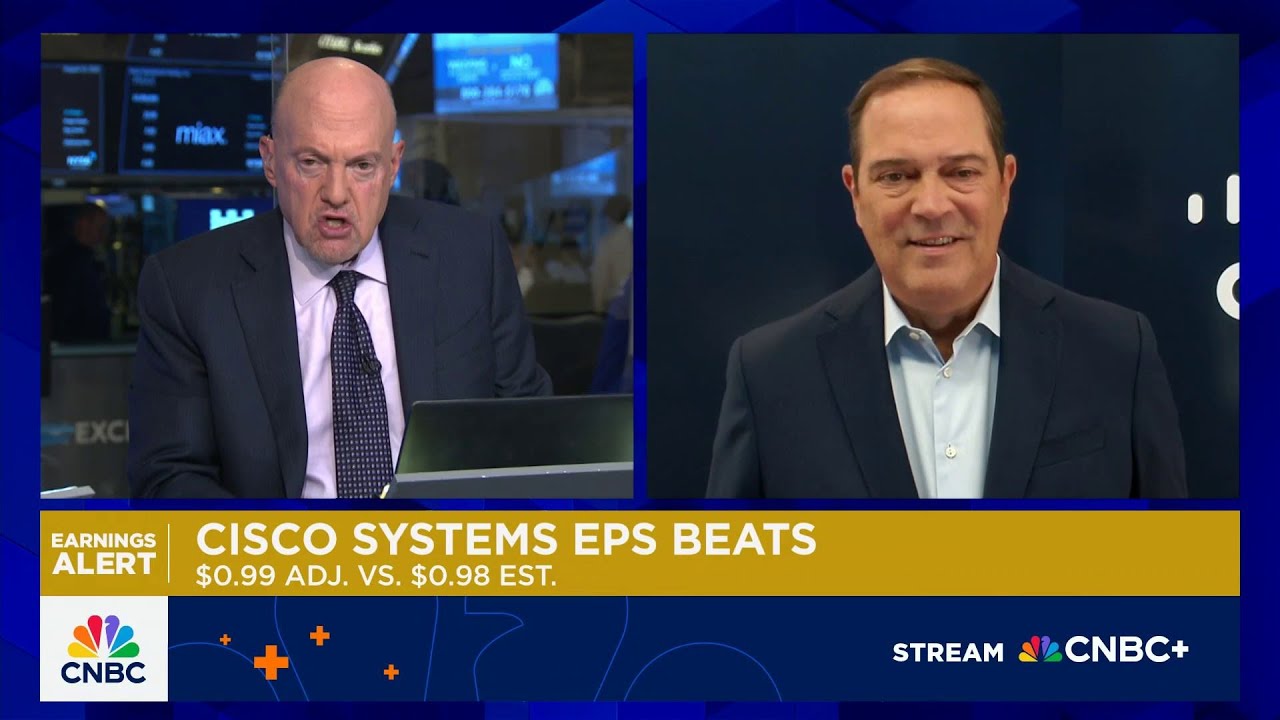
Cisco's latest quarterly results showcased significant growth, with strong revenue and earnings per share exceeding expectations. Robbins expressed pride in the team's achievements, noting a 5% overall growth and double-digit EPS gains for the year. A standout metric was the company's performance in AI infrastructure orders from hyperscale customers. Robbins revealed, "We more than doubled that [AI orders]... We recognized roughly a billion dollars of AI infrastructure orders during the quarter." This indicates a substantial and accelerating demand for the foundational networking and security components critical to building and scaling AI capabilities.
The conversation also touched on Cisco's evolving security portfolio, a segment that had previously faced skepticism. Robbins affirmed that security is "getting a lot better," particularly with new and refreshed products comprising two-thirds of Cisco's organic security offerings. These new solutions grew in excess of 20% during the quarter. This robust growth, even excluding the US federal sector which experienced a dip, highlights the broad adoption of these advanced technologies across enterprise, commercial, service provider, and international public sectors.
Robbins emphasized that the current "pace of innovation that we're delivering today is probably faster than I've seen since I've been CEO and long before." He underlined two critical drivers for AI adoption: the imperative for "low latency network capacity demand" and the necessity to "put security into the network." He stressed that introducing latency through separate security appliances is no longer viable, underscoring Cisco's strategic move to fuse security directly into the network architecture.
The most provocative aspect of the discussion, however, revolved around AI's impact on human capital. Robbins confirmed that "every customer I talk to, a gentic [an autonomous agent] is the destination they're trying to get to." He elaborated on the potential for AI to automate tasks currently performed by humans. While acknowledging it's still early, he stated that "most of my peers would suggest that they do expect to be hiring fewer people if we get this right." He clarified that this isn't about immediate layoffs but rather a shift in the pace of future hiring. At Cisco, Robbins is challenging his teams to evaluate whether new hires are truly necessary or if tasks can be automated with technology, aiming for greater productivity and a competitive advantage.