

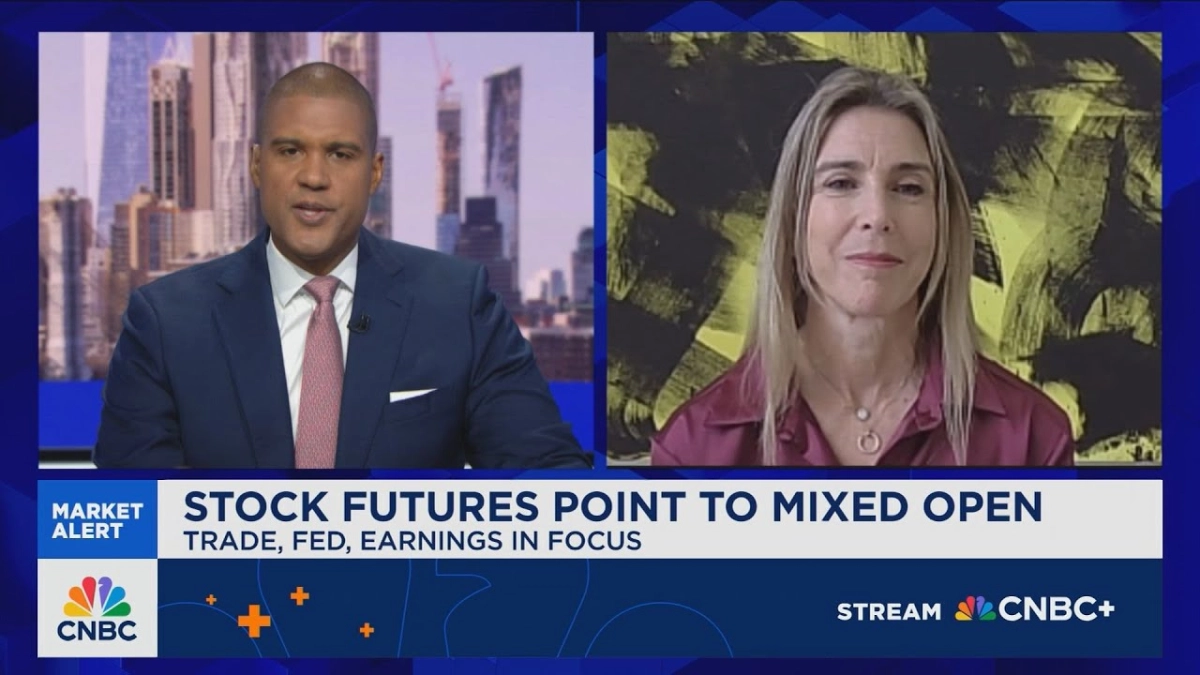
The relentless ascent of artificial intelligence, alongside the broader push for electrification, is forging an unprecedented demand for power, a trend that Valérie Noël, Head of Trading at Syz Group, highlights as a potent catalyst for uranium miners. This insight, delivered during her recent interview on CNBC's *Worldwide Exchange* with anchor Frank Holland, underscored a nuanced market perspective, moving beyond immediate tech earnings to identify a foundational shift in global energy needs. Noël’s commentary traversed the immediate landscape of Big Tech performance, market sentiment, and long-term commodity plays, offering a cohesive view for founders, venture capitalists, and AI professionals navigating a rapidly evolving economic environment.
Noël began by dissecting the latest earnings reports from tech giants like Microsoft, Meta, and Alphabet. While Microsoft and Meta experienced some market pullback, Noël characterized the reaction as not "massively disappointed." She pointed to Microsoft's strategic investment in OpenAI as a pivotal long-term driver, asserting that "for Microsoft on a long-term basis, everything can be open, right?" This perspective suggests that short-term volatility in tech earnings should not overshadow the transformative potential of AI. Alphabet’s strong performance, particularly in its search business and the progress of its Gemini AI model, further reinforced the pervasive influence of artificial intelligence. Noël emphasized that AI is now "a big theme for everyone, not only for our clients but I think for every company right now," illustrating its ubiquitous impact across industries and market segments.
The broader market, according to Noël, finds itself in a period she aptly described as "digestion or a pause." Having previously identified the market at an "inflection" point, she now sees investors processing recent Federal Reserve statements and the mixed bag of earnings reports. This transitional phase is marked by a collective wait-and-see approach as participants gauge the next significant market signals, particularly from upcoming earnings and central bank decisions. It's a moment for careful consideration rather than impulsive action, reflecting the underlying uncertainty despite the technological advancements driving new sectors.
Against this backdrop of tech innovation and market recalibration, Noël unveiled her compelling long-term investment theme: uranium miners. She articulated a clear rationale, stating, "global power demand is exploding, driven by AI, EV, electrification." This trifecta of technological and societal trends creates an immense energy requirement, which traditional sources are struggling to meet sustainably.
The uranium market is fundamentally under-supplied. Demand from data centers and new nuclear reactors is rising very fast.
