


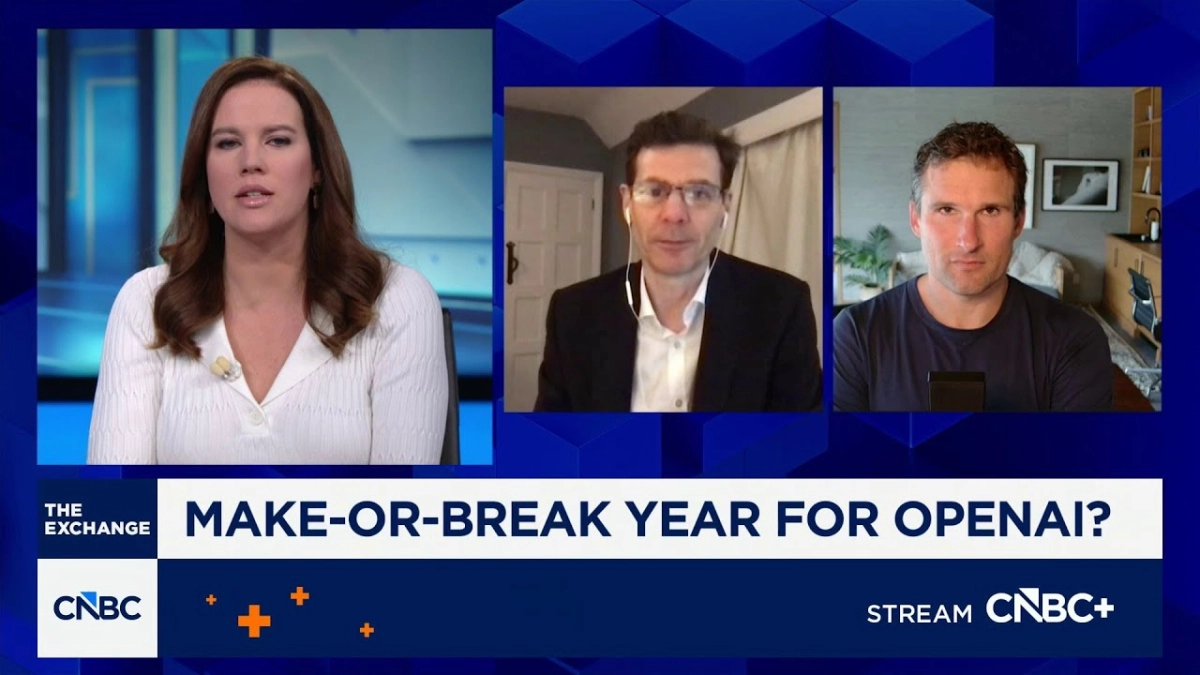
“The honeymoon is now over,” according to Adrian Cox, Thematic Strategist at Deutsche Bank Research Institute, speaking on CNBC’s The Exchange alongside Slow Ventures General Partner Sam Lessin. The sentiment across the technology sector is shifting from the initial exuberance surrounding generative AI to a cold, hard look at the business fundamentals, particularly the massive costs and the looming threat of hyperscaler competition. The conversation centered on the precarious position of standalone AI leaders like OpenAI, which, despite massive funding and hype, faces a critical make-or-break year defined by three converging themes: disillusionment, dislocation, and distrust.
The core tension highlighted by Cox is the stark difference between companies like OpenAI, which must constantly raise capital to fuel their expensive training and inference operations, and established tech giants like Google and Microsoft, which already possess immense distribution, proprietary data, and massive data center infrastructure. Cox emphasized that for OpenAI, the challenge is existential: it has not yet found a workable business model to cover its significant cash burn. He noted that unlike the hyperscalers, OpenAI must continually seek funding for its data center and training needs, which “presents it with the real challenge.” Deutsche Bank’s internal data, Cox revealed, suggests that the growth in consumer subscriptions for OpenAI’s products in Europe has “more or less flatlined since the middle of last year.” This revenue stagnation, coupled with the astronomical costs of maintaining state-of-the-art models, forces the company to aggressively seek new monetization avenues.