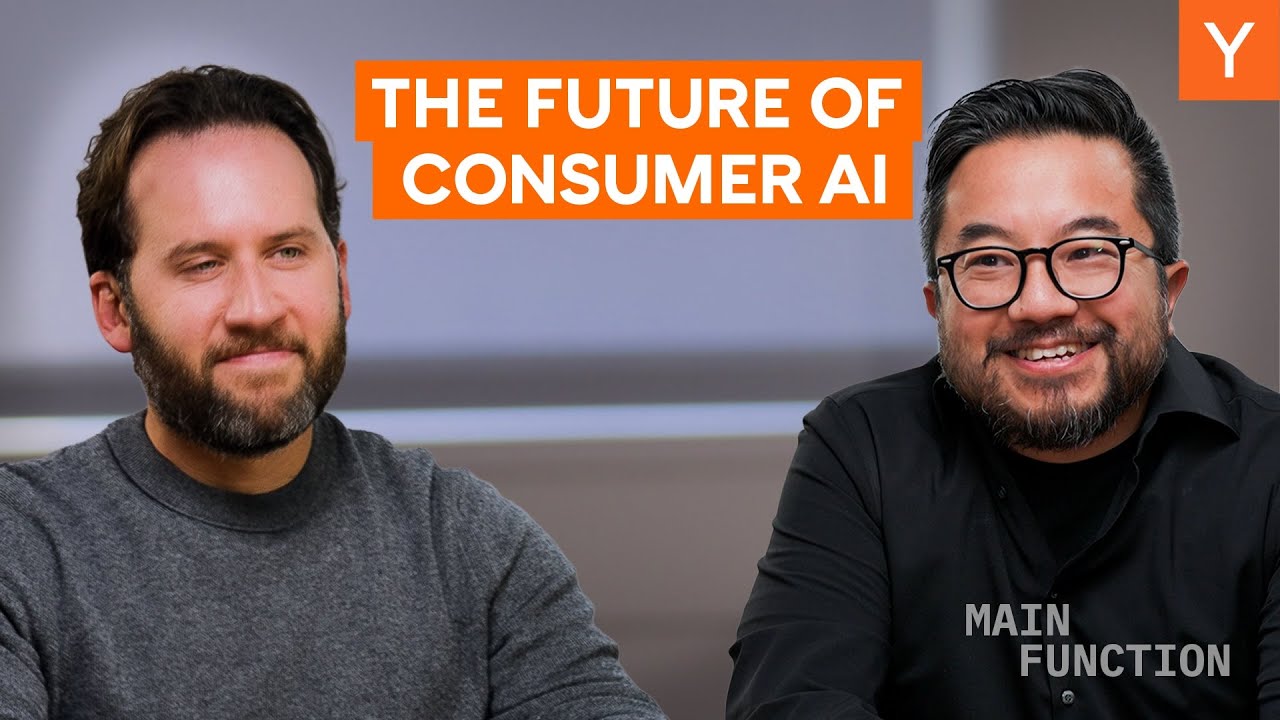
"The hardest thing with consumer is not only identifying the trend and the team, but getting the timing right. Like when is this thing actually going to tap into the culture and be relevant with the culture and that's like almost an impossible thing to predict." This profound observation from Michael Mignano, a partner at Lightspeed Venture Partners and co-founder of Anchor, sets the stage for a compelling discussion with Garry Tan, President & CEO of Y Combinator. Their conversation delves into the transformative power of artificial intelligence in the consumer landscape, examining how AI is reshaping media, democratizing creation, and presenting unprecedented opportunities—and challenges—for founders.
Mignano, whose prior venture Anchor simplified podcast creation for millions before its acquisition by Spotify, draws insightful parallels between past technological shifts and the current AI boom. He notes that every major leap in consumer tech has a moment when it suddenly becomes accessible. Just as Anchor made podcasting approachable, AI is now enabling breakthroughs in fields like music and media that were previously considered "impossible" for the average user.
The democratization of creation, Mignano argues, is one of AI's most significant impacts. Historically, while cameras made photography easier and microphones simplified podcasting, no technology truly democratized music creation until AI. Platforms like Suno, in which Lightspeed has invested, exemplify this shift. They allow anyone to generate music with simple prompts, fostering a new wave of creators who are often making music primarily for their own enjoyment, a behavior Mignano finds unique in content creation. This accessibility fundamentally alters the creative landscape, empowering individuals who previously lacked the specialized skills or expensive tools to produce high-quality media.
Yet, amidst this wave of creative liberation, the perennial challenge of distribution remains. While AI can generate content, getting that content seen, heard, or used by a broad audience is still the ultimate hurdle. "You still got to solve the distribution problem. That hasn't changed, that hasn't gone away," Garry Tan emphasizes. This means founders cannot solely rely on the power of AI to build a product; they must simultaneously strategize how to build or leverage distribution channels effectively.
The evolution of social media platforms further underscores this point. From early social graphs connecting friends to the algorithm-driven recommendation engines of TikTok, content distribution has continuously reshaped consumer behavior. The next phase, Mignano suggests, might involve AI dynamically generating personalized content on behalf of users, potentially blurring the lines between creator and consumer. This could lead to new forms of engagement and monetization, but it also raises questions about the role of human "taste" and "craft" in a world of abundant, AI-generated media.
AI also offers a unique opportunity to revisit previously "baked" categories—markets deemed too mature or consolidated for new entrants. Mignano cites email as an example, a space largely ignored by venture capital for years. However, by injecting AI capabilities, founders can now reimagine and rebuild foundational services, offering entirely new user experiences. The ability to leverage vast, often private, datasets—from health records (as seen with YC-backed Nori) to personal photos and geolocation—with large language models opens doors for deeply personalized, context-aware consumer applications that were unimaginable before.
In this hyper-competitive environment, consumer founders must embrace an aggressive, iterative approach. Mignano's own experience with Anchor, which faced near-death moments and pivoted from a social audio platform to an easy podcast creation tool, highlights the necessity of listening to users and relentlessly pursuing growth. The current landscape, driven by rapidly advancing AI models, demands that founders move fast and be willing to challenge their initial assumptions. Success often comes from those who can identify overlooked opportunities and build products that resonate culturally, even if that means constantly adapting their initial vision.