

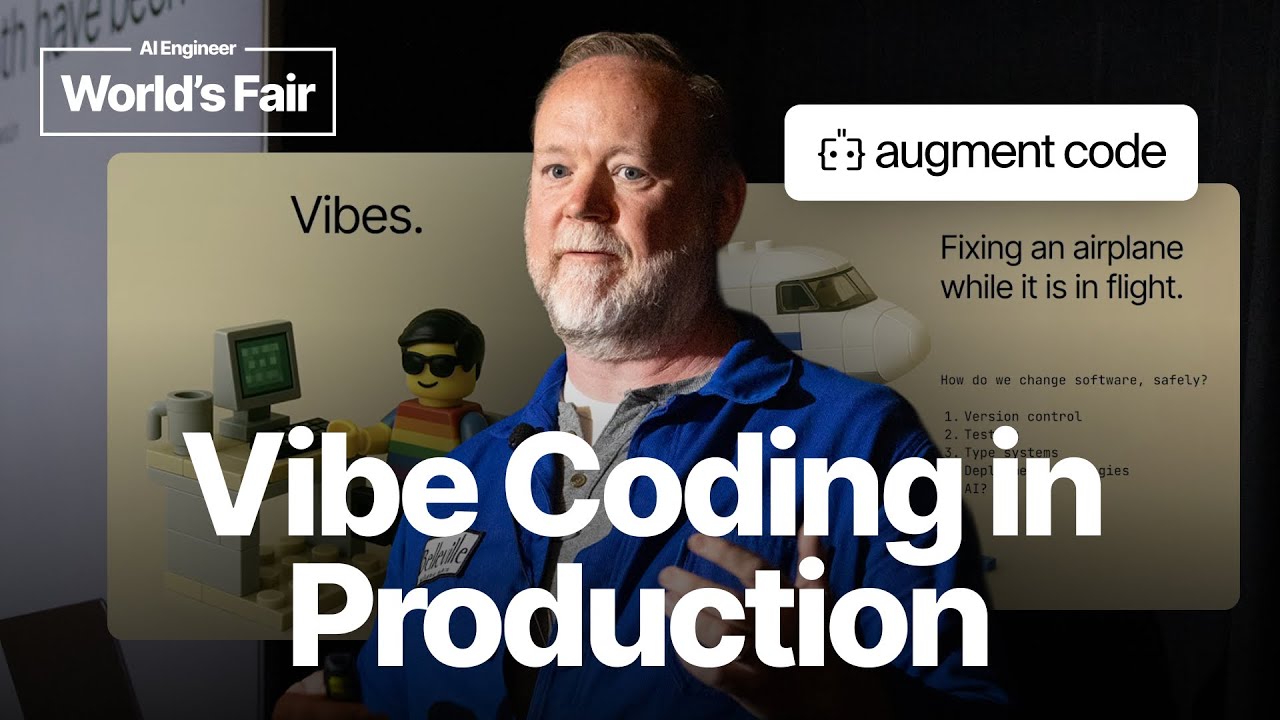
"The reports of my death have been greatly exaggerated." Mark Twain's famous quip finds a modern echo in the software engineering community, where recent pronouncements from tech titans like Satya Nadella, Anthropic's CEO, and Mark Zuckerberg suggest AI will soon be responsible for a significant, if not dominant, portion of code production. Chris Kelly, Head of Developer Experience at Augment Code, speaking at the AI Engineer World's Fair in San Francisco, offers a sharp counter-narrative to this pervasive hype, arguing that the role of human engineers is far from diminished.
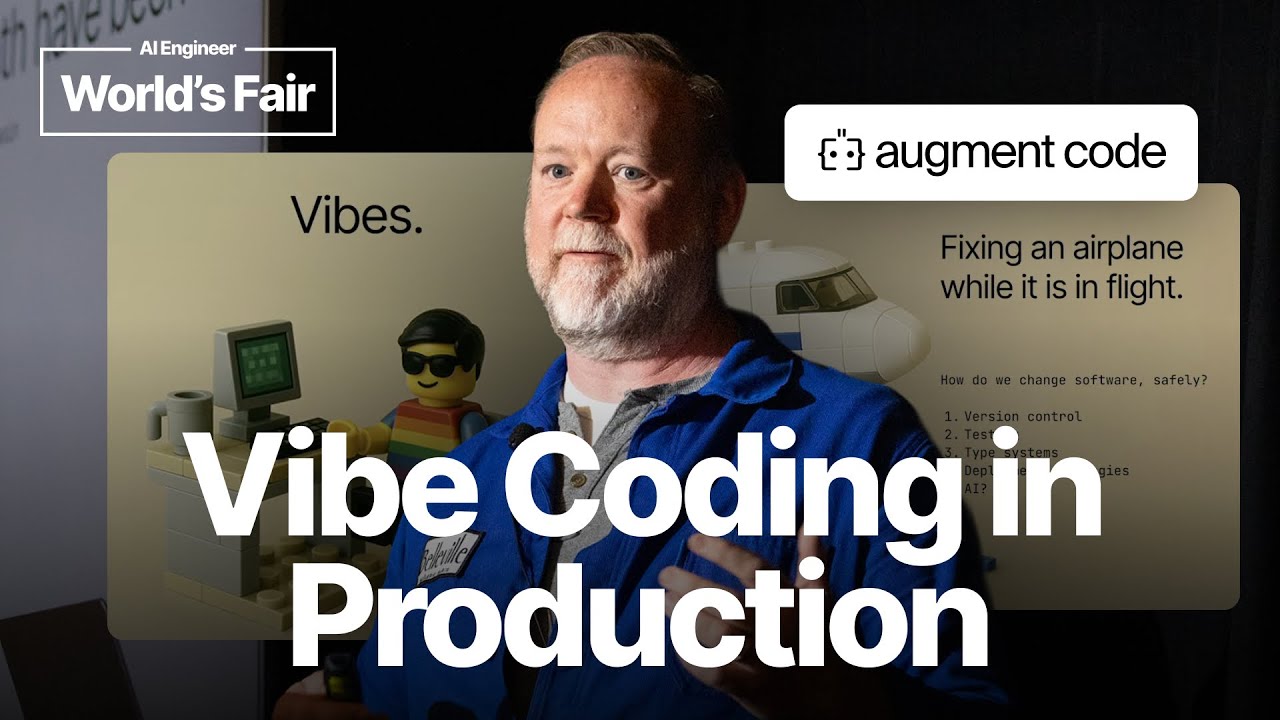
Kelly spoke with an uncredited interviewer at the AI Engineer World's Fair in San Francisco about the critical distinction between generating code and truly building production-grade software, emphasizing the indispensable role of context in software engineering. His core contention is that the current fanfare surrounding AI's coding prowess overlooks fundamental realities of software development.
Kelly challenges the optimistic percentages, stating that AI's success in code generation is largely confined to large, established codebases. "Their AI is writing code based on massive codebases," he explains, where most architectural and infrastructure decisions are already embedded. This leaves minimal "wiggle room" for the AI to make genuinely novel contributions or fundamental design choices, effectively reducing its role to pattern matching within predefined constraints.
The crux of Kelly's argument pivots on a crucial redefinition of the engineer's true function: "Code isn't the job. It's an artifact of the work." He posits that much like blueprints are the tangible output of an architect's intellectual labor, code serves as the artifact of a software developer's deeper cognitive process. The real value engineers provide lies in navigating "thousands of decisions about what my software is supposed to do," including strategic choices about libraries, methodologies, and system architectures. AI, in its current state, excels at generating the artifact, but not the complex, nuanced decision-making inherent in software craftsmanship.
Even AI-generated code demands human oversight and intervention. "AI code is still code, and code doesn't run itself," Kelly asserts. Complex production systems inevitably exhibit emergent behaviors and failures that cannot be anticipated or resolved by mere code generation. When critical software goes down at 2 AM, relying on "vibes" won't suffice; human engineers with deep contextual understanding are essential for diagnosis and remediation, especially for applications demanding high reliability.