

The assertion that artificial intelligence will eliminate nearly 100 million U.S. jobs within a decade is, according to economic policy analyst James Pethokoukis, a "Halloween headline" designed to provoke fear rather than inform. Speaking on CNBC’s ‘Power Lunch,’ Pethokoukis engaged in a critical discussion regarding a recent report from Senator Bernie Sanders' staff, which painted a dire picture of AI-induced job losses. His analysis offered a crucial counter-narrative, distinguishing between the automation of tasks and the wholesale replacement of entire job roles, a nuance often lost in alarmist predictions.
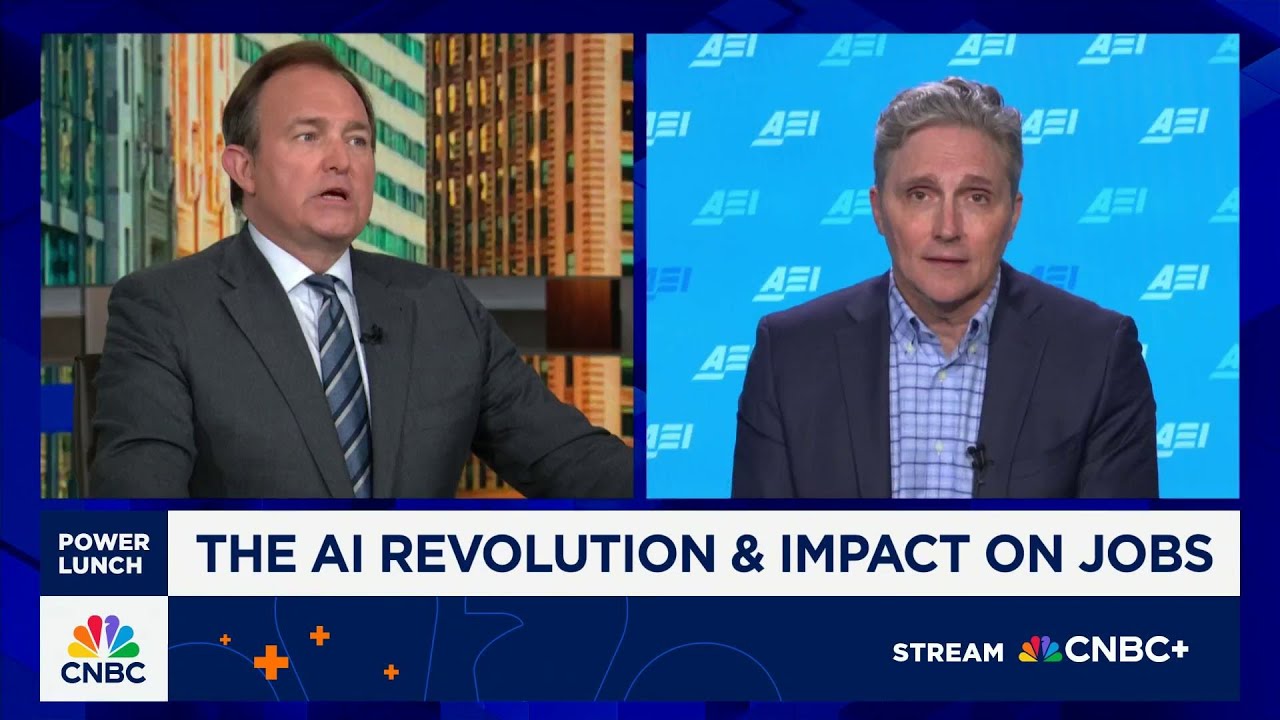
Pethokoukis, an economic policy analyst at the American Enterprise Institute (AEI) and a CNBC contributor, spoke with the 'Power Lunch' hosts about the Sanders report, titled "The Big Tech Oligarchs’ War Against Workers: AI and Automation Could Destroy Nearly 100 Million U.S. Jobs in a Decade." The report’s stark figures and provocative title garnered significant media attention, prompting a closer look at its methodology and underlying assumptions. Pethokoukis’ central critique revolved around a fundamental misinterpretation of AI’s capabilities and its actual impact on the labor market.
"The report seemed to confuse the ability of AI to automate particular parts of a job with automating the entire job," Pethokoukis stated, underscoring a critical distinction. This insight is paramount for founders, VCs, and AI professionals navigating the evolving technological landscape. AI, in its current and foreseeable iterations, excels at automating repetitive, data-intensive tasks, thereby augmenting human capabilities rather than rendering them obsolete. This augmentation can free up human workers to focus on higher-value, more creative, and interpersonal aspects of their roles.
Industry analyses, including those from leading consultants like McKinsey and major Wall Street banks, consistently point to a different reality. These studies suggest that while a significant percentage of job *tasks* might be amenable to AI automation, the number of entire jobs at risk is far lower. Pethokoukis cited this consensus, noting, "What they've determined is not that AI is going to replace 70% of jobs, but more like maybe 25% of job tasks." This substantial difference, automating a quarter of tasks versus eliminating three-quarters of jobs, presents a far less frightening, yet more accurate, outlook. It implies a transformation of job descriptions and skill requirements, rather than an apocalyptic culling of the workforce.
The interviewer pressed Pethokoukis on the source of such an "outlier" report, hinting at potential human error in its creation. Pethokoukis agreed, suggesting that the fault lies not with the AI, but with the human interpretation and framing of its capabilities. "When a report like this comes out with a number that is such an outlier, you know, the problem probably lies with the human... I would blame the staff of that Senate committee rather than the machine," he asserted, pointing to a likely agenda behind the sensational figures. Such exaggerated claims, while attention-grabbing, can lead to a distorted public understanding of AI, potentially fostering an environment of fear and resistance that could impede technological progress.