
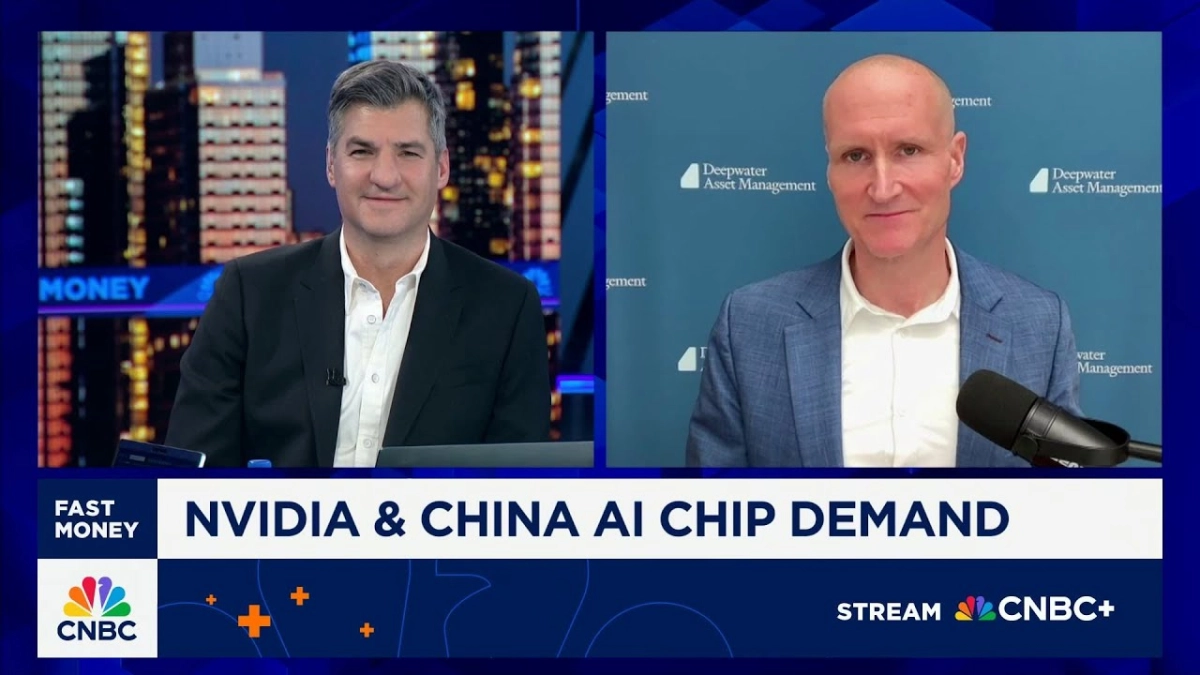
"What it just ultimately speaks to is this funk that the AI trade is in," observed Gene Munster, Managing Partner at Deepwater Asset Management, during a recent discussion on CNBC's Fast Money. This sentiment, delivered in the wake of Oracle's latest earnings report, encapsulates a growing unease within the investment community regarding the sustainability and immediate returns of the artificial intelligence boom. The market, it appears, is no longer content with mere promises or even solid foundational growth; it demands more, or perhaps, it is simply fatigued by the relentless hype.
Gene Munster spoke with Melissa Lee and Karen Finerman on CNBC's Fast Money about Oracle's recent earnings and the broader implications for the artificial intelligence investment landscape. The discussion centered on the surprising market reaction to Oracle's seemingly positive results, highlighting a potential shift in investor psychology concerning AI-driven growth.
Oracle’s recent financial disclosures, by conventional measures, presented a robust picture. The company announced what Munster described as "in-line-ish results, the guidance was really solid, they had backlog increased $68 billion sequentially" in its cloud and AI segments. Such figures would typically trigger a positive market response, indicative of strong underlying business momentum. Yet, Oracle's stock experienced a significant decline, falling by approximately 10% in extended hours. This disconnect between fundamental performance and market valuation signals a deeper, more systemic issue within the AI investment sphere.
The prevailing narrative suggests that investors have become "almost exhausted from good news." This exhaustion is not a rejection of AI's transformative potential but rather a recalibration of expectations. For months, the market has been fed a steady diet of optimistic projections and groundbreaking announcements, leading to inflated valuations across the sector. Now, even genuinely positive data points are being "shrugging it off" by investors, who are beginning to scrutinize the timelines for profitability and the capital intensity required to realize these grand visions. The initial enthusiasm for AI, which propelled numerous tech stocks to dizzying heights, is confronting the stark reality of execution and long-term monetization.
This investor fatigue is particularly evident in the market's focus on the financial mechanics of AI growth. Munster noted that the first two questions on Oracle’s earnings call revolved around the capital required to fund growth and the exact timing for cloud business margins to reach the 30-40% range. These are not questions about innovation or market share, but about capital efficiency and return on investment, reflecting a more mature and cautious approach to valuation. The market is pressing for clarity on when the massive investments in AI infrastructure and R&D will translate into tangible, bottom-line benefits, moving beyond the narrative of future potential to present financial performance.
The valuation challenge for companies like Oracle, and by extension, many AI-centric enterprises, lies in the gap between current earnings and the lofty expectations built into their stock prices. Oracle's substantial backlog, while promising, represents future revenue that requires significant ongoing investment to convert. If the realization of this backlog, or the associated margin expansion, takes longer than anticipated, the current multiples become unsustainable. This dynamic leads Munster to view Oracle as potentially "more as a value trap," suggesting that despite its impressive technological advancements and pipeline, its current market price may not reflect a compelling risk-reward profile compared to other opportunities.
The critical question now for the entire AI ecosystem—from burgeoning startups to established tech giants—is identifying the catalysts that will reignite investor excitement. "What are the catalysts that are going to get investors more excited about believing that we're still early in AI?" Munster queried, pinpointing the core dilemma. The initial wave of excitement was driven by foundational models and broad potential. The next wave of capital will likely flow towards companies demonstrating clear, scalable business models, superior unit economics, and a definitive path to profitability, rather than just impressive technological feats. This entails a shift from investing in potential to investing in proven commercial viability and efficient capital deployment.
For founders, VCs, and AI professionals, this market "funk" necessitates a strategic pivot. The era of pure speculative investment in AI, where groundbreaking technology alone could command exorbitant valuations, may be waning. The emphasis will increasingly be on demonstrating tangible ROI, disciplined capital management, and a clear understanding of the path to market leadership and sustained profitability. The current environment demands robust business cases, not just revolutionary ideas. This heightened scrutiny will separate the truly disruptive and economically viable AI ventures from those that merely ride the wave of technological enthusiasm.