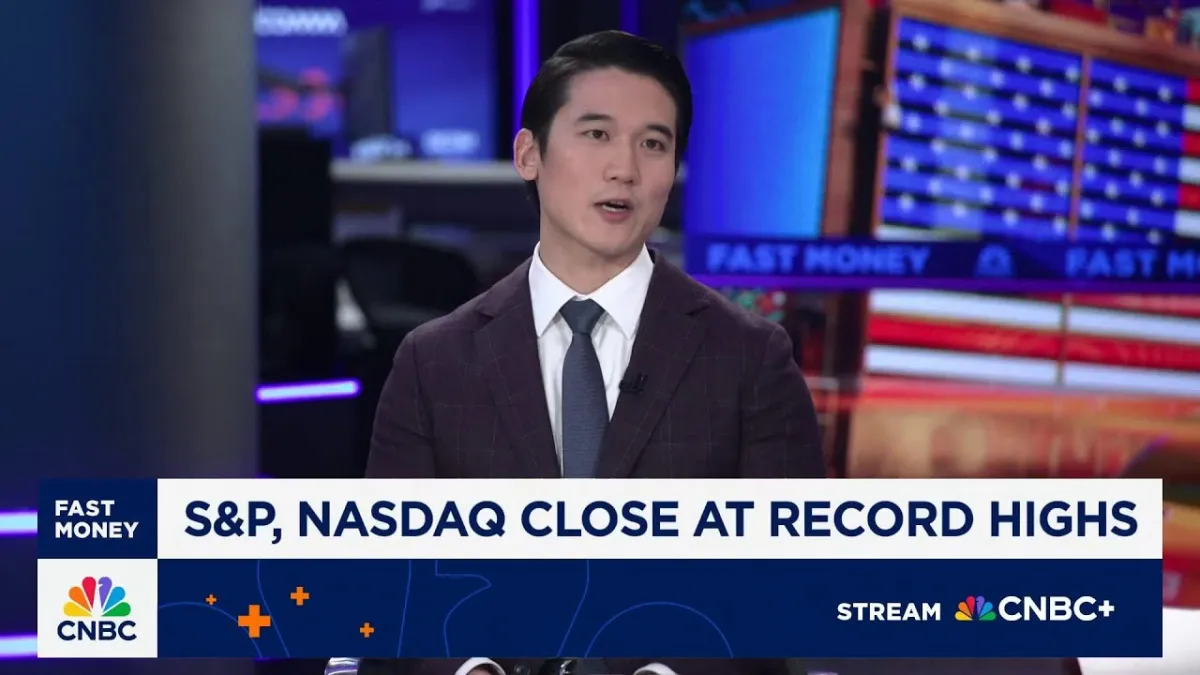
"I think AI matters more than the Fed," declared Ohsung Kwon, Wells Fargo Securities' Chief Equity Strategist, during a recent appearance on CNBC's Fast Money. This bold assertion encapsulates the prevailing sentiment and data-driven conviction shared by Kwon and his team regarding the current market landscape. He spoke with the Fast Money panel about his firm's latest earnings preview and the profound impact of artificial intelligence on equity markets, challenging conventional wisdom that often places monetary policy at the forefront of market drivers.
Kwon's analysis indicates a robust earnings season ahead, forecasting a "4% beat" for the upcoming quarter. This optimistic outlook, he clarified, is "led by AI, semis," underscoring the dominant role of the artificial intelligence sector and its foundational semiconductor components. His team’s proprietary machine learning model, which sifts through approximately 350 macroeconomic variables, points to a sustained growth trajectory that is far from a speculative bubble. This isn't merely a fleeting trend; Kwon firmly believes the market is still in the "early innings of the AI capex cycle," suggesting substantial future investment and expansion.
The prevailing concern that the "bar is a little too high" for earnings, due to a lack of pre-earnings EPS cuts, doesn't deter Kwon. He highlights that while consensus numbers for Q3 earnings are down about 4% since the deliberation date, this largely reflects the anticipated, yet delayed, impact of tariffs. Companies typically carry around 65 days of inventory, meaning the full effect of tariffs imposed in August will primarily manifest in Q4 and Q1 results, not Q3. This temporal lag suggests that Q3 earnings, unburdened by the immediate tariff drag, are poised to surprise on the upside, further fueled by the AI boom.
Looking beyond immediate earnings, Kwon contends that future market gains will hinge on earnings growth rather than multiple expansion. He noted, "it's hard to argue that multiples are going to expand further from here. I think it's really going to be more of an earnings growth story going forward." Wells Fargo projects an impressive 11% earnings growth for this year and next, followed by another strong 12% in 2027 for the S&P 500, even without additional multiple growth. This shift implies a healthier, more fundamentally driven market rally.
Kwon outlined his firm's "PRISM" framework, Profits, Rates, Sentiment, and Macro, as the four key drivers of the equity market. Profits remain in an upcycle, while rates are improving due to an easing cycle. Sentiment is neutral, and macro indicators, specifically growth minus inflation, are also showing signs of improvement, albeit still negative. Combining these factors, Kwon sees a "pretty healthy backdrop for equities overall," leading to Wells Fargo's S&P 500 target of 7,200 by year-end 2026.