


"Competition is good. The fact that there's competition for NVIDIA shows that the market is real," declared Mark Malek, Chief Investment Officer at Siebert Financial, in a recent CNBC interview, encapsulating a pivotal shift in the artificial intelligence investment landscape. Malek, speaking with CNBC’s Frank Holland, offered a sharp commentary on the evolving dynamics of the AI market, investor behavior, and where the next significant growth opportunities lie, particularly in the wake of Alphabet’s recent surge and broader market adjustments. His analysis provides critical insights for founders, venture capitalists, and AI professionals navigating this rapidly maturing sector.
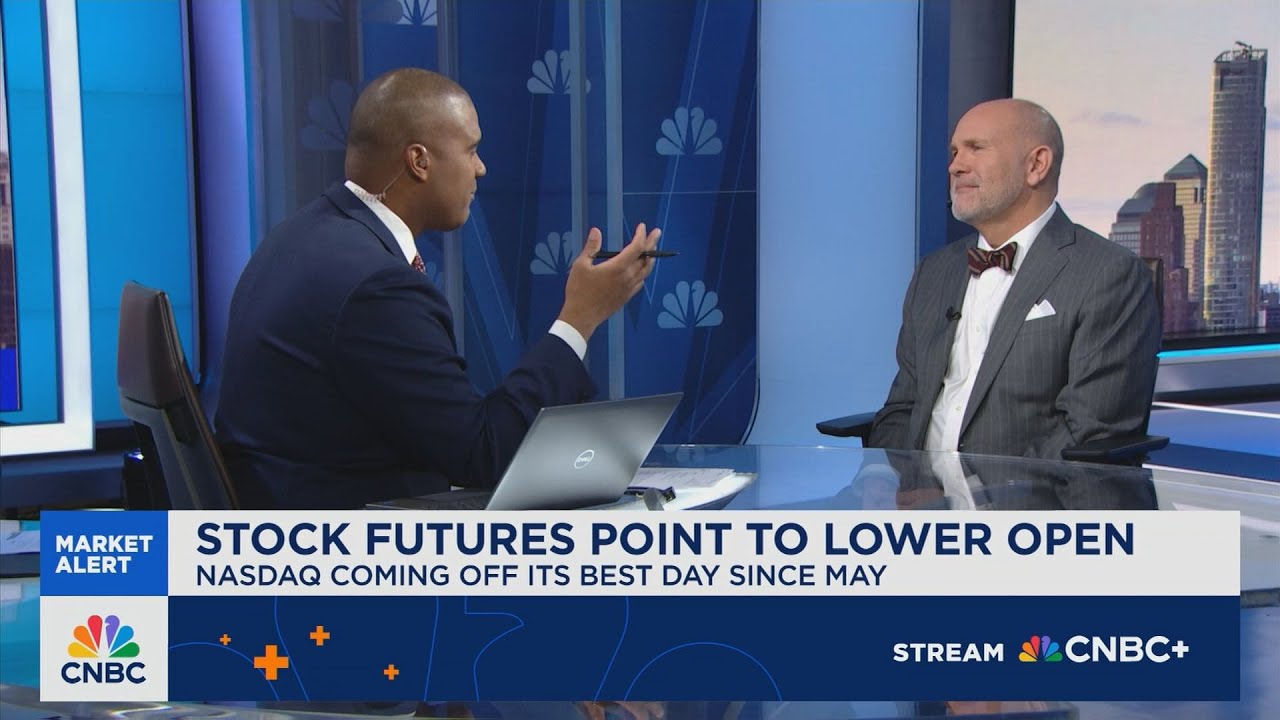
Malek's central thesis posits that the emergence of robust competition, even for established leaders like NVIDIA, signals a healthy and validated AI market. This isn't merely a speculative bubble; it is a burgeoning ecosystem where multiple players are vying for dominance, thereby strengthening the overall technological output. He emphasized that "this is just proof that we're in the springtime of this AI growth right now," suggesting that the current competitive pressures will ultimately lead to more sophisticated and diverse solutions, benefiting the entire industry. For VCs and founders, this implies that the market is expansive enough to support multiple successful ventures, provided they offer compelling innovation.
The conversation highlighted Alphabet's increasingly prominent role as a major AI player, challenging the previously concentrated focus on NVIDIA. Malek noted that investors, having been "micro-focused on maybe just a few companies on the top," are now recognizing that Alphabet possesses not only competitive AI solutions but also a "broader offerings as well." This realization is prompting a strategic "inter-sector rotation" among investors. The market is moving beyond a singular AI darling, diversifying capital into other large tech firms with substantial AI capabilities and a wider array of products. This shift underscores the importance for founders to articulate how their AI solutions integrate into larger platforms or ecosystems, rather than relying solely on breakthrough technology in isolation.
This broadening of investment focus extends beyond the immediate tech giants. While tech still presents the "greatest opportunity in terms of growth," Malek pointed to other sectors like healthcare, specifically MedTech and Pharma, as areas ripe for AI-driven expansion. However, he cautioned that growth opportunities outside of core technology can be more challenging to project, making them inherently riskier. "Most of the good stuff is already very rich," Malek observed, indicating that many obvious value plays have become "value traps" due to their already high valuations and less predictable future growth trajectories. This nuance is crucial for VCs evaluating investment proposals; a deep understanding of sector-specific growth drivers and realistic long-term projections is paramount.
Related Reading
- Alphabet's Vertical AI Dominance Threatens Nvidia-OpenAI Ecosystem
- The AMD Uprising and the Art of AI Engineering
- Alibaba's Qwen and the Geopolitics of AI Integration
The shift in investor sentiment reflects a desire for diversification and a hunt for more sustainable, albeit potentially less obvious, growth avenues. Investors are actively seeking companies that, while perhaps not yet at the forefront of the AI conversation, demonstrate clear potential to leverage AI for substantial long-term value creation. This necessitates a more discerning approach, moving beyond hype to fundamentals and tangible roadmaps.