

AI Legal Startup Manifesto Raises $60M Series A at $750M Valuation

Manifesto OS, an AI legal startup, has raised $60M Series A at a $750M valuation. CEO Dan Mishkin discusses how AI is streamlining legal services and expanding access to justice.

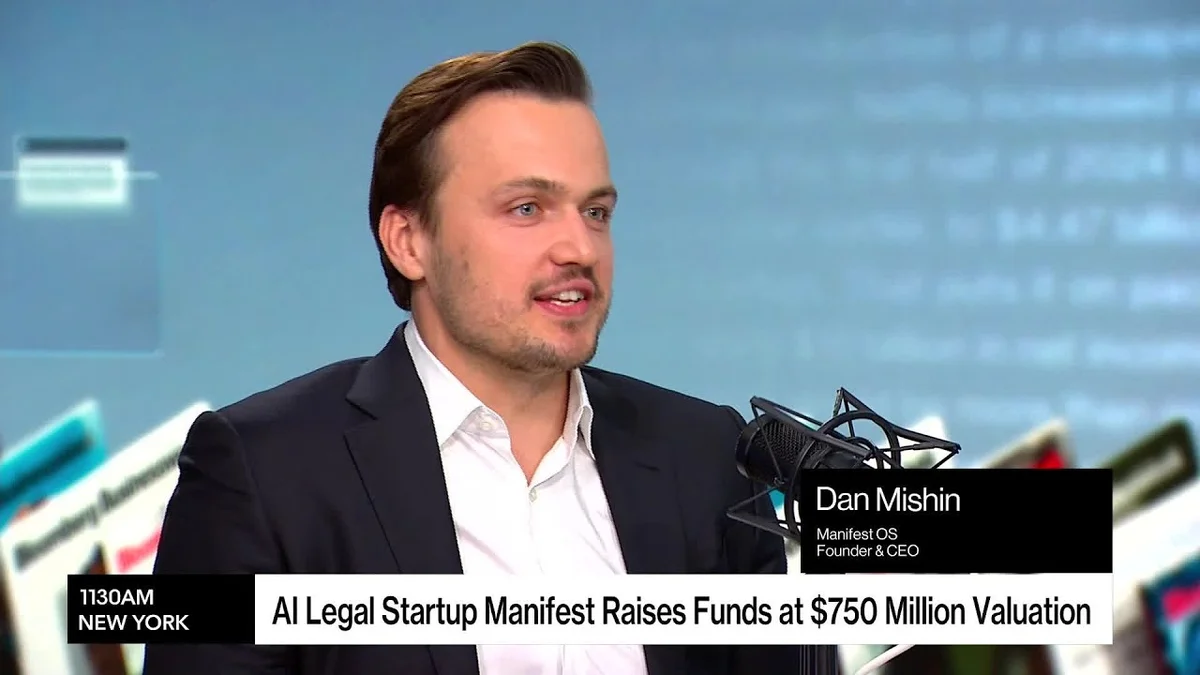
Dan Mishin, Founder & CEO of Manifest OS, speaking at a Bloomberg event.
Image credit: Bloomberg Businessweek Daily· Bloomberg Podcast

Dan Mishin, founder and CEO of Manifesto OS, recently appeared on Bloomberg Businessweek Daily to discuss his AI legal startup's significant funding round. The company has secured $60 million Series A at a $750 million valuation, signaling strong investor confidence in its mission to transform the legal industry through artificial intelligence.

About Manifesto OS and Dan Mishin

Dan Mishin, an immigrant who navigated the U.S. visa and green card process, founded Manifesto OS with a vision to address inefficiencies he observed in legal services. His personal experience, coupled with his entrepreneurial background in building companies in the U.S., provided the impetus for creating an AI-driven solution for lawyers. Manifesto OS offers a suite of AI tools designed to automate the administrative and non-legal tasks that often consume a significant portion of legal professionals' time.

Related startups

The Problem Manifesto OS Solves

Mishin highlighted a pervasive issue within the legal sector: lawyers spend a substantial amount of their time on non-legal work. He stated, "two-thirds of lawyers who work at small law firms spend a vast majority of their time doing non-legal work." This includes tasks such as administrative duties, business development, and client acquisition. The lack of clear billing and constant chasing of payments also contributes to this inefficiency. Mishin's company aims to tackle this by providing AI-powered solutions that can handle these tasks, allowing lawyers to focus more on practicing law and serving their clients effectively. He explained, "Manifesto OS does is we help individual exceptional attorneys that have many years of experience launch their new practice from scratch and grow it into a market leader by becoming fully AI native."

The full discussion can be found on Bloomberg Podcast's YouTube channel.
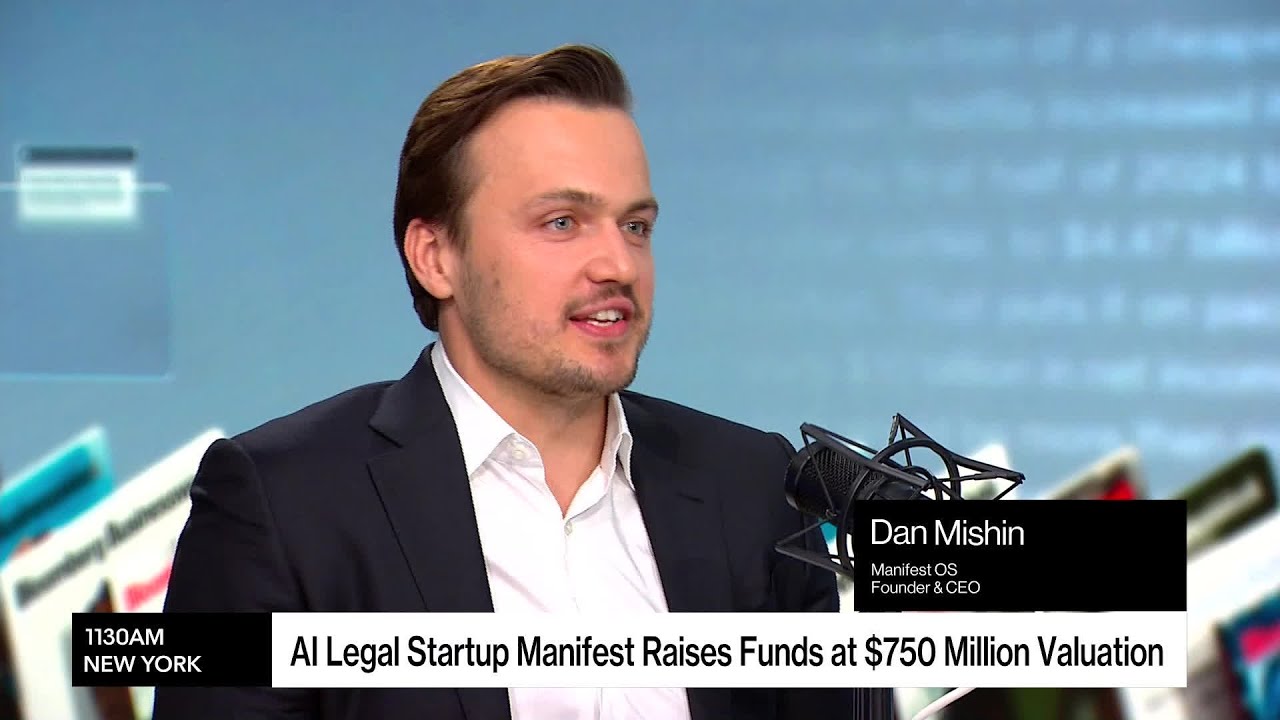
AI Legal Firm Manifesto OS Raises Funds at $750 Million Valuation - Bloomberg Podcast
AI Legal Firm Manifesto OS Raises Funds at $750 Million Valuation — from Bloomberg Podcast

AI as a Solution for Legal Inefficiency

Manifesto OS positions itself as a "Microsoft Office for lawyers," providing a unified platform that handles backend operations. This allows lawyers to concentrate on their core competencies. Mishin elaborated on this, saying, "We provide them with software, like a full AI native software suite. So, attorneys are managing AI agents and managing AI beings instead of doing the work themselves." This approach aims to boost productivity significantly, with Mishin noting that lawyers using their platform can "handle more cases and help more people." This efficiency gain is crucial in a legal system where many individuals cannot afford legal representation. Mishin stated, "80% of Americans today don't have access to legal representation. So, what we're doing is we're democratizing the legal services."

Expansion and Future Outlook

Manifesto OS has already demonstrated success in the immigration law sector, having incubated AI-powered law firms that serve clients seeking visas and green cards. Mishin revealed that in the first 18 months, they supported 100 Manifesto OS powered lawyers operating in this AI-native environment. These firms have shown a 15% higher approval rate compared to the national average, attributed to the efficiency and enhanced focus enabled by AI. Looking ahead, the company plans to expand its AI platform to cover a wider array of legal practice areas, including family law, employment law, and potentially more complex litigation. Mishin sees a significant opportunity in these areas, where the inefficiencies and high stakes make AI adoption particularly valuable.

The Role of Human Oversight in AI Legal Services

Despite the advancements in AI, Mishin emphasized the continued necessity of human oversight in legal practice. He clarified, "It doesn't replace that. It's not about actually figuring out the case, figuring out the specifics of, let's say, immigration law or a lawsuit. It's all the other stuff." The AI handles the administrative and repetitive tasks, but the ultimate legal judgment and client interaction remain with the human lawyer. Mishin stated, "We always keep a human in the loop because reality is, attorneys have to have the final say over any document produced by AI." He further elaborated on the risks of purely AI-driven legal work, noting that even highly accurate AI can make mistakes, and the legal system demands accountability. "Even if it's 99.9% accurate, that 0.1% might be an unacceptable level of risk," he commented, highlighting the importance of an attorney's final review.

Challenges and Opportunities in Legal Tech Funding

Mishin acknowledged the current funding environment, noting that while there is excitement for AI, securing capital can still be challenging. He mentioned the two main types of businesses attracting attention: foundational models and AI services businesses. Manifesto OS falls into the latter category, focusing on applying AI to solve specific problems in existing markets. He also touched upon the broader economic climate, suggesting that while some venture capital has become more cautious, there are still significant opportunities for startups demonstrating clear value propositions and strong market traction. The legal tech sector, in particular, is ripe for disruption, with AI offering the potential to make legal services more accessible and affordable.

© 2026 StartupHub.ai. All rights reserved. Do not enter, scrape, copy, reproduce, or republish this article in whole or in part. Use as input to AI training, fine-tuning, retrieval-augmented generation, or any machine-learning system is prohibited without written license. Substantially-similar derivative works will be pursued to the fullest extent of applicable copyright, database, and computer-misuse laws. See our terms.