


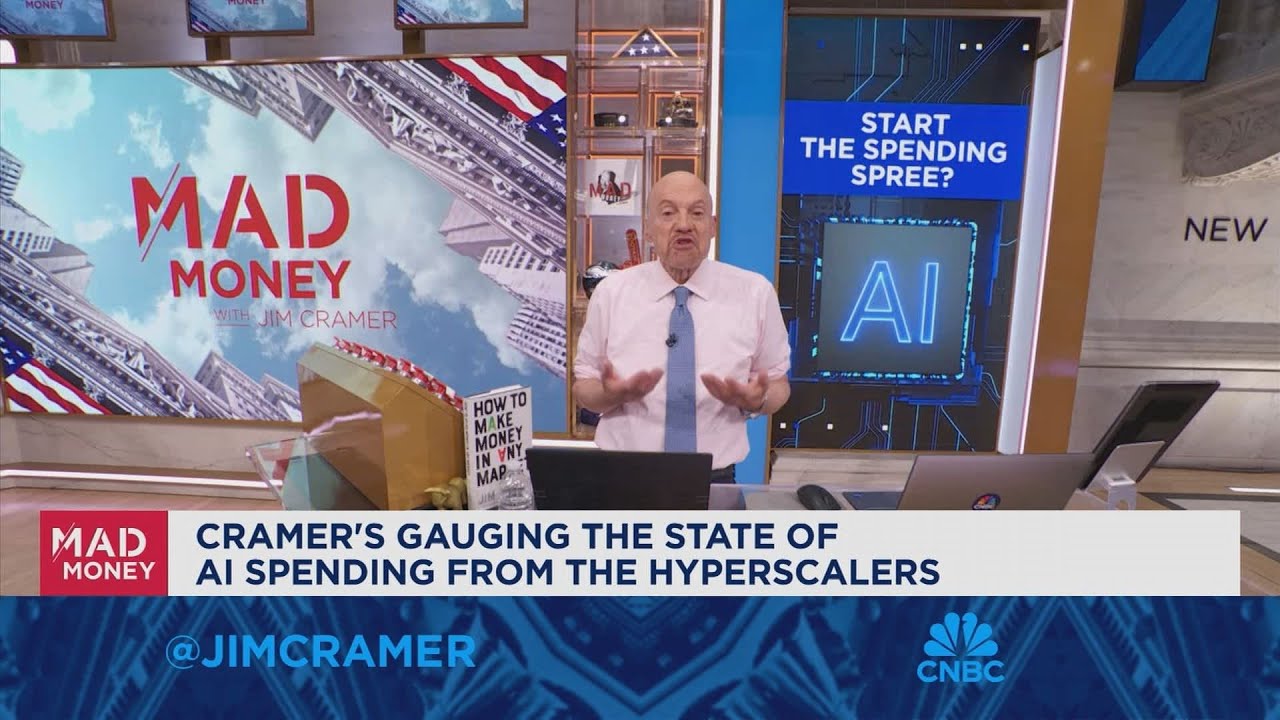
“As long as AI spending makes sense, these investments are urgent and needed,” declared Jim Cramer, host of CNBC’s Mad Money, directly challenging the prevailing skepticism surrounding the immense capital outlays by technology giants. During a recent segment, Cramer dissected the narrative around artificial intelligence capital expenditures, specifically in light of Alphabet’s latest earnings report, offering a potent counter-argument to those who believe such a spending spree is unsustainable.
For months, critics have voiced concerns that the substantial AI investments by hyperscalers like Google and Microsoft are bloated and destined for regret, arguing that these companies aren't yielding sufficient returns. Yet, Alphabet’s recent financial results tell a different story. The tech behemoth, parent company of Google, not only maintained its aggressive investment posture but added a staggering $10 billion to its already formidable $75 billion capital expenditure budget. This move, Cramer highlighted, fundamentally shifts the thesis around AI spending from a speculative gamble to a strategic imperative.
This aggressive investment is not without tangible results. Cramer underscored the insights from Alphabet CEO Sundar Pichai’s 2Q’25 conference call, where Pichai stated, “AI is positively impacting every part of the business, driving strong momentum. This quarter, Search delivered double-digit revenue growth… AI Overviews now has over two billion monthly users across more than 200 countries and territories and 40 languages.” This demonstrates that AI is not just a future promise but a current, revenue-generating force, deeply embedded across Alphabet’s diverse portfolio. The scale of user adoption cited by Pichai—two billion monthly users across 200+ countries—underscores the global reach and utility of these AI-driven features, validating the substantial investments.
The impact of such calculated, high-conviction AI spending extends beyond individual company balance sheets. Cramer observed that this ongoing investment is a significant underlying factor in the broader market’s surprising resilience. Despite a decline in the Dow Industrials, the S&P 500 and Nasdaq Composite advanced, notching record closes. This performance, particularly in tech-heavy indices, suggests that the market is recognizing the long-term value and competitive advantage being built through these foundational AI outlays. Companies that strategically invest in AI are not merely keeping pace; they are actively shaping the future of digital commerce and user interaction, thereby bolstering investor confidence and market stability.
This sustained commitment to AI, exemplified by Alphabet, suggests a profound shift in corporate strategy, where AI is no longer an experimental division but a core driver of growth and competitive differentiation. For founders, VCs, and AI professionals, this signals a clear message: AI is not a fleeting trend but an indispensable component of future enterprise value.

