


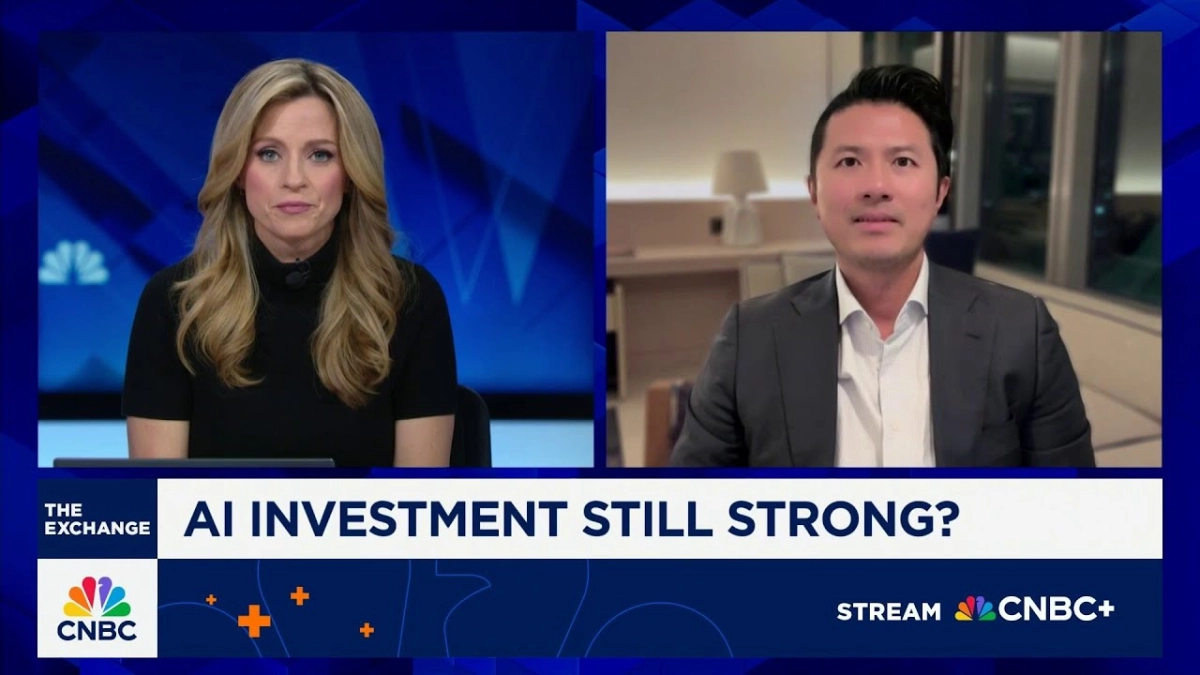
The current surge in artificial intelligence is not merely a fleeting trend but an "absolute imperative investment," according to Tony Wang, T. Rowe Price Science & Technology Fund Manager. Speaking with an interviewer on CNBC's "The Exchange," Wang articulated a nuanced yet decidedly optimistic outlook on the AI sector, emphasizing its foundational elements and long-term growth trajectory amidst burgeoning interest and rising valuations. His commentary focused on the enduring potential of generative AI, the critical infrastructure supporting it, and the strategic plays for investors in this evolving landscape.
Wang posits that the AI revolution is still in its nascent stages, an early point in the S-curve of adoption, suggesting significant runway for growth. He notes that companies across the board are not easing their investment in AI, recognizing its transformative power. This sustained commitment is fueled by the promise of enhanced productivity and the emergence of novel use cases that were unimaginable just a few years ago.
A core insight from Wang is the pivotal role of underlying hardware. He states unequivocally that "the compute platforms are going to continue to be the building blocks of the technology." This highlights the indispensability of companies like Nvidia, which provide the essential processing power for complex AI models. Beyond the processing units themselves, the memory and storage components are also seeing increased demand. Wang points out emerging bottlenecks in NAND and DRAM, driven by the need to store vast quantities of both real-world and synthetic data. The consolidation within the NAND industry, for example, creates unique investment opportunities within this critical infrastructure layer.
The financial viability of AI infrastructure is another key area of analysis. Wang shifts the focus from merely acquiring GPUs to understanding their profitability. He delves into the unit economics, asking, "How much profit can you get from each GPU? Are the tokens profitable?" He estimates the useful life of a GPU to be five to six years, significantly longer than a typical three-year depreciation schedule, during which time these assets generate substantial profit. This perspective suggests that the initial capital expenditure, while considerable, is justified by sustained returns, making investments in GPU infrastructure more self-sustaining over time.
Related Reading
- Anthropic announces $50B nationwide AI infrastructure buildout
- AMD CEO Lisa Su: AI Investment is "The Right Gamble" in a Trillion-Dollar Market
Beyond the hardware, Wang identifies companies that are mastering the application of AI as crucial players. He cites Palantir as an example, noting, "Palantir, for example, they're really at the leading edge of implementing AI for companies." These firms provide critical ontologies, enabling clients to seamlessly integrate and leverage AI with their existing data, thus unlocking immense value and driving productivity gains. This represents a paradigm shift where companies are not just consuming AI but actively deploying it to transform their operations.
Addressing concerns about current valuations for high-performing AI stocks like Palantir and AMD, Wang maintains that the sector is still in an early investment cycle. While acknowledging some pullbacks, he underscores the exponential growth of the market and the strategic positioning of companies like AMD, particularly with their developments in collaboration with entities like OpenAI. This strengthens their market segment and positions them for continued expansion as the AI ecosystem matures. The overarching message is that while volatility may persist, the fundamental drivers and long-term potential for AI investment remain robust.

