
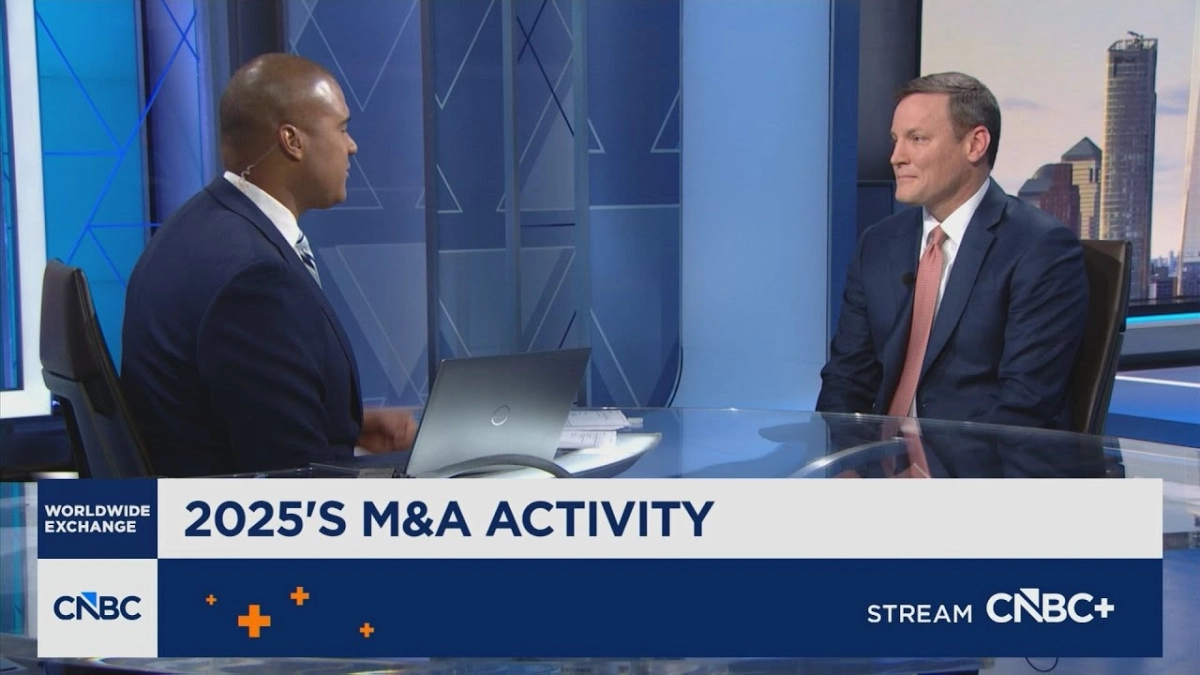
Nearly a quarter of megadeals this year were AI-driven, a stark indicator of artificial intelligence's transformative power in the M&A landscape. This trend, highlighted by Paul Griggs, U.S. Senior Partner at PwC, during his recent interview with Frank Holland on CNBC's Worldwide Exchange, underscores a pivotal shift where strategic positioning and technological advancement are paramount. The conversation dissected the surging M&A activity of 2025 and offered a forward-looking perspective on 2026, emphasizing AI's central role and the disciplined yet active approach of private equity.
While the overall M&A deal volume saw a modest 2% increase, the dollar value of these transactions surged by an impressive 45%. This divergence signifies a market prioritizing fewer, but substantially larger, strategic acquisitions. Griggs pointed out that 2025 has been "a huge deal for megadeals. Take the US alone, we had nearly 75 megadeals done in the US," representing a "2x multiple" compared to prior periods. This indicates a strategic imperative for companies to scale platforms, build capabilities, and secure advantageous market positions, rather than simply pursuing a high volume of smaller deals.
Artificial intelligence is at the heart of this megadeal phenomenon. Despite an initial perception that 20% of megadeals being AI-driven might seem low, Griggs quickly clarified its profound impact, stating that "AI is on the balance sheet at this point in time, and I expect that to continue in 2026." This isn't merely about acquiring AI startups; it’s about established corporations integrating AI capabilities directly into their core operations, viewing it as a fundamental asset for future growth and efficiency. The expectation of tangible returns from AI investments is now a key driver for these substantial transactions.
The M&A activity in 2026 is expected to be largely powered by three key sectors: AI and technology, healthcare (specifically MedTech), and industrials. In healthcare, AI integration is accelerating point-of-care delivery and expediting drug discovery processes. For industrials, AI is fueling the demand for energy, driving electrification initiatives, and advancing automation across various segments. "I expect all three of those sectors to see a reasonable deal cycle in 2026," Griggs affirmed, underscoring the broad applicability and value-creation potential of AI across diverse industries.
Private equity firms, often characterized by their "loads of dry powder," are approaching the market with a measured discipline. Their activity in 2026 will hinge on several macroeconomic factors: sustained strong corporate earnings, a robust labor market, reasonable interest rates, and stable trade policies. If these conditions align, private equity will be active, but their investments will be highly targeted, focusing on deals that offer clear pathways to value creation rather than speculative plays. This selectivity reflects a mature market where capital deployment is strategic, aiming for predictable and substantial returns.
The current M&A landscape is a testament to the ongoing revaluation of corporate assets in the face of rapid technological advancement. The emphasis on larger, strategically significant deals, particularly those leveraging AI, suggests a market focused on long-term competitive advantage. Companies are not just buying technology; they are buying future capabilities. This strategic outlook is reshaping how capital is deployed and how growth is pursued across the global economy.