


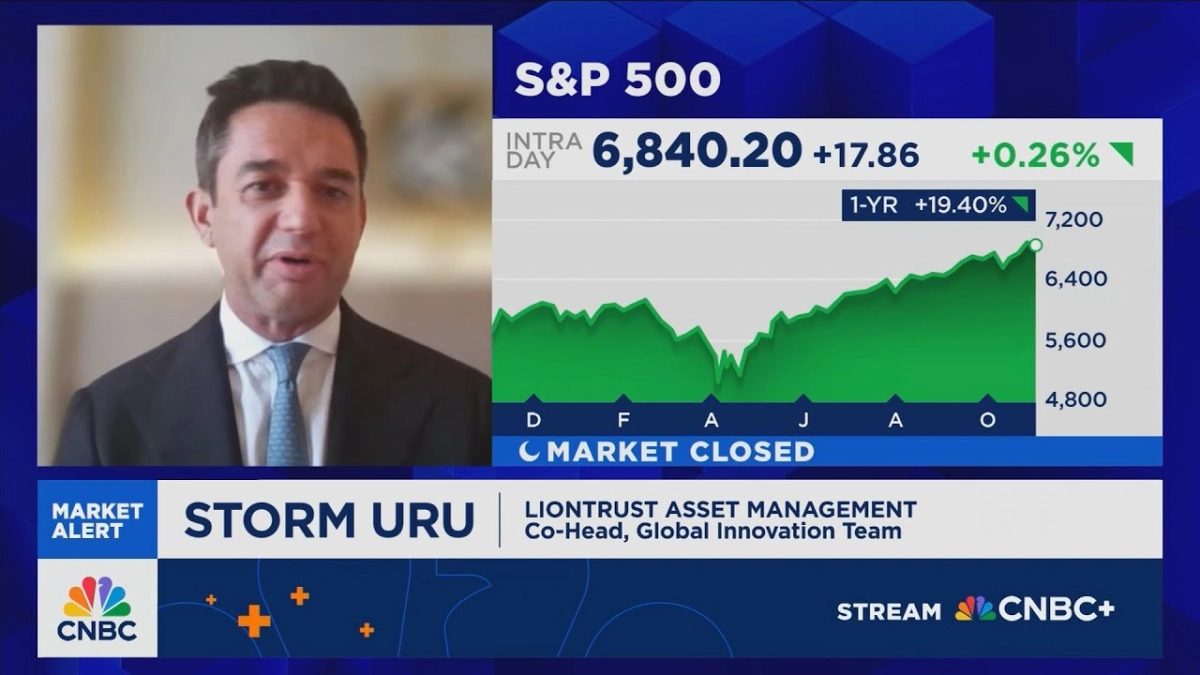
The current market environment is witnessing the emergence of an "AI flywheel" that is starting to operate in a meaningful way, propelling significant capital expenditure and driving a broader market "melt-up." This powerful dynamic, characterized by decreasing compute costs fueling new AI applications, which in turn attract more capital and further reduce compute expenses, is creating a self-reinforcing cycle of growth. This insight comes from Storm Uru, Co-Head of the Global Innovation Team at Liontrust Asset Management, who recently shared his perspective with CNBC on the underlying forces shaping today's investment landscape.
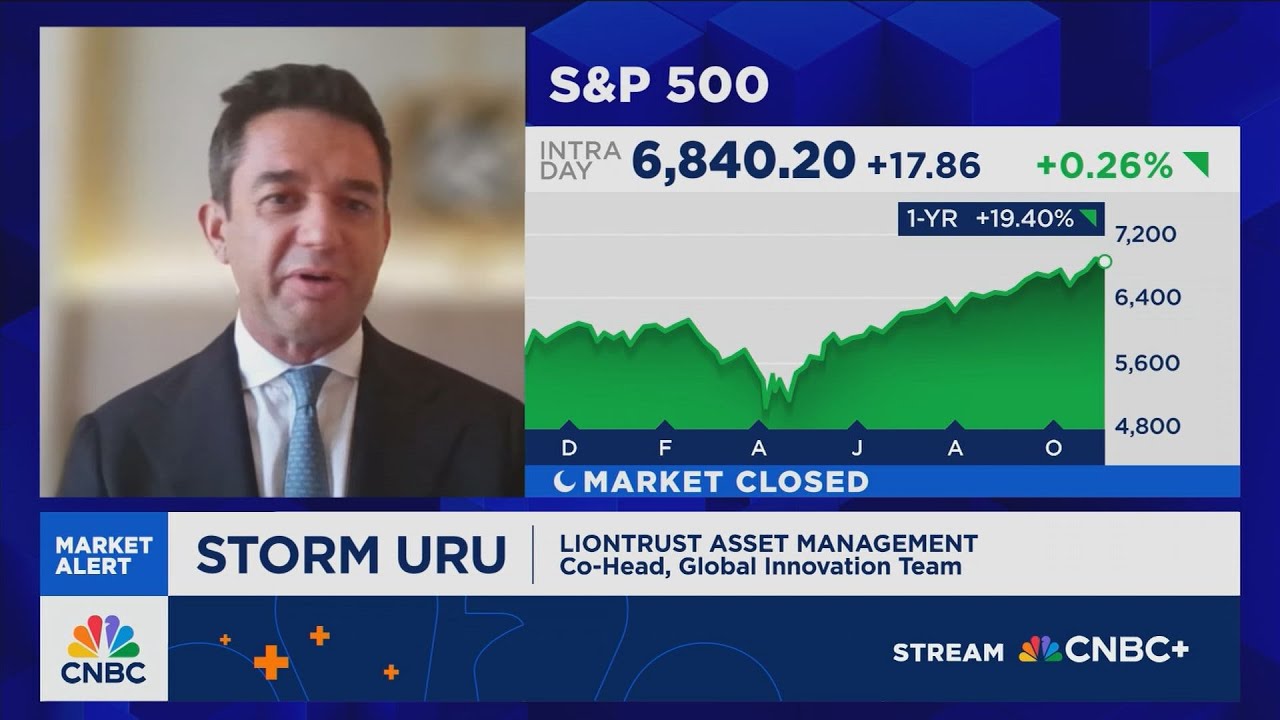
Uru's commentary on CNBC highlighted a year of robust stock market returns, supported by a confluence of favorable macroeconomic factors: a lower U.S. dollar, declining yields, and easing energy prices. These broad trends, combined with individual companies reporting strong productivity improvements, contribute to what he describes as a "melt-up environment." The narrative extends beyond mere market buoyancy, however, delving into the structural shifts driven by artificial intelligence.
A core tenet of Uru’s analysis centers on the massive capital expenditure by hyperscalers. He pointed to the aggregate $101 billion in quarterly spending by tech giants like Amazon, Alphabet, Microsoft, Meta, and Apple, noting that these significant investments are not merely speculative but are foundational to scaling AI infrastructure. This colossal deployment of capital into compute resources is a direct manifestation of the AI flywheel in action, creating both supply and demand for the foundational elements of the AI revolution.
While acknowledging the current concentration of market activity within the AI sector, Uru remains optimistic about the broader market implications. The interviewer raised concerns about the underperformance of equal-weight and dividend-paying stocks compared to the tech-heavy momentum plays, questioning if such concentration posed a risk. Uru conceded that "there’s no doubt we're seeing pockets of excesses in certain areas." His firm, however, maintains a disciplined focus on companies where "the fundamentals are keeping up the stock prices," suggesting a discerning approach rather than broad-brush enthusiasm.
Beyond the immediate AI beneficiaries, Uru identified nascent opportunities emerging from these technological shifts. He specifically highlighted areas like quantum computing as a segment where momentum is building, promising significant upside for companies that can "continue to deliver and execute on quantum promise" over the next decade or more. This long-term perspective suggests that the AI revolution is still in its early innings, with profound implications yet to unfold across various sectors.
The insatiable demand for energy to power advanced AI compute and quantum systems creates a unique investment opportunity, even in sectors not traditionally considered "tech." Uru presented Brookfield Renewable Partners (BEP) as a compelling pick, noting that it has "really missed out on the AI trade in the last two years" despite its critical role. Brookfield's extensive infrastructure footprint, encompassing hydro, solar, and wind assets, positions it as a foundational provider of the clean energy required for the burgeoning AI ecosystem. The company also holds a significant stake in Westinghouse Electric, further diversifying its energy portfolio.
Related Reading
- Sphinx AI: Reshaping Data Science with Agentic Co-pilots for Real-World Problems
- Python SDK and AI Agents Redefine Data Pipeline Automation
- Stripe's AI Backbone: Powering the Agent Economy with Financial Infrastructure
This focus on underlying infrastructure, particularly renewable energy, underscores a critical bottleneck and opportunity within the AI expansion. As AI models become more complex and widespread, their energy consumption will escalate dramatically. Companies like Brookfield Renewable Partners, with their robust and diversified renewable energy generation capabilities, are poised to become indispensable partners in sustaining the AI flywheel. Their current valuation, coupled with a roughly 5% dividend yield, presents an attractive entry point for investors looking to capitalize on the indirect, yet essential, beneficiaries of the AI boom.
The overall sentiment conveyed by Uru is one of transformative growth, underpinned by a dynamic interplay between technological advancement and strategic capital allocation. While acknowledging the potential for localized excesses, the overarching thesis points to a sustainable, long-term expansion driven by the AI flywheel, creating opportunities across the technology stack and its supporting infrastructure.

