


• StartupHub.ai
    StartupHub.aiAI Intelligence
Discover
  • Home
  • Search
  • Trending
  • News
Intelligence
  • Market Analysis
  • Comparison
  • Market Map
Workspace
  • Email Validator
  • Pricing
Company
  • About
  • Editorial
  • Terms
  • Privacy
  • v1.0.0
  1. Home
  2. News
  3. Ai Disruption Forces Legacy Companies To Buy Or Die Bessemer Partner Warns
Back to News
Ai video

AI Disruption Forces Legacy Companies to Buy or Die Bessemer Partner Warns

S
StartupHub Team
Jan 23 at 7:23 PM5 min read
AI Disruption Forces Legacy Companies to Buy or Die Bessemer Partner Warns

"Insurance, healthcare, accounting, legal. They're about to get blown up." This stark pronouncement from Byron Deeter, Partner at Bessemer Venture Partners, cuts through the typical cautious language of venture capital, signaling a seismic shift already underway in some of the global economy's most entrenched, data-intensive industries. Deeter’s analysis suggests that for legacy incumbents in these sectors, artificial intelligence is not merely an efficiency tool; it is an existential threat demanding immediate, drastic strategic response.

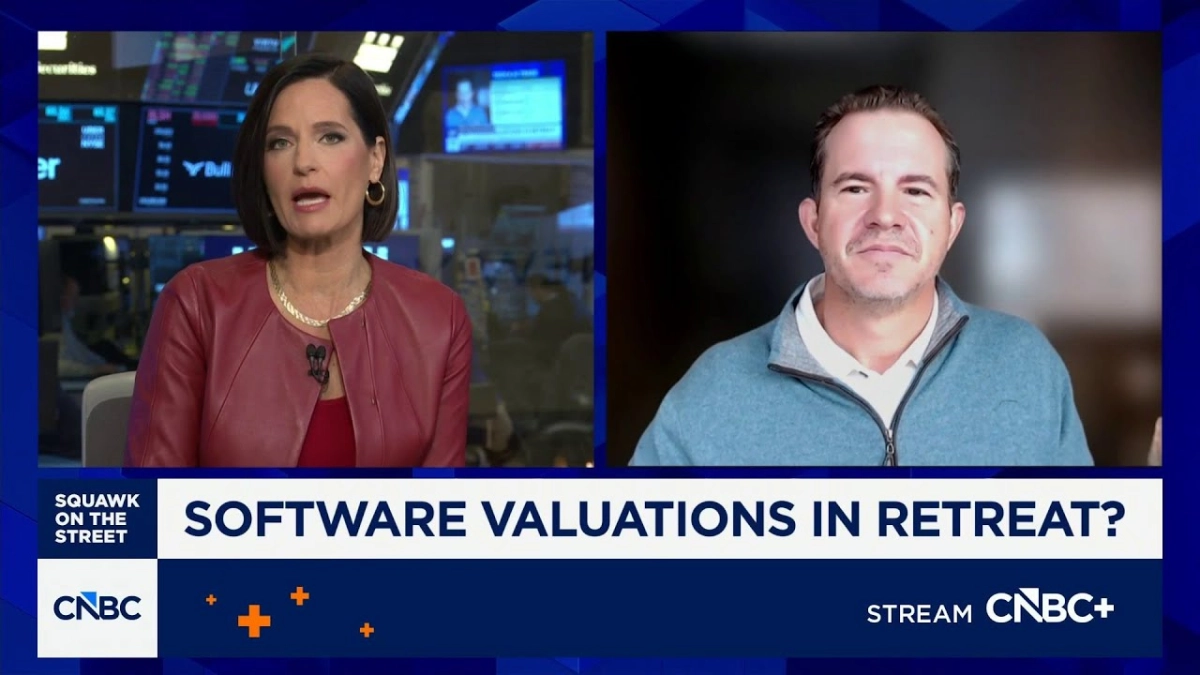
Byron Deeter, Partner at Bessemer Venture Partners, spoke with CNBC’s Squawk on the Street anchors regarding the immediate impact of generative AI on software valuations and the necessity of AI-driven mergers and acquisitions (M&A) for legacy incumbents. His commentary centered on the profound, rapid reallocation of economic value currently challenging traditional business models across finance and professional services. The core thesis is simple: industries built on complex, data-driven decision-making—which have historically enjoyed high economic rents due to information asymmetry and operational complexity—are now the most vulnerable targets for AI optimization.

The insurance sector provides a textbook example. As Deeter noted, the industry is a legacy business whose incumbents are struggling to integrate AI capabilities into core functions like underwriting and claims processing. The recent announcement of Travelers partnering with Anthropic underscores this urgency. Large carriers recognize that the traditional competitive moat—scale—is rapidly eroding against new challengers capable of leveraging massive datasets and advanced AI engines. The speed at which AI can parse complex risk profiles and automate decision-making creates a competitive disparity that legacy systems simply cannot match. "We think there's going to be massive disruption there, and there will be a reallocation of that economic rent," Deeter explained, emphasizing that AI provides a "perfect use case" for transforming these data-intensive decisions. This efficiency gain, even at the margins, quickly translates into superior pricing, better risk management, and ultimately, market dominance.

This dynamic is creating an imperative for incumbents: they must either build internal AI capabilities at breakneck speed or acquire them. For many large, publicly traded companies, the former is proving too slow. Their internal innovation cycles are often choked by bureaucratic inertia, technical debt, and a culture resistant to true platform overhaul. This inability to move fast enough in the face of a generational technological shift is the primary catalyst driving the expected surge in AI-driven M&A.

Deeter views the acquisition strategy as a necessity, not a luxury, for established players. These legacy vendors, despite potentially sitting on large piles of cash, often lack the internal speed required to compete with nimble, AI-native startups. "It’s an essential part of the legacy vendor play right now because they can't innovate fast enough," he asserted. This isn't just about bolstering R&D; it’s about survival. When the speed of innovation dictates who captures the economic value, buying proven technology and talent becomes the only viable path to close the widening gap. The recent flurry of major tech acquisitions, such as Nvidia’s reported interest in Groq or Google’s deals, highlights that this strategy is already in play among the largest players, setting a precedent for enterprise software and financial services.

The valuation compression seen across the broader software market, while painful for some, is inextricably linked to the AI transition. Investors are now aggressively differentiating between companies that merely talk about AI and those that are fundamentally built around it. Software companies whose core value proposition is easily replicated or enhanced by generative AI are seeing their multiples contract, while those providing foundational AI infrastructure, models, or highly defensible domain-specific applications are seeing explosive growth. This valuation bifurcation reinforces the M&A thesis: incumbents must buy the winners before the cost of entry becomes prohibitive, or before the competitive advantage offered by the target company translates into irreversible market share loss.

Deeter characterized the current transition as far more rapid and powerful than past technological shifts, offering a sobering comparison for those who might underestimate its pace. He cautioned that this AI wave is the "cloud wave all over again, but 10x bigger and probably 3x faster." This acceleration means that the window for strategic response is alarmingly narrow. The cloud transition took years, allowing many established companies time to migrate and adapt. The speed of AI adoption, however, compresses that timeline dramatically, forcing immediate, high-stakes decisions.

The implication for founders in the AI space is clear: focus on solving high-value, data-intensive problems within legacy sectors. The demand for transformative technology in areas like insurance underwriting, legal discovery, and specialized healthcare diagnostics is immense and backed by large corporate balance sheets desperate for a lifeline. For incumbents, the message is unequivocal: the time for incremental change is over. The pressure to consolidate and integrate AI capabilities is non-negotiable, and those who fail to embrace the "build and buy" strategy will inevitably be left behind. Those who don't respond, Deeter concluded, "are going to die because this disruption is just completely rolling through the industry." The market is entering a phase where technological adoption is synonymous with organizational survival.

#AI
#Artificial Intelligence
#Insurance companies will
#Technology

AI Daily Digest

Get the most important AI news daily.

GoogleSequoiaOpenAIa16z
+40k readers