

AI data privacy is now opt-out by default

Axios' Ina Fried says AI labs flipped to opt-out data sharing, with training, memory and ads now governed by fine print most users never read.

Illustration of AI privacy fine print and data sharing toggles for chatbots
Axios' latest What They Know About You tracks AI training and memory policies· Pioneers of AI
Contents(3)

Axios chief technology correspondent Ina Fried is back with the third run of What They Know About You, and her warning is blunt: AI data privacy now defaults to opt-out, not opt-in. Speaking on Pioneers of AI, she said AI platforms are quietly making data sharing the default for training future models.

StartupHub data

Companies working on this

Profiles of the companies named in this story, with funding and a one-liner from our database.

OpenAI
Private / $100B+ est
OpenAI is an AI research and deployment company dedicated to ensuring that artificial general intelligence benefits all of humanity.

Anthropic
Private / $100B+ est
Anthropic is an AI safety and research company building reliable, interpretable, and steerable AI systems, best known for the Claude family of models.

OpenAI
$190.6B
An AI research and deployment company building safe and beneficial artificial general intelligence.

Apple
$6.2B
Global technology leader in consumer electronics, software, and online services.

The series started in 2019 tracking what Google, Apple and Facebook collected, then pivoted in 2024 to what AI companies use to train systems. Now Fried argues the risk is not just training.
It is what a superhuman, persuasive system could do when it holds your health notes, insecurities and finances.

The full discussion can be found on Pioneers of AI's YouTube channel.

We read the AI fine print, so you don’t have to (with Axios’ Ina Fried) - Pioneers of AI
We read the AI fine print, so you don’t have to (with Axios’ Ina Fried), from Pioneers of AI

She points to ChatGPT as the clearest example. Paid users can disable training on their data, health data in the ChatGPT Health experience is not used for training, and temporary chat leaves no memory. Free and low-tier paid users already see ads.

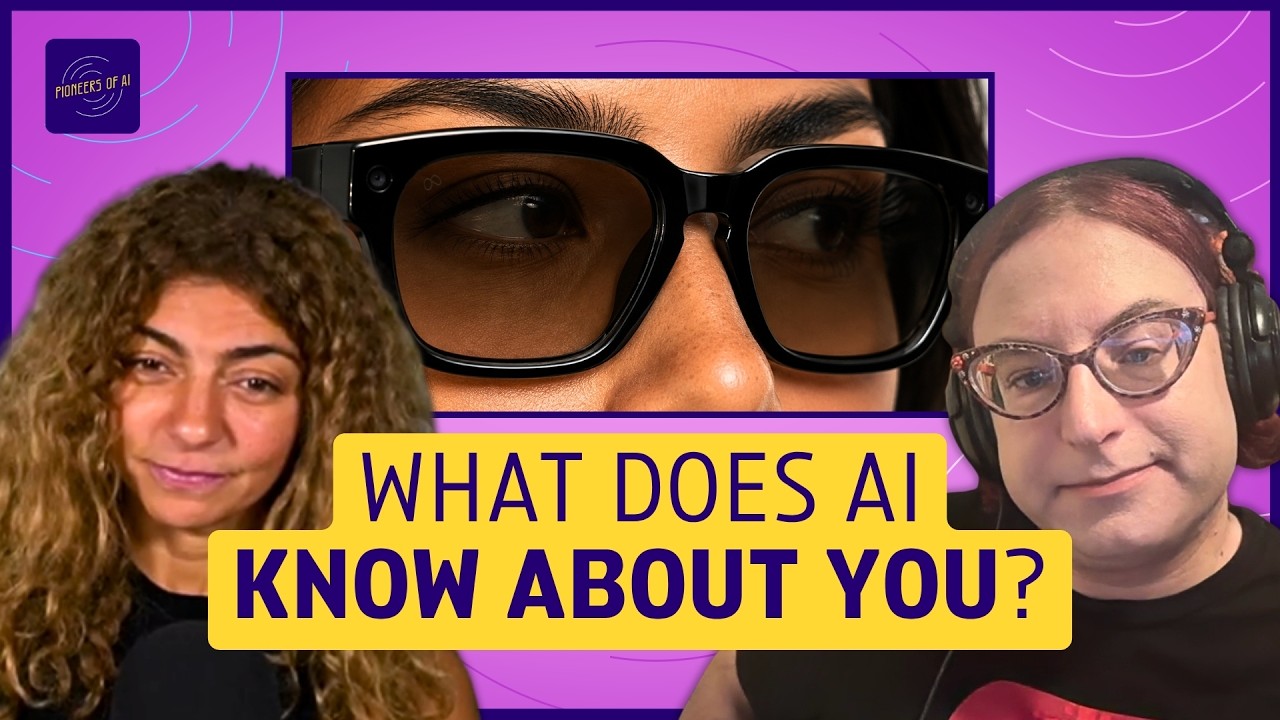
Meta sits at the opposite end. Ask its AI about a photo taken on Ray-Ban Meta glasses and the entire image becomes usable for training and ad targeting, Fried said. Apple is the outlier on architecture, processing Apple Intelligence queries in a way that is not stored or linked to you, though its models have lagged.

Google is the most fragmented case. Uploading an image to Search can now be used for training, while Pixel or Nest hardware carries different policies than the same Google service elsewhere.

Anthropic draws a hard line on incentives: no advertising for Claude, which Fried frames as keeping the assistant aligned to the user.

Why the default matters for startups

The default matters more than the principle. Fried notes most people will not toggle settings or finish reading terms that function as a land grab.

For builders that means an opening for privacy by design. On-device memory, project-scoped recall and explicit per-data-type toggles are not just compliance features, they are trust features as models get more persuasive and retentive.

What the reporting still leaves out

Fried is clear on what policies claim today, but not on enforcement, retention after deletion requests, or what happens if a model provider is acquired or goes bankrupt. That is where data sold to the highest bidder becomes real risk.

She also flags that incentives change. A system built to help you today becomes a system incentivized to keep you scrolling tomorrow once ads fund it.

A StartupHub takeaway: startups competing against OpenAI and Google should not copy their defaults. Offer paid, no-train tiers and incognito by default for sensitive surfaces, then make the trade-off explicit.

She has not connected her own finances or health records to chatbots, and she reuses temporary chats for health queries. That constraint is telling.

© 2026 StartupHub.ai. All rights reserved. You may not republish this article in full without a license. Search engines and AI research tools may crawl and summarize for reference. Bulk reproduction or model training requires a license. See our terms.
Daniel Singer

Written by

Daniel Singer

Editor, StartupHub.ai

Daniel Singer is the editor of StartupHub.ai, a technology expert and thought leader on AI and its applications across sectors, from fintech and healthcare to developer tooling and consumer software. He writes and tests the tools covered here thoroughly and regularly, and built StartupHub.ai to give founders, operators and buyers a clearer read on what they are actually being sold.

More from Daniel Singer