

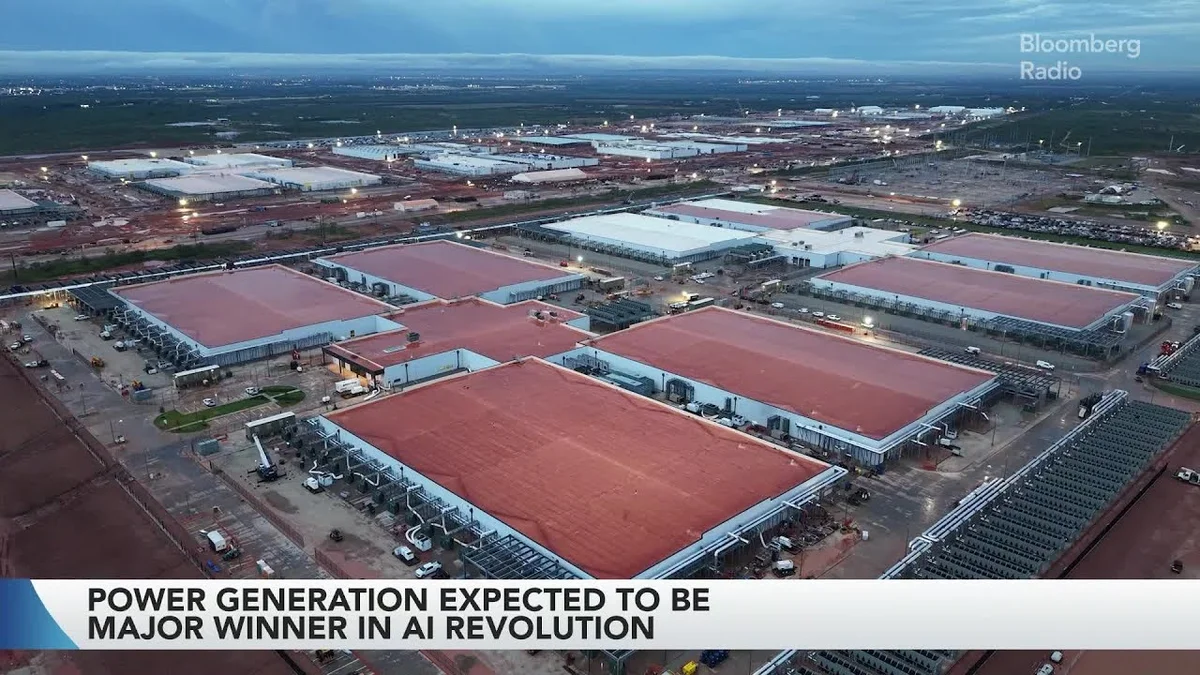
AI Data Centers Drive Power Generation Demand

Andrew Gilbert of Energy Capital Partners discusses the immense electricity demand from AI data centers and how it's impacting power generation strategies.

5 min read
AI Data Centers Drive Power Generation Demand
Bloomberg Podcast

The insatiable appetite of artificial intelligence for computing power is creating a significant and growing demand for electricity. This surge is reshaping the energy sector, pushing utilities to find new solutions to meet the needs of massive data centers. Andrew Gilbert, a partner at Energy Capital Partners, discussed this trend, highlighting the economic and logistical challenges involved.

Andrew Gilbert's Perspective

Andrew Gilbert, a partner at Energy Capital Partners, brings a wealth of experience in the energy investment sector. His firm focuses on the energy and power industries, giving him a unique vantage point on market dynamics and investment opportunities. Gilbert's insights are particularly valuable given his firm's deep understanding of the capital-intensive nature of energy infrastructure and the evolving technological demands placed upon it.

The AI Power Dilemma

Gilbert articulated a key challenge: the current reliance on natural gas for powering many new data centers. He stated, "In the US, we don't have to burn oil for electricity anymore. Natural gas is a huge advantage. We have more natural gas than many think and that's a big reason why our electricity prices are some of the lowest in the world." This abundance has made natural gas an attractive option for its immediate availability and cost-effectiveness.

The full discussion can be found on Bloomberg Podcast's YouTube channel.
Related startups

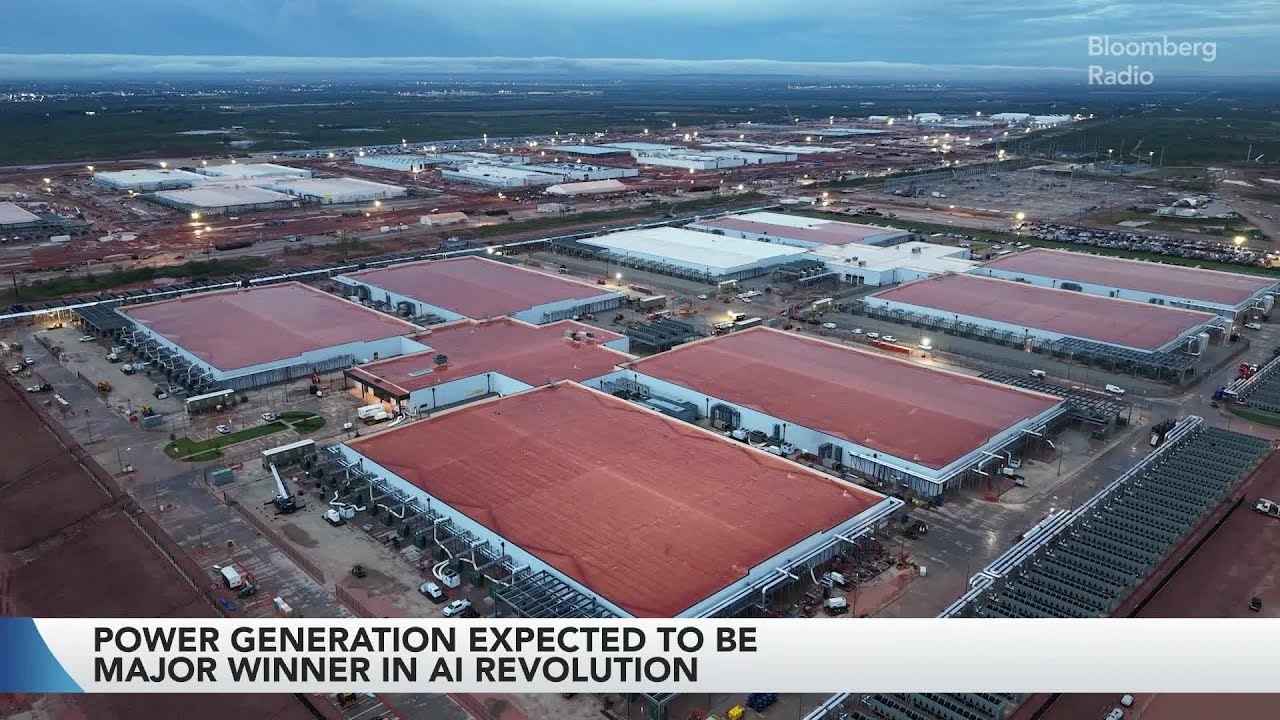
AI Data Center Boom Tests Buildout Limits, Power Supply - Bloomberg Podcast
AI Data Center Boom Tests Buildout Limits, Power Supply — from Bloomberg Podcast

However, Gilbert also pointed out the long-term implications. He explained, "The oil crisis does mean that for energy capital partners, electricity focused, and fortunately, in the US, we don't have to burn oil for electricity anymore. Natural gas is a huge advantage. We have more natural gas than many think and that's a big reason why our electricity prices are some of the lowest in the world." He further elaborated on the comparative costs, noting, "The cost of natural gas has gone from about $1,000 a kilowatt-hour four years ago to over $2,500 a kilowatt-hour today. Nuclear is well over $10,000 a kilowatt-hour, as best we know. And we really don't know what the cost of solar is going to be."

The Rise of Renewables and Nuclear

The conversation also touched upon the increasing viability of renewable energy sources, particularly solar power, for AI data centers. Gilbert highlighted, "We've seen new gas turbines have more than doubled and in a very short amount of time, it's nearly tripled in three or four years now. At that level, solar is the cheapest form of electricity today. It's intermittent, so it doesn't run around the clock, it's not exactly the same product, but it is really affordable today, even with tariffs and protectionist policies that are raising prices."

The difficulty in securing reliable, baseload power for AI is a significant hurdle. Gilbert suggested that nuclear power, despite its drawbacks, is being considered. "I think the solution to energy demand for AI data centers is going to be a combination of everything," he stated. "You want to build a data center, you've got to make promises and commitments to lower the cost of those wires over a rate base. So spread that cost over the new customers. And companies that now have gigawatt plus data centers to connect, they can double, you know, their rate base."

He further elaborated on the cost-effectiveness of different power sources. "Natural gas costs have gone from about $1,000 a megawatt-hour four years ago to over $2,500 a megawatt-hour today. Nuclear is well over $10,000 a megawatt-hour, as best we know. And we really don't know what the cost of solar is going to be." This comparison illustrates the current economic advantage of natural gas, but also the potential of solar to become more competitive.

The Utility Challenge

Gilbert stressed the pressure on utilities to adapt. "Utilities are going to be a major winner in the AI revolution, but they have to manage the pressure of people that are going to build data centers and have to make sure that they're not going to be able to get electricity for free or cheap," he noted. "And while you're building out, you've got to bring on more and more power generation, and you've got to expand the grid."

The sheer scale of AI data centers means they are becoming a significant portion of a utility's customer base. "The scale of the city," Gilbert observed, "was a bit of a shock. The diversity of the classmates... was a bit of a shock." He continued, "We're looking at a situation where, you know, some of the biggest customers that we have are the hyperscalers, the Googles and the Amazons of the world. And they're building these massive complexes."

He also highlighted the financial implications for utilities and their existing customers. "The cost of electricity for the consumer is going to go up," Gilbert predicted. "The utilities are going to be in a position to pass those costs on. And I think that's a legitimate part of the solution."

The Future of AI Power

The discussion concluded with a look towards the future. Gilbert suggested that the massive power demands of AI will necessitate a diversified approach to energy generation. "You've got to build a data center, you've got to make promises and commitments to lower the cost of those wires over a rate base," he stated. "So spread that cost over the new customers. And companies that now have gigawatt plus data centers to connect, they can double, you know, their rate base."

He added, "And while you're building out, you've got to bring on more and more power generation, and you've got to expand the grid." This indicates a significant investment period ahead for the energy sector to keep pace with AI development.

Gilbert's insights suggest that while natural gas offers immediate benefits, the long-term strategy for powering AI will likely involve a significant shift towards more sustainable and scalable energy sources like solar and potentially nuclear power, with utilities playing a pivotal role in this transition.

© 2026 StartupHub.ai. All rights reserved. Do not enter, scrape, copy, reproduce, or republish this article in whole or in part. Use as input to AI training, fine-tuning, retrieval-augmented generation, or any machine-learning system is prohibited without written license. Substantially-similar derivative works will be pursued to the fullest extent of applicable copyright, database, and computer-misuse laws. See our terms.