


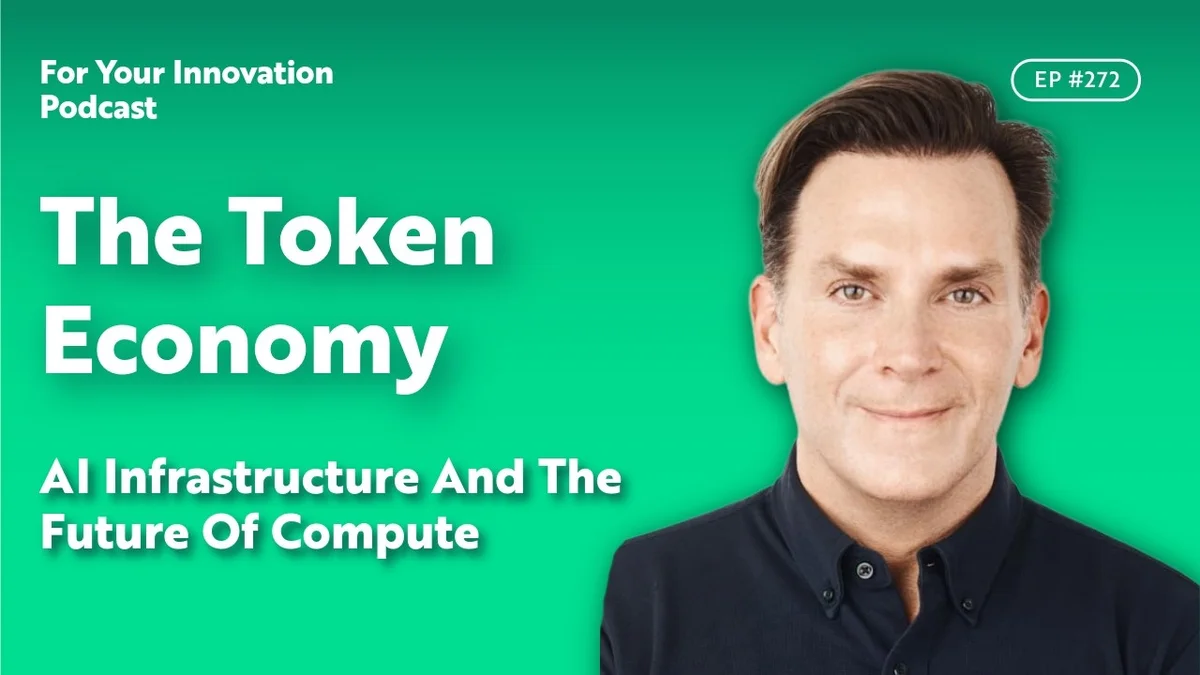
In a recent "For Your Innovation" podcast episode, the conversation focused on the critical intersection of AI compute, the token economy, and the future of technological innovation. The discussion featured Brett Winton, Chief Investment Strategist at ARK Invest, and Michael Stuart, a venture capital investor specializing in AI and infrastructure. They explored how the burgeoning demand for artificial intelligence is reshaping not just software, but the entire computing stack, with a particular emphasis on the role of tokens and decentralized models.
Understanding the Landscape of AI Compute
Stuart initiated the discussion by outlining the current state of AI compute, highlighting that while companies like Microsoft (NASDAQ: MSFT) are making substantial investments in AI infrastructure, particularly through their venture arm's focus on companies utilizing models like GPT-3 and GPT-4, there's a broader market dynamic at play. He noted that the demand for computational power is outstripping supply, creating significant opportunities for companies that can efficiently provide this essential resource.
The conversation then pivoted to the concept of the token economy as a potential solution. Winton elaborated on how tokenization can enable a more distributed and accessible approach to compute resources. By tokenizing compute power, companies can theoretically create a more fluid market, allowing for flexible allocation and potentially lower costs for users. This model could democratize access to AI, enabling smaller companies and individual developers to leverage powerful AI models without the prohibitive upfront costs associated with building and maintaining their own infrastructure.
The Role of Tokens in AI Infrastructure
Stuart and Winton discussed the potential for AI models themselves to be tokenized. This could allow for fractional ownership and trading of AI capabilities, creating new investment opportunities and revenue streams. The idea is that as AI models become more sophisticated and their applications more widespread, the underlying compute power and the models themselves will become increasingly valuable assets that can be accessed and utilized through a tokenized system.
They touched upon the concept of a "compute-as-a-service" model, where organizations can pay for AI processing power on demand, similar to existing cloud computing services. However, the integration of tokens and decentralized networks adds a unique layer, potentially offering greater transparency, security, and flexibility compared to traditional cloud offerings. This could be particularly beneficial for companies that need to manage sensitive data or require highly customizable AI solutions.