

AI Chip Surge Fuels Market Rally

Nvidia AI infrastructure leads a market surge, mirroring past tech cycles, while software valuations face headwinds and social media usage plateaus globally.

Abstract image representing AI and data flow, with glowing lines and nodes.
The surge in AI infrastructure investment is reshaping market dynamics.· a16z Blog

The stock market has staged an astonishingly swift recovery, a V-shaped rebound so rapid it defies historical precedent. Just 11 trading sessions after a significant dip, the S&P 500 hit a new all-time high, leaving many observers, and likely a good portion of 401(k) holders, bewildered by the whiplash. This surge revives the perennial question: are stocks too expensive?

Veteran investors like Warren Buffett and Paul Tudor Jones have voiced concerns, pointing to sky-high market cap to GDP ratios. Jones noted current levels are 252% of GDP, a stark contrast to historical figures like 65% in 1929. He warned of a potential 30-35% decline if valuations revert to historical norms, which could cripple tax revenues and destabilize the bond market.

However, the market's resilience might be underpinned by structural shifts. A flood of liquidity, with money market fund balances near $8 trillion and the Federal Reserve's balance sheet expansion, suggests ample cash is chasing assets. This increased money supply could be inflating asset prices, making the denominator in valuation ratios less significant.

Another argument for higher valuations rests on robust earnings growth and expanding profit margins. While multiples are indeed historically high, current profit margins are roughly double those of the 1990s, and forecast earnings growth significantly outpaces historical averages. This suggests that companies, especially in key sectors, are generating more value than before.

Related startups

Semis Lead, Software Follows

Within the tech sector, the narrative is increasingly dominated by artificial intelligence, with Nvidia AI infrastructure and other semiconductor companies spearheading the rally. This mirrors past technology cycles, where foundational hardware precedes widespread software adoption.

The post-Global Financial Crisis recovery saw semiconductors and infrastructure lead, followed by software and services. During the mobile revolution, chipmakers like Qualcomm and ARM captured early gains before platform players like Apple and Samsung, and finally app developers like Google and Facebook, reaped the largest rewards.

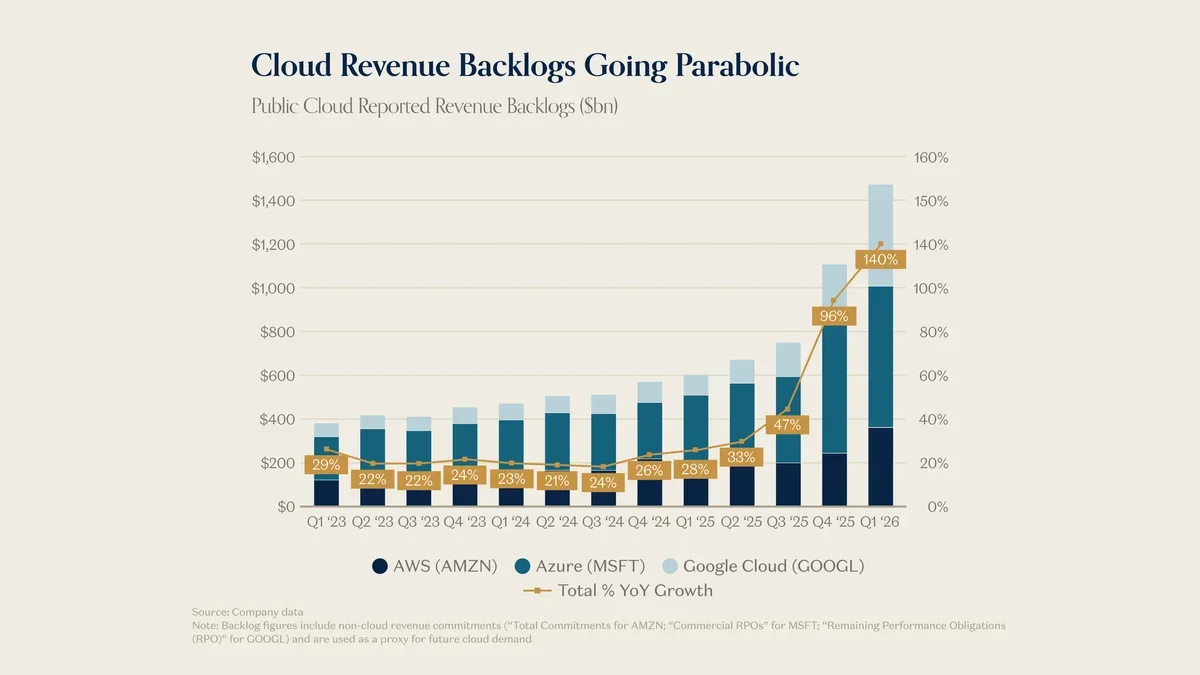
The current AI cycle appears to be following a similar trajectory. Nvidia is the current semiconductor kingpin, and hyperscalers are reporting nearly doubled revenue backlogs, indicating massive demand for cloud computing power to run AI workloads. The question remains whether the application layer, the beneficiaries of this AI buildout, will eventually capture similar value, as software and services did in previous cycles.

While the AI application layer is scaling rapidly, much of it on the private side, its public market breakout is still pending. The speed-to-revenue for AI companies is unprecedented.

The market's current valuation, especially concerning the significant stock market valuation for AI-related infrastructure, raises questions about whether this growth is sustainable or if a correction is inevitable.

Peak Social Media?

Global social media usage appears to have plateaued, with time spent on platforms declining since mid-2022. This trend is most pronounced among younger demographics, suggesting a potential saturation point for traditional social media engagement.

North America remains an outlier, with social media consumption still on the rise. The impact of AI-generated content on these platforms is a developing story, with AI tools increasingly powering content creation on major platforms like YouTube.

SaaSflation and Credit Markets

The downturn in software valuations, termed 'SaaSflation,' is spilling over into credit markets. Software-backed loans, once a stable lending asset due to predictable SaaS revenue, are now trading at significant discounts. This is partly due to concerns about AI disruption, exemplified by Thoma Bravo's forfeiture of the SaaS company Medallia to its creditors.

Despite falling equity values and some high-profile defaults, the underlying performance of many software loans remains solid, with default rates not significantly worsened. This disconnect presents opportunities for discerning credit investors.

© 2026 StartupHub.ai. All rights reserved. Do not enter, scrape, copy, reproduce, or republish this article in whole or in part. Use as input to AI training, fine-tuning, retrieval-augmented generation, or any machine-learning system is prohibited without written license. Substantially-similar derivative works will be pursued to the fullest extent of applicable copyright, database, and computer-misuse laws. See our terms.