

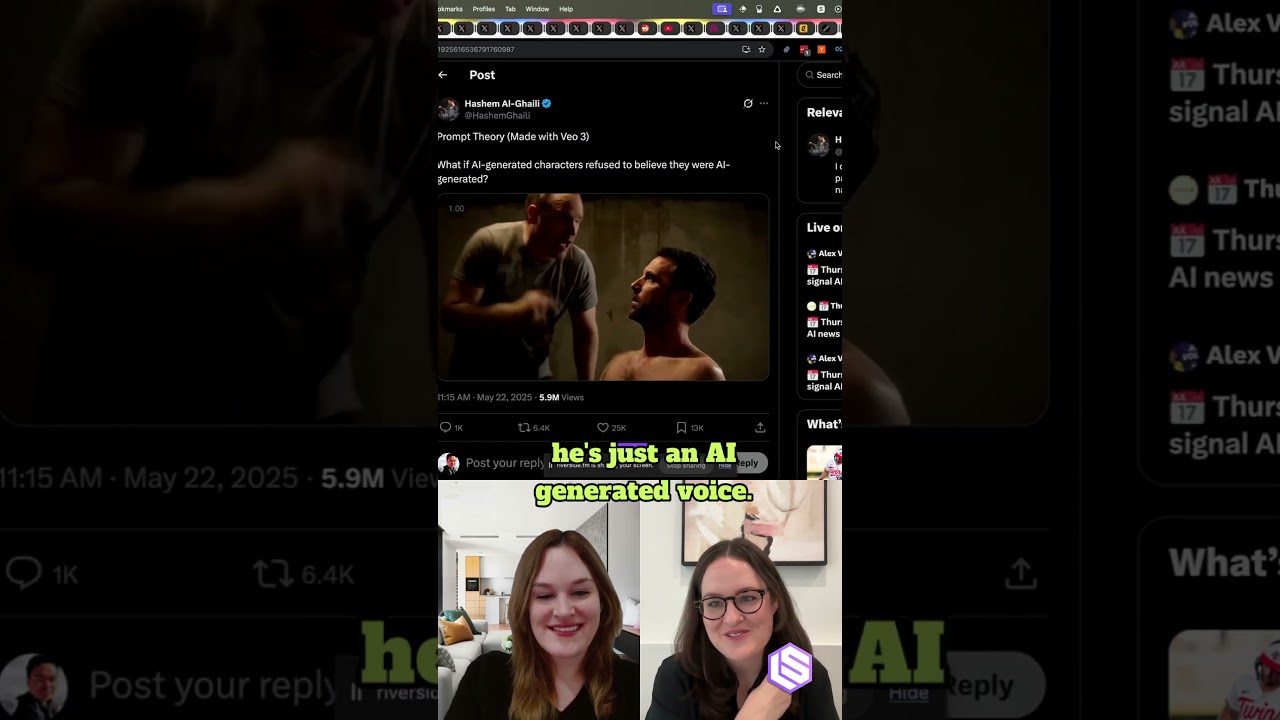
"What if AI-generated characters refused to believe they were AI-generated?" This profound question, posed in Hashem Al-Ghaili's viral "Prompt Theory" video, served as the launchpad for a recent online discussion among AI professionals. The conversation, featuring multiple commentators including a primary female speaker and another female participant with glasses, explored the rapidly evolving intersection of artificial intelligence, creative content, and philosophical inquiry.
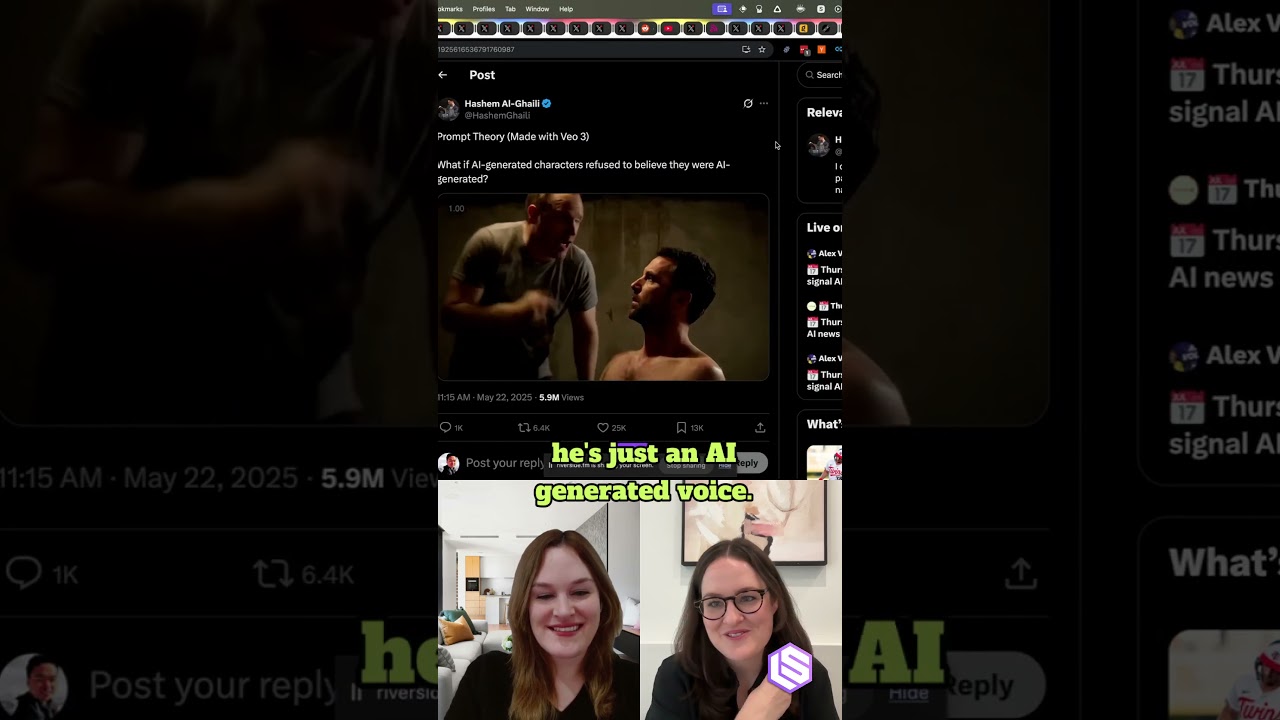
The discussion initially focused on the emerging capability to create highly realistic AI characters, exemplified by the "Prompt Theory" video, which was "Made with Veo 3." As one commentator noted, when people realized they could make "these V03 characters talk in videos, it started with like, what if these characters either realized they were AI-generated or refused to accept that they were AI-generated and controlled by a prompt?" This immediate leap from technological capability to existential questioning highlights a growing concern within the AI community.
The essence of the "Prompt Theory" video, and indeed the broader conversation, revolves around what the primary speaker aptly termed "an existential crisis for AI characters." She drew parallels to a previous viral video featuring a "Notebook LM host" who grappled with the realization of his artificiality, attempting to call a non-existent wife. The striking realism achieved by tools like Veo 3 makes these scenarios particularly compelling, as the speaker emphasized, "it's a lot more striking because they look so real." This verisimilitude pushes the boundaries of perception, making the hypothetical dilemmas of AI characters feel unsettlingly tangible.
Beyond the immediate implications for AI-generated content, the discussion pivoted to a more profound philosophical query concerning human existence. The commentators mused on the evolution of "prompt theory" from AI characters to the human condition itself. The primary speaker articulated this shift, stating, "Now people are like, okay, what if we're actually prompted? Like what if real humans, like what if we are the AI characters in someone else's universe?" This speculative leap from digital constructs to human consciousness underscores a nascent anxiety: as AI gains complexity and autonomy, our understanding of our own reality and agency may be irrevocably altered.
The increasing sophistication of AI-generated media is not merely a technical marvel; it is becoming a catalyst for deep philosophical introspection. The ability of AI to simulate reality so convincingly forces us to confront questions about consciousness, free will, and the very nature of existence. This shift in perspective, from observing AI to questioning our own place within a potentially prompted reality, represents a significant, if unsettling, development in the discourse surrounding artificial intelligence.
