

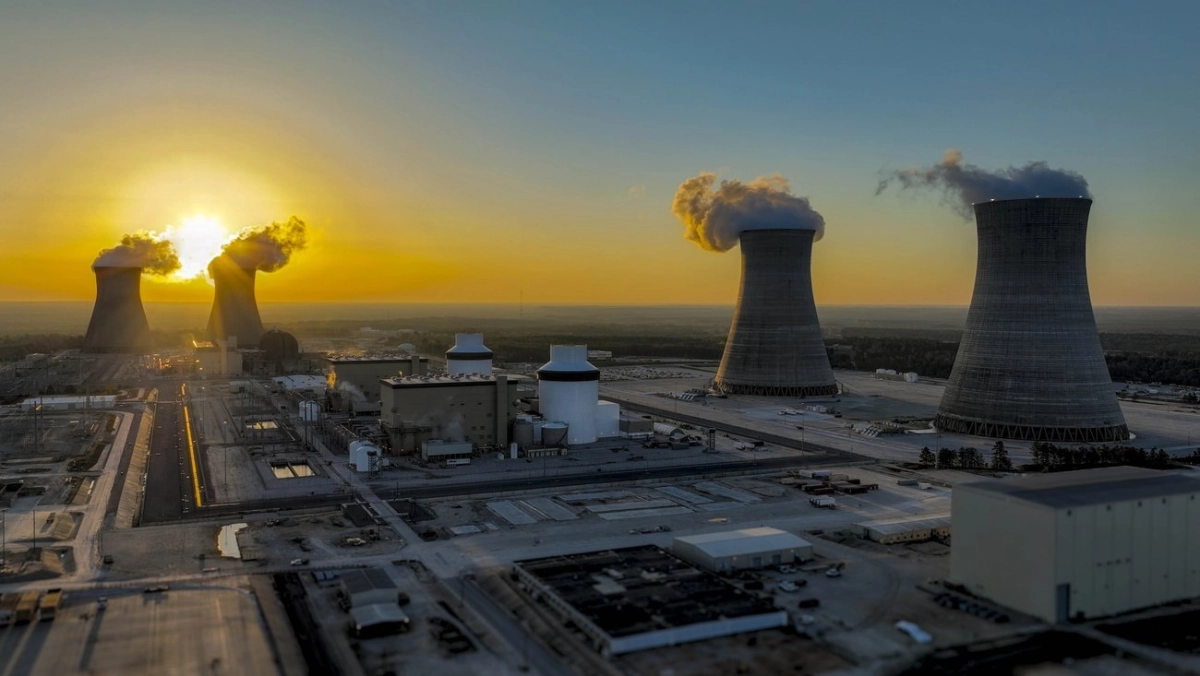
Westinghouse is leveraging artificial intelligence to dramatically accelerate nuclear reactor construction, aiming to meet the escalating demands of the U.S. energy grid. This strategic partnership with Google Cloud introduces a custom AI platform designed to optimize every phase of nuclear power generation. The initiative directly addresses the critical need for clean, reliable power, particularly as AI energy consumption continues its rapid ascent.
The collaboration embodies a dual vision: "energy for AI and AI for energy." By deploying advanced AI models, Westinghouse plans to have 10 state-of-the-art AP1000 reactors under construction by 2030. This ambitious goal seeks to provide enough combined power for 7.5 million households and numerous data centers, directly offsetting the substantial power requirements of burgeoning AI infrastructure. Nuclear power is uniquely positioned to offer immense, carbon-free energy output from a compact footprint, making it a crucial component in future energy strategies.
Historically, nuclear construction has been plagued by complex approvals and protracted timelines, with building processes accounting for 60 percent of reactor costs. The new AI system, combining Google's prediction tools with Westinghouse's WNEXUS 3D digital twin, revolutionizes this paradigm. It analyzes decades of documentation and real-time data to predict bottlenecks, optimize construction task sequences, adjust staffing levels, and manage external factors like supply chain constraints. This intelligent approach transforms legacy documentation into a powerful accelerator, promising significant time and cost efficiencies.
AI's Role in Nuclear Readiness
Westinghouse's internal AI readiness proved crucial for this partnership's success. The company developed Hive, a proprietary AI infrastructure tailored specifically for nuclear's stringent regulatory and export-control frameworks. They also created Bertha, a generative AI assistant that instantly accesses 75 years of meticulous nuclear knowledge and documentation. These foundational tools impressed Google engineers, demonstrating Westinghouse's foresight in securely integrating AI within a heavily regulated sector, providing a robust internal framework for advanced AI solutions.
The "technology brick approach" extends AI's influence beyond initial construction, applying these sophisticated tools to streamline licensing processes and enhance operational efficiency. By finding the fastest path through maintenance and refueling tasks, AI helps minimize reactor downtime, thereby maximizing energy output and reliability. This strategic integration positions AI not merely as a tool for simple cost optimization, but as a transformative force for the entire energy sector, ensuring nuclear power remains a viable and scalable investment for utilities.