

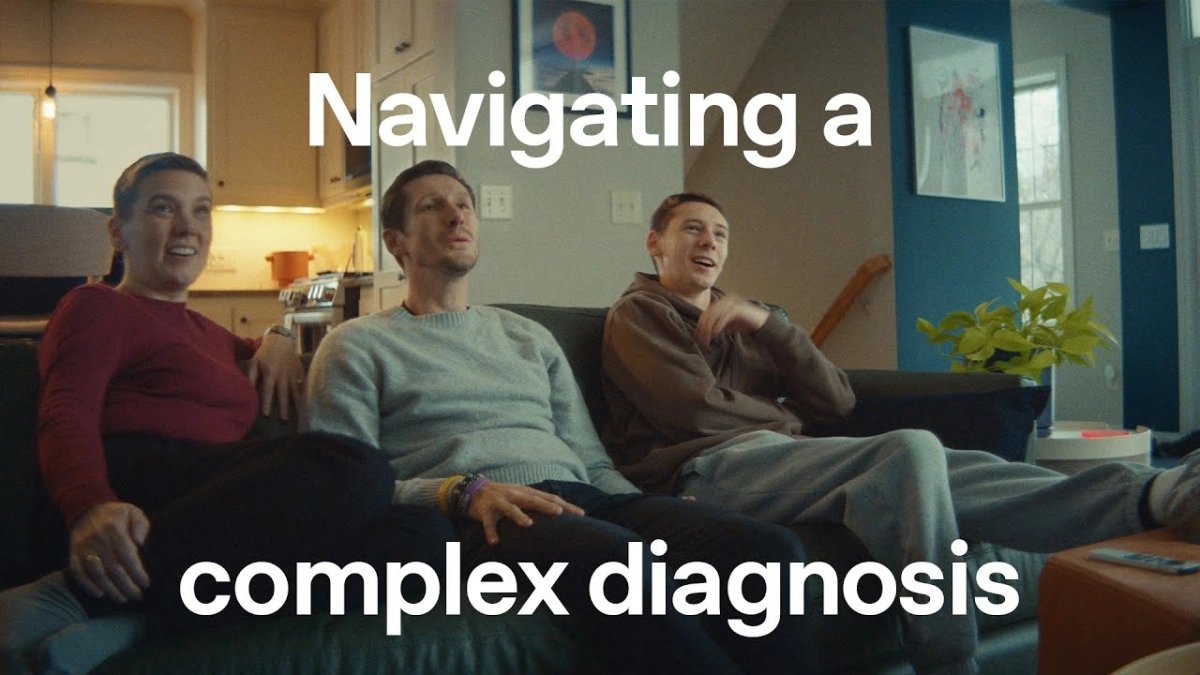
The integration of Large Language Models into high-stakes decision-making has often been debated within the tech sector, typically focusing on regulatory hurdles or algorithmic safety. Yet, the real, visceral impact of this technology is revealed when AI bridges the chasm between specialist knowledge and human vulnerability. A recent testimonial highlights a crucial, deeply personal application of consumer-grade generative AI: transforming a parent’s fear into informed advocacy during a child’s cancer battle. This case study moves the discussion of AI in health beyond diagnostic tools and into the realm of profound caregiver empowerment.
Liz, a mother from Minnesota, shared her intensely personal experience regarding her son Tommy’s diagnosis and treatment for Ewing sarcoma, detailed in a recent testimonial released by OpenAI. This narrative serves as a potent case study illustrating how consumer-grade generative AI, specifically ChatGPT, is shifting the dynamic of patient-provider relationships and equipping caregivers to navigate clinical complexity under duress. The underlying tension of the video—the overwhelming emotional burden placed on parents facing critical, time-sensitive medical choices—provides a stark backdrop for evaluating the utility of conversational AI as a coping and preparatory mechanism.
Upon receiving the diagnosis, the immediate challenge for Liz and her husband was not just accepting the reality of cancer, but mastering the alien, dense language of oncology reports and surgical options. The family faced the classic dilemma of the modern healthcare system: they were drowning in data yet starved for comprehensible information. Liz recalled the initial feelings of panic and disorientation, stating, “When you find out that your child has cancer, you feel helpless. Your mind is just spinning with the possibilities.” This emotional paralysis, common among patients and caregivers, often prevents effective participation in medical planning.
Liz’s breakthrough came when she began using ChatGPT as a preparatory tool. She would input complex radiology reports and ask the model to translate the findings into plain English, reducing the cognitive friction inherent in medical jargon. More critically, she used the output to generate structured, specific questions for Tommy’s oncologist. This process transformed her from a passive recipient of information into an active, strategic participant in her son’s care. Her primary motivation was simple efficiency: “Your time with doctors can be very limited.”
For venture capitalists evaluating AI’s vertical applications, this use case demonstrates immediate, quantifiable value. It transforms overwhelmed patients into highly informed, efficient participants in their own care pathways.
The preparation allowed Liz and Tommy to maximize the scarce minutes allocated during high-stakes consultations. Instead of spending appointment time translating basic terminology or recalling fundamental facts, the family arrived with targeted inquiries designed to elicit highly specific clinical opinions and expert judgment. For instance, after receiving a report detailing a “stable subtle groundglass-like nodular density,” Liz used ChatGPT to generate questions focused on understanding its meaning, the risk of recurrence, and its behavior over time relative to chemotherapy. This level of granular preparation ensures that the physician’s precious expertise is focused on nuanced strategy rather than basic education.
The necessity of informed decision-making reached its apex when the family had to weigh options for Tommy’s affected leg, a choice that would determine his quality of life as a dedicated soccer player. One surgeon presented a difficult scenario: “The surgeon said, if you’re an athlete, you might want to seriously consider an amputation.” Faced with a decision between limb salvage (which carried high risks of recurrence and limited mobility) and amputation (which offered a clearer path to full athletic recovery via prosthetics), the family needed more than just clinical data—they needed context on future functionality.
Tommy, the patient, was intensely focused on retaining his identity as an athlete. The LLM provided the factual scaffolding necessary to explore the long-term implications of each option, including research into the viability of competitive sports like amputee soccer and track. This comprehensive, self-directed research enabled Tommy to process the emotional and physical trade-offs, leading to a profound personal realization. After the surgeon explained the lives of amputee athletes, Tommy confirmed his choice, saying, “I feel like this is the decision for me.” The AI did not substitute the physician’s judgment or the patient’s will; it provided the informational framework that allowed the patient’s will to align with the best clinical outcome.
This testimonial is a powerful argument for AI’s role as an equitable access layer in complex knowledge domains. It suggests that LLMs are not merely productivity tools for the elite, but crucial democratizers of information, particularly in moments of extreme vulnerability where emotional stress compromises cognitive function. The system allowed the family to arrive at a consensus decision with robust confidence, not just blind trust. As Liz summarized the outcome, “Using ChatGPT allowed us to really feel like we have the facts and our doctor is giving us his expertise, his experience, his gut instinct.” The confluence of AI-derived facts and human expertise created a robust, confident path forward.



