

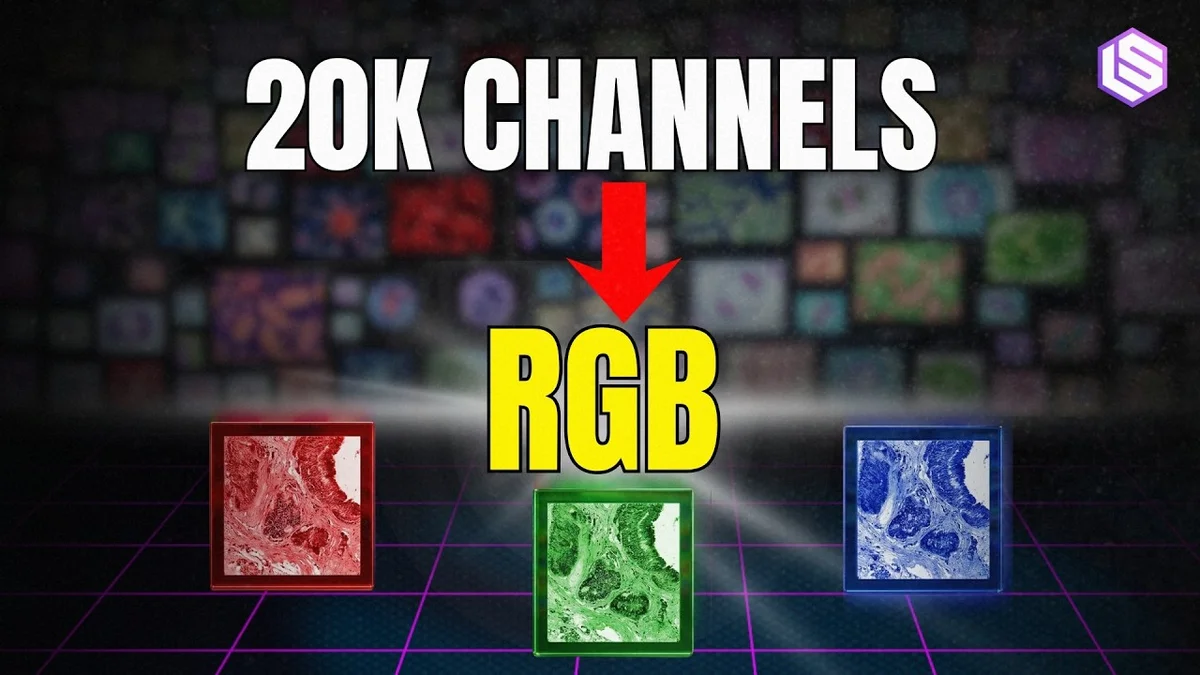
AI and Cancer: How Noetik.ai is Revolutionizing Drug Discovery

Ron Alfa of Noetik.ai discusses how AI is being used to understand patient biology and improve cancer drug discovery, moving beyond broad classifications to personalized treatments.

5 min read
Ron Alfa and Brandon Anderson discuss AI in cancer drug discovery
Image credit: Latent Space· Latent Space

In the complex world of cancer treatment, identifying the right drug for the right patient remains a monumental challenge. While advancements in AI are rapidly transforming various industries, their impact on drug discovery, particularly in oncology, is still in its nascent stages. However, startups like Noetik.ai are pushing the boundaries, aiming to leverage AI to unlock a new era of personalized medicine.
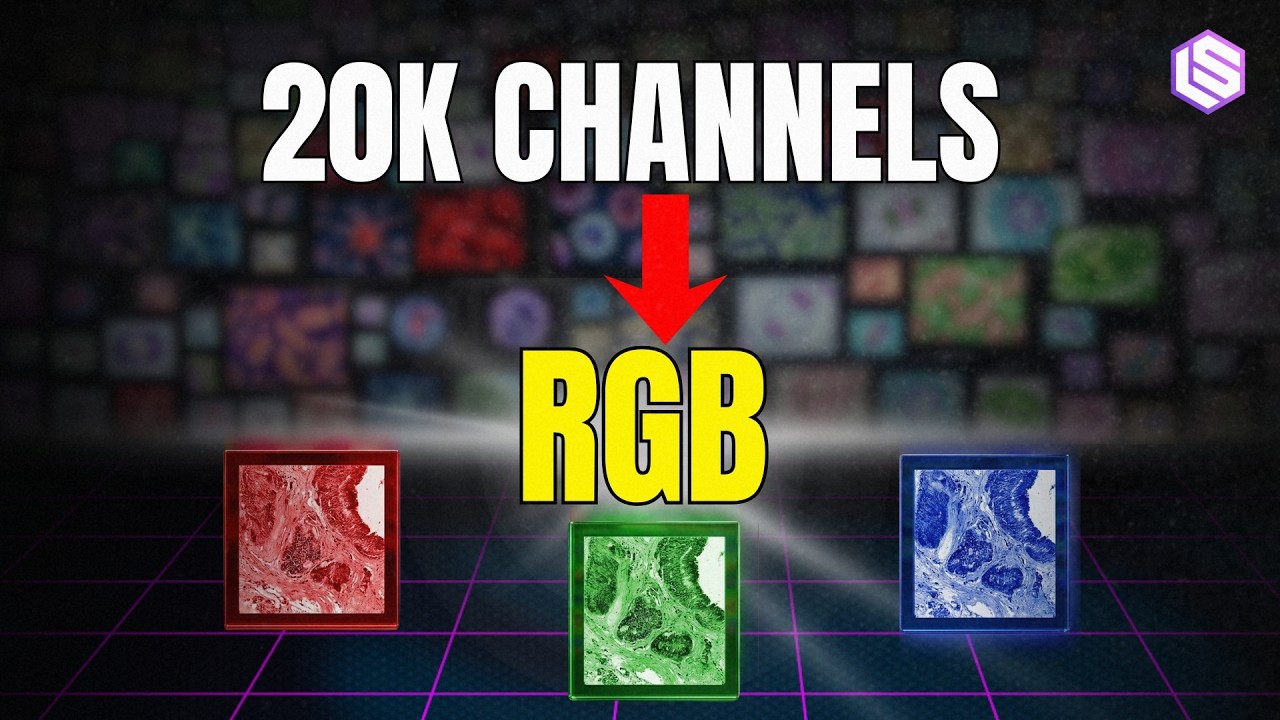
AI and Cancer: How Noetik.ai is Revolutionizing Drug Discovery - Latent Space
AI and Cancer: How Noetik.ai is Revolutionizing Drug Discovery — from Latent Space

In a recent discussion hosted by Latent Space at Chroma, Ron Alfa, Co-Founder and CEO of Noetik.ai, sat down with Brandon Anderson, Staff Scientist at Atomic.ai, to shed light on the company's mission. Noetik.ai is at the forefront of utilizing AI to understand the intricate biological mechanisms of cancer and to predict which patients will respond best to specific therapies.

The Challenge of Cancer Drug Efficacy

Ron Alfa highlighted a stark reality in current cancer treatment: the high failure rate of drugs in clinical trials. He pointed out that statistics often show 90-95% of cancer drugs failing in clinical trials. This staggering failure rate, he explained, isn't necessarily due to poor drug design but rather a fundamental misunderstanding of patient biology.

Alfa elaborated on this point: "We're bad at pharmacogenomics. We're bad at selecting which patients will respond, not because we're bad at making the drug, but because we don't understand the biology of the patients well enough." This lack of understanding means that even potentially effective drugs fail simply because they are tested on patient populations that are not biologically predisposed to respond.

He further explained the sheer complexity of cancer, noting that there isn't just one type of cancer, but rather thousands of subtypes. This complexity makes it incredibly difficult to develop a one-size-fits-all treatment. The traditional approach of developing drugs for broad cancer types has proven inefficient, leading to wasted resources and, more importantly, delayed patient access to potentially life-saving treatments.

Noetik.ai's AI-Driven Approach

Noetik.ai aims to tackle this challenge head-on by building sophisticated AI models that can analyze vast amounts of biological data. Their goal is to move beyond broad classifications and identify specific patient subgroups that are most likely to benefit from particular drugs. This approach, often referred to as precision medicine, promises to increase drug efficacy and reduce the failure rates in clinical trials.

Alfa described their process: "We basically open the lab, we hire a team, we get all the instruments, we start sourcing tumor samples, and there was no prior here, any of this would work. We just started generating data. And sourcing human tumors, processing them, we built this whole processing pipeline to get the tumors into these arrays and the formats so you've got these two-week where you're processing two slides and we're just churning data for months." This intensive data generation and processing is the bedrock of their AI models.

The company focuses on generating multimodal data, including spatial transcriptomics, which provides insights into the spatial organization of cells within a tumor and their interactions. By integrating this complex data with other biological information, Noetik.ai aims to build AI models that can predict treatment response with unprecedented accuracy.

The Power of Data Granularity

Alfa emphasized the importance of data granularity in their approach. He explained that existing datasets, while vast, often lack the necessary detail to capture the subtle biological differences between patients that dictate drug response. "There just weren't really data sets out there that people had been able to develop on, we do a lot of custom model building," he stated.

Their proprietary approach involves generating highly detailed, multi-modal data from patient samples. This allows their AI models to learn the complex interplay of genetic, cellular, and environmental factors that influence a patient's response to a drug. By understanding these intricate relationships, Noetik.ai aims to identify patient subgroups that may have been missed by broader classification methods.

From Bench to Bedside: The Future of Cancer Treatment

The ultimate goal of Noetik.ai is to bridge the gap between laboratory research and clinical application. By providing pharmaceutical companies with AI-powered tools that can accurately predict drug response, they aim to accelerate the development of new cancer therapies and ensure that the right patients receive the right treatments at the right time.

Alfa's vision is clear: "We want the model to learn, let's say 18 months later, can we train a model off? Give me train a model off? And then it was not, it wasn't obvious. Yeah, there wasn't really anything major to go off of. I mean, there were transformers developed for single-cell data... but there just weren't really data sets out there that people had been able to develop on. We do a lot of custom model building." This highlights their commitment to building novel solutions in a field where existing data has limitations.

The company's work represents a significant step forward in the fight against cancer, offering a glimpse into a future where AI plays a pivotal role in delivering more effective and personalized treatments. By focusing on deep biological understanding and leveraging the power of AI, Noetik.ai is paving the way for a new era in drug discovery.

© 2026 StartupHub.ai. All rights reserved. Do not enter, scrape, copy, reproduce, or republish this article in whole or in part. Use as input to AI training, fine-tuning, retrieval-augmented generation, or any machine-learning system is prohibited without written license. Substantially-similar derivative works will be pursued to the fullest extent of applicable copyright, database, and computer-misuse laws. See our terms.