

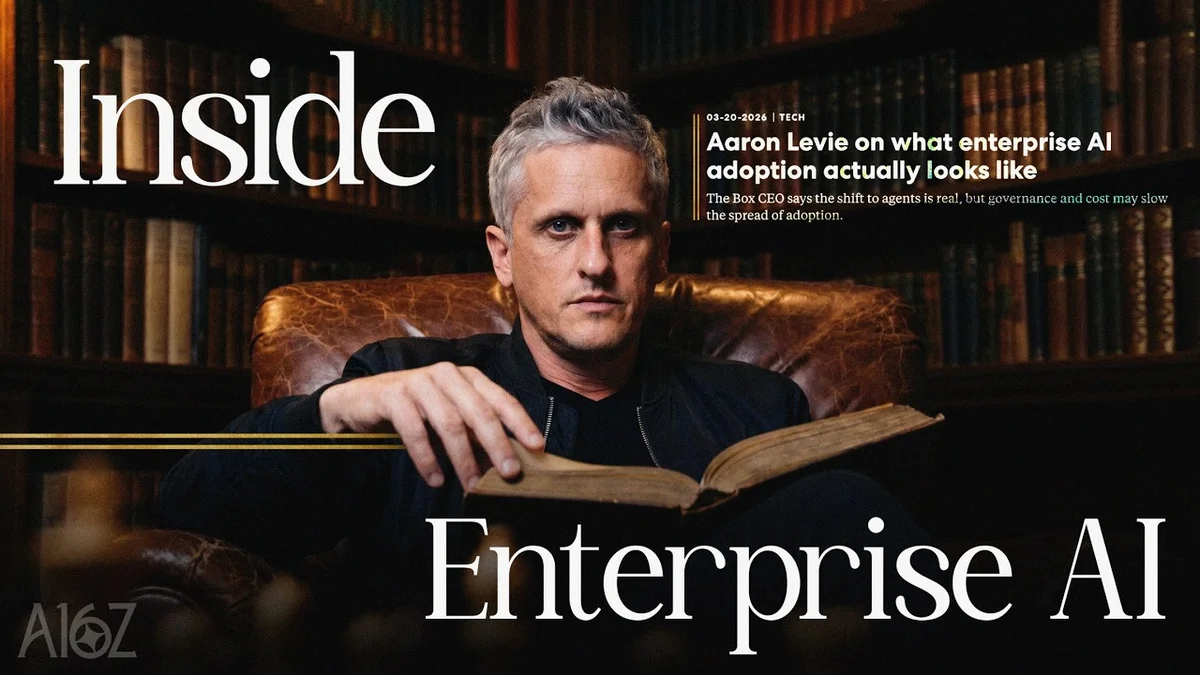
In a recent discussion on The a16z Show, experts Steven Sinofsky, Martin Casado, and Aaron Levie explored the complex realities of integrating AI agents into enterprise workflows. The conversation highlighted a critical tension: the promise of AI-driven automation versus the inherent complexities and risks associated with deploying these advanced systems in real-world scenarios. The core thesis emerged that while AI agents can offer significant efficiency gains, their successful implementation hinges on a nuanced understanding of their limitations and the necessity of human oversight.
The Experts Weigh In
Steven Sinofsky, former President of Microsoft's Windows division and a current venture partner at a16z, brings a wealth of experience in scaling software products and navigating the challenges of large-scale technology adoption. His perspective often centers on the practical, user-facing aspects of technology and the importance of a well-defined product strategy.
Martin Casado, General Partner at a16z and a seasoned entrepreneur who founded the cybersecurity company Nicira, offers a deep understanding of infrastructure, security, and the challenges of building complex systems. His insights often focus on the underlying architecture and the security implications of new technologies.
Aaron Levie, co-founder and CEO of Box, a cloud content management company, provides a firsthand perspective from the front lines of enterprise software. His experience leading a company that has navigated rapid technological shifts and intense competition offers a unique view on how businesses adapt and integrate new tools.
AI Agents: Promise and Peril
The conversation began with a discussion on the current state of AI agents and their potential to transform various industries. Levie kicked off the discussion by highlighting the immense interest from enterprise customers in AI solutions, noting the widespread sentiment of "We need more AI!". However, he quickly pivoted to the practical challenges, pointing out that many companies are struggling with the integration of these agents into their existing operations.
Levie illustrated this point with a common scenario: "Okay, I will get like a consultant to do more AI". This often leads to what he described as "some centralized project that nobody knows how it works", which then fails to align with the company’s operations. He emphasized that "those things will fail" if not properly integrated.
The Software Agent Dilemma
A key theme that emerged was the inherent difficulty in developing and deploying AI agents effectively. Sinofsky touched upon a concept he found particularly thought-provoking: "that the more code the less we would need engineers. Because now your systems are even more complex than before, which means to be running more challenges of when you need a system upgrade, there's downtime to figure out like, well, how do I fix that problem?" This highlights the paradox of AI: while it aims to automate, the underlying complexity can create new hurdles.
Casado added to this by discussing the distinction between AI for specific tasks and broader, more generalized agents. He noted that the current focus is often on the latter, which presents a significant challenge. He stated, "I mean, we’re started on this front."
The Integration Wall
The discussion then shifted to the practical barriers to AI adoption, with Sinofsky pointing out that companies "will hit a wall at integration". He elaborated on the notion that "The thing that’s not different about AI and that agents don’t fix, that nothing fixes, is that any enterprise of a thousand people or more, or that’s older than ten years, is just a mass of stuff waiting to be integrated." This implies that legacy systems and existing workflows are significant obstacles to seamless AI deployment.
Sinofsky further emphasized that "And you can’t just say it’s going to integrate. AI actually doesn’t help to integrate anything." This is a stark reminder that AI is not a magic bullet for all integration problems. The underlying complexity of existing systems often requires significant effort to bridge the gap with new AI capabilities.
The Human Element in AI Deployment
A significant portion of the conversation revolved around the human element in the AI development and deployment process. Levie pointed out the difference between how startups and larger, established companies approach AI integration. He observed that "the difference is that the more code that the more code, the less we would need engineers. Because now your systems are even more complex than before, which means to be running more challenges of when you need a system upgrade, there's downtime to figure out like, well, how do I fix that problem?"
Levie also highlighted the contrasting approaches to AI adoption: "I mean, we’re started on this front. And so, you know, what we're seeing from engineering teams is that they can use computers to kind of bottleneck all of the, you know, all of the greatness that is AI and then bring that into the enterprise context where your workflows are, you know, quite different from engineering teams, and the data is much more fragmented, and the systems are much more legacy." This suggests that the human element, including team structures and existing processes, plays a crucial role in how effectively AI can be adopted.
Sinofsky echoed this sentiment by discussing the importance of understanding the specific use cases and the target audience for AI solutions. He stated, "The thing that’s not different about AI and that agents don’t fix, that nothing fixes, is that any enterprise of a thousand people or more, or that’s older than ten years, is just a mass of stuff waiting to be integrated. And you can’t just say it’s going to integrate."
The Future of AI Agents
The discussion concluded with a look towards the future of AI agents. The experts agreed that while the potential is immense, the path forward requires careful consideration of integration challenges, the role of human oversight, and the need for adaptable, user-centric AI solutions. The conversation underscored that building effective AI agents is not just about developing advanced algorithms, but also about understanding the human and organizational factors that will determine their success in the real world.
