

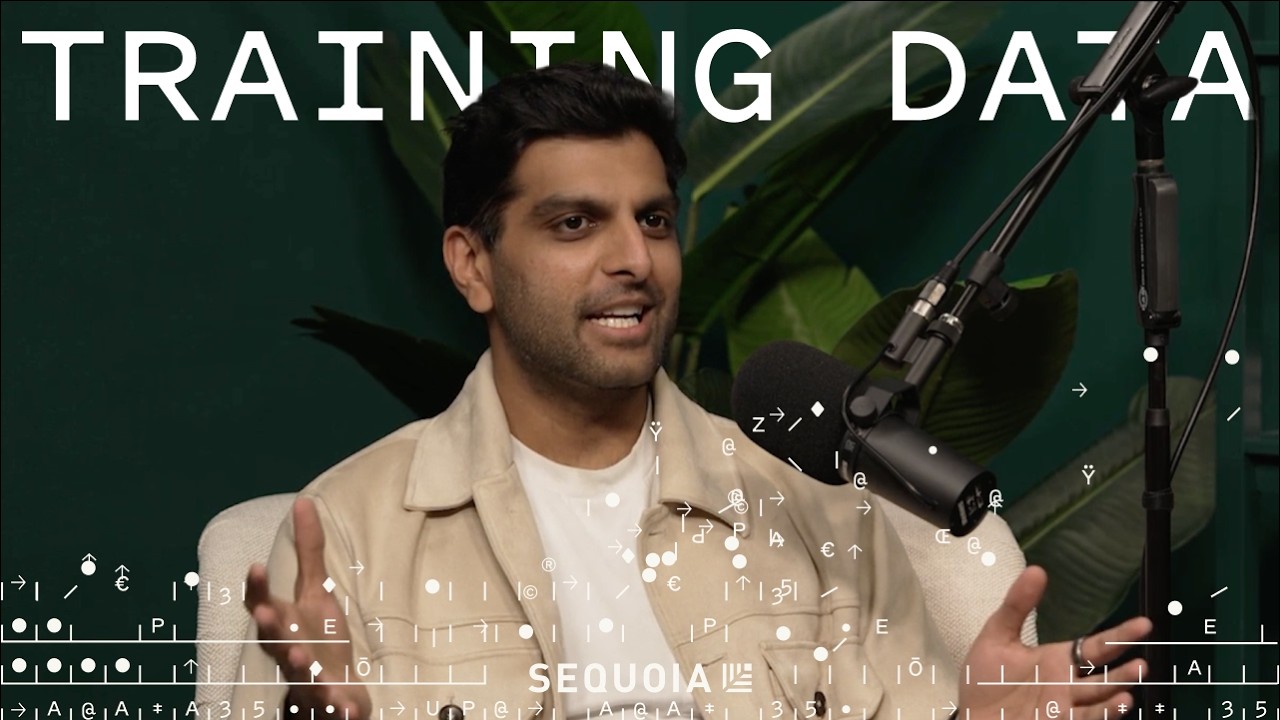
The relentless pulse of modern software operations often feels like a constant state of emergency, a series of "heart attacks" that demand immediate, all-hands-on-deck responses. This vivid analogy, coined by Anish Agarwal, co-founder of Traversal, aptly captures the high-stakes reality of DevOps and Site Reliability Engineering (SRE) today.
Agarwal and his co-founder, Raj Agrawal, recently shared their vision for transforming this landscape on Sequoia Capital’s Training Data podcast, hosted by Sonya Huang and Bogomil Balkansky, outlining how AI agents are poised to revolutionize how enterprises manage critical system failures.
For too long, companies have relied on "war rooms" and armies of engineers scrambling in Slack channels to troubleshoot production failures, a process that can stretch for hours and incur immense costs. This challenge is exacerbated by the advent of AI-generated code. As Sonya Huang pointed out, "keeping a company’s application running is very hard and valuable work, and it’s a problem that is only getting worse with the advent of AI-generated code." Anish elaborated on this growing pain, noting that AI-written code, while passing local unit tests, can lead to unpredictable systemic failures where humans, lacking the original context, struggle to debug. This creates a bottleneck, leaving companies "throttled" unless AI steps in to manage maintenance.
Traversal’s core insight is that AI agents offer a scalable solution. Raj Agrawal described their agents as "an LLM orchestration of tools," designed to systematically traverse complex dependency maps. Unlike traditional observability tools that merely store and visualize data, Traversal’s agents automate the complex workflow of root cause analysis, reducing resolution times from hours to mere minutes. Anish highlighted a critical architectural decision made early on: they built their system so "the reasoning models would get to shine," a bet that has "really played out dividends." This focus on inference-time compute allows their agents to process massive volumes of data, even when a "single trace might not even fit an LLM context," bypassing the limitations of human cognitive load.
This agent-driven approach is proving remarkably effective. If the root cause of an incident lies within the available data, Traversal’s agents achieve over 90% accuracy, providing answers within two to four minutes. This dramatic reduction in Mean Time To Resolution (MTTR) shifts the focus for human engineers.