

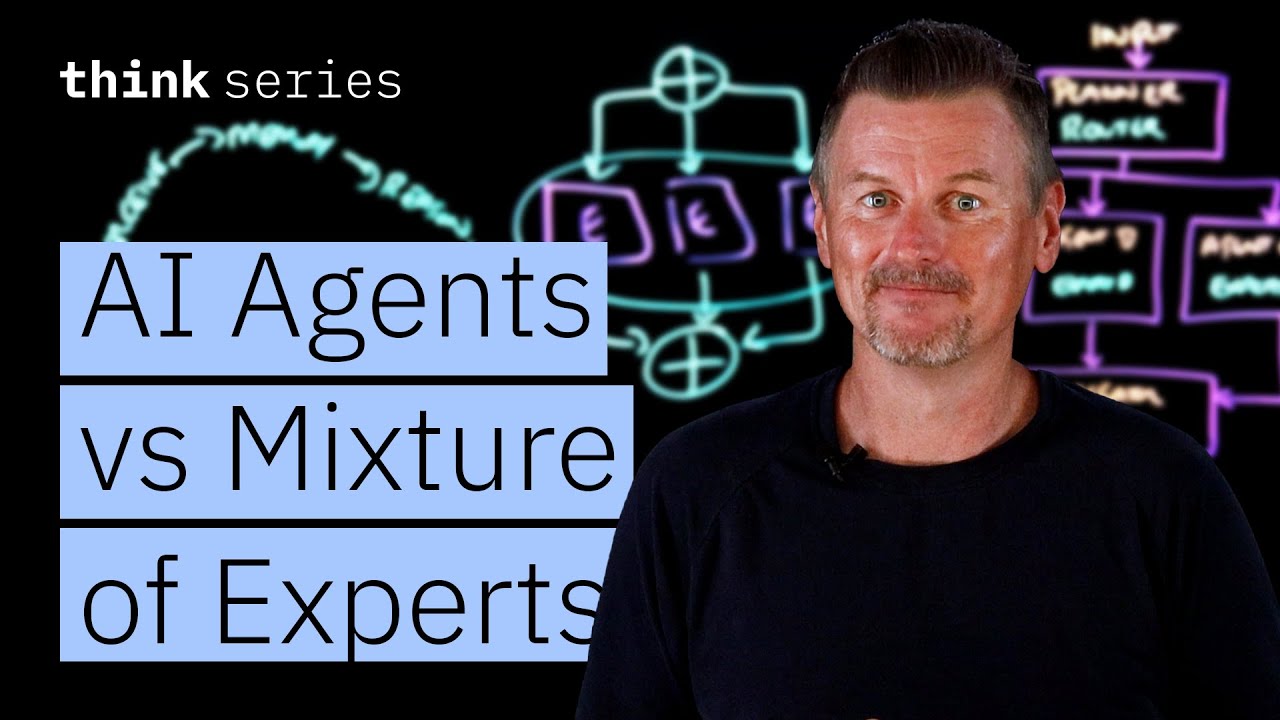
The rapid advancement of artificial intelligence is marked by increasingly sophisticated architectures, with AI Agents and Mixture of Experts (MoE) emerging as pivotal paradigms. Martin Keen, a Master Inventor at IBM, recently clarified the fundamental distinctions and powerful synergies between these two approaches, highlighting their roles in optimizing AI workflows for complex, real-world applications.
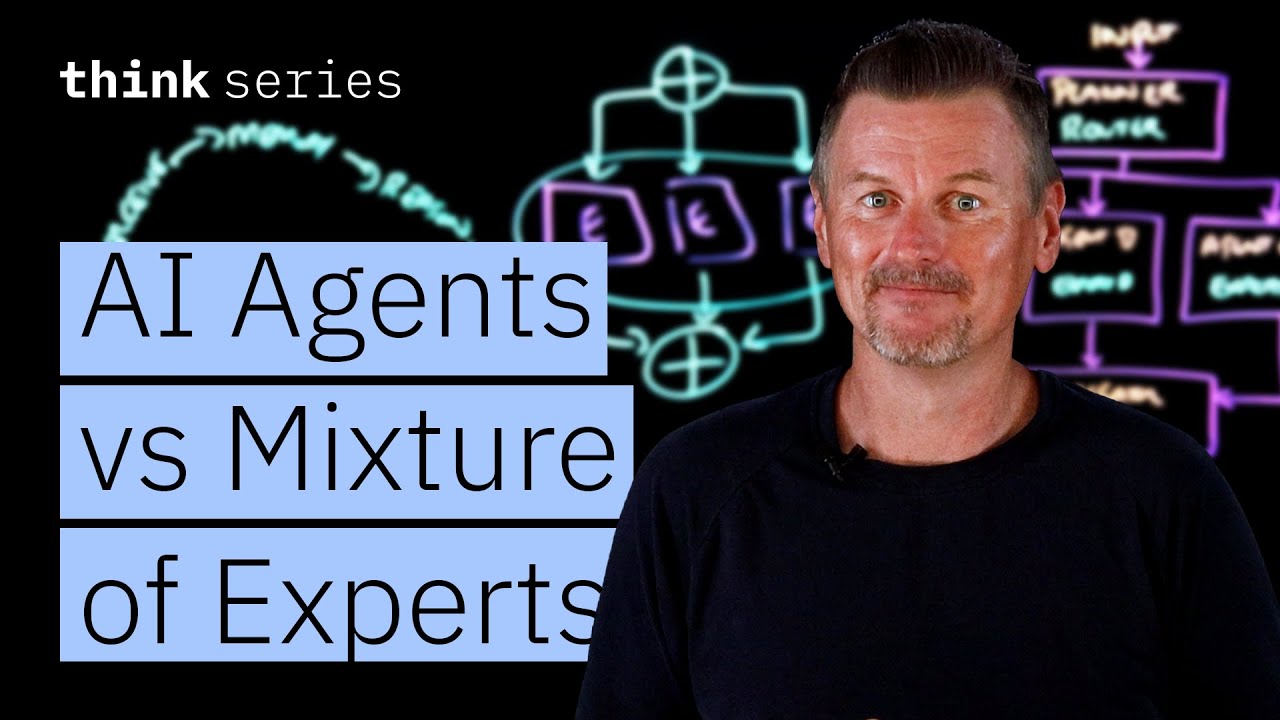
Keen explained that AI Multi-Agent workflows operate at the application level, designed to perceive environments, make decisions, and execute actions with minimal human intervention. These systems are typically composed of modular components like a perception module, a memory store (for both working and long-term knowledge), and an assortment of specialized agents. Each agent is "specialized in a particular task," such as a data agent for querying databases or an analysis agent for business intelligence. This forms a continuous loop of perceive, memory, reason, act, and observe, where agents communicate and make decisions.
In contrast, Mixture of Experts (MoE) represents a neural network design operating at the architectural level. While visually similar in workflow, MoE functions by splitting a model into multiple specialized "experts." A "gating network" intelligently routes incoming input to a select subset of these experts.
"One of the big advantages of MoE is sparsity because only the active expert parameters contribute to that input's computation," Keen noted. This sparsity allows for the creation of massive models, such as IBM's Granite 4.0 Tiny Preview which features 64 different experts and 7 billion total parameters, yet only activates about 1 billion parameters during inference. This makes MoE highly memory-efficient, capable of running on a single, modest GPU. Critically, these experts are not independent AI agents but "specialized neural network components within the same model."
The synergy between these architectures is profound. Consider an enterprise incident response workflow: a planner agent might break down a security alert, then delegate the task to a log triage agent. This log triage agent itself could be an LLM built on an MoE architecture. As streams of text tokens flow into the MoE-powered log triage agent, the gating network dynamically decides which specific experts within its neural network should process each micro-batch. Only a fraction of the total parameters are activated, ensuring efficient, specialized processing.