

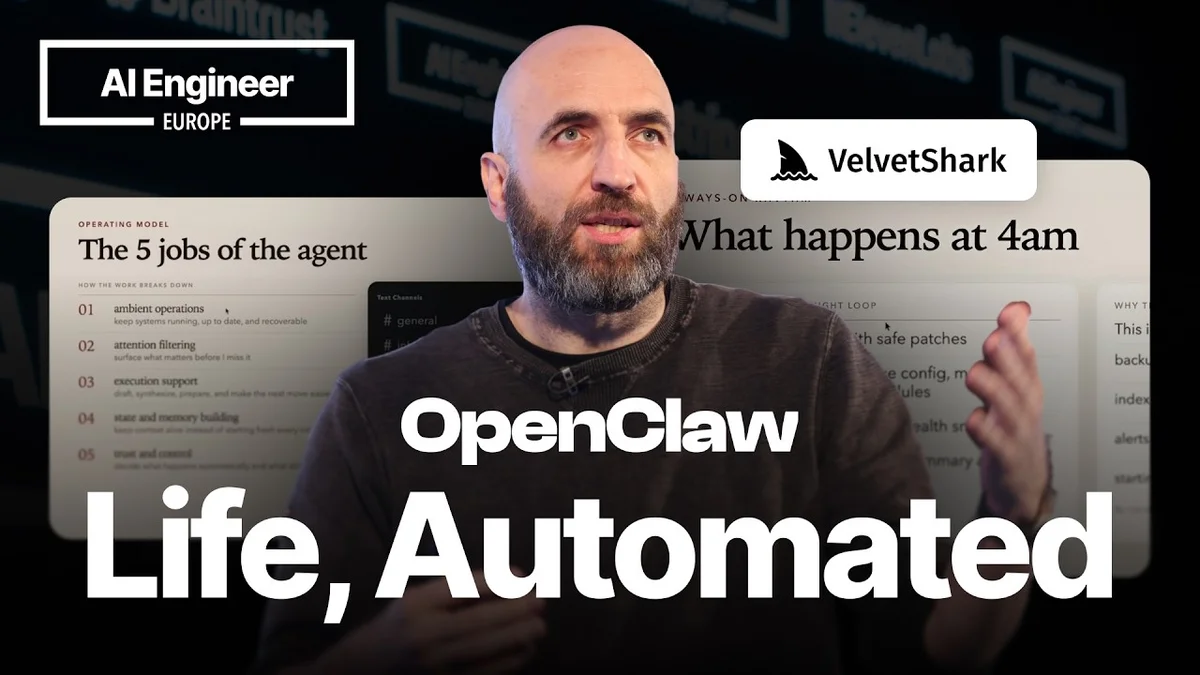
AI Agent: From Simple Setup to Life OS

Radek Sienkiewicz of VelvetShark details the evolution of his personal AI agent, from a simple tool to a life-managing infrastructure, highlighting key principles for builders.

Speaker presenting on stage at AI Engineer Europe conference
Image credit: StartupHub.ai· AI Engineer

The journey of building a personal AI agent, as detailed in a recent presentation by Radek Sienkiewicz of VelvetShark at AI Engineer Europe, highlights a fascinating evolution from a simple, single-purpose tool to a sophisticated system managing various aspects of a user's digital life. Sienkiewicz shared his personal experience, illustrating how a basic setup designed to solve one recurring problem gradually expanded its capabilities and integration, ultimately becoming an essential part of his daily workflow.
AI Agent: From Simple Setup to Life OS - AI Engineer
AI Agent: From Simple Setup to Life OS — from AI Engineer

The Genesis of a Personal AI Agent

Sienkiewicz recounted that he did not initially set out to architect a comprehensive AI operating system. The process began organically, starting with a single, useful problem that he needed to solve. This initial setup was then augmented over time with additional tools, schedules, and permissions, leading to a more capable and integrated assistant.

From 'Keys to My Life' to Infrastructure

The core of Sienkiewicz's presentation focused on what he means by giving an AI agent the "keys to my life." This encompasses a wide range of personal data and functionalities, including notes, reminders, monitoring, memory, files, calendar access, and automations. Initially, the agent was a simple tool, but through incremental steps, it evolved into what he describes as a "quiet infrastructure" that supports his life. This progression was not a single leap but a series of small, manageable steps, a strategy he recommends for building trust and ensuring the system's reliability.

Related startups

He emphasized that granting such extensive access would be reckless if attempted all at once. The system's trustworthiness grew as it was developed incrementally, with each step focused on solving a specific problem or adding a discrete function. This approach allows for learning and adaptation, ensuring that the agent remains useful and manageable.

The Power of the Knowledge Base

A critical component of the agent's success is its knowledge base, which Sienkiewicz noted is what makes the system so useful. This knowledge base, consisting of approximately 3,000 notes in his Obsidian vault, includes daily journals, project plans, call notes, article drafts, and personal context. The AI agent can access and synthesize this information, providing relevant context and making connections that a human might miss. This ability to surface relevant information quickly and link disparate pieces of data is a testament to the power of a well-maintained knowledge base.

The Agent's Operating Model

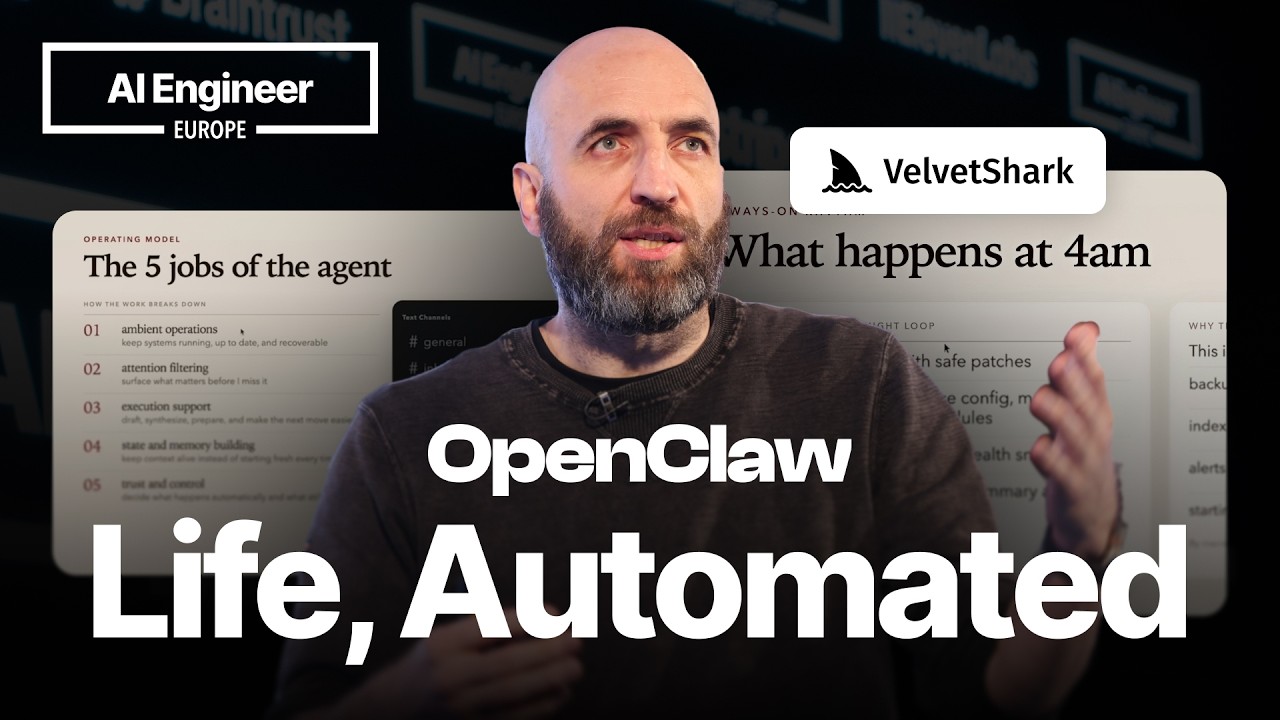
Sienkiewicz broke down the agent's operation into five key jobs:

  • Ambient Operations: Keeping systems running, up-to-date, and recoverable.
  • Attention Filtering: Surfacing what matters most and flagging what might be missed.
  • Execution Support: Drafting, synthesizing, preparing, and making tasks easier.
  • State and Memory Building: Keeping context alive by instead of starting fresh every time.
  • Trust and Control: Deciding what happens automatically and what still requires explicit user input.

He highlighted specific examples of how the agent functions, such as proactively catching potential issues like a Netflix payment failure or reminding him about an upcoming meeting. He also shared how the agent helps manage his inbox, drafting replies to urgent emails and organizing them into relevant folders.

Building Trust and Managing Complexity

The presentation also touched on the challenges that arise as the system grows. Issues like "bad memory compounds" and "brittle automations" can become operational risks. "Noisy notes create noisy associations," and "weak boundaries matter more as reach increases." Sienkiewicz stressed the importance of meticulously managing these aspects, suggesting that a well-structured and inspectable system is crucial.

He emphasized the importance of a structured approach to building and maintaining such an agent:

  • Start with a recurring pain point.
  • Grow trust incrementally.
  • Build the knowledge base as you go.
  • Keep the system inspectable.
  • Separate judgment from predictable execution.
  • Optimize for your future self.

His concluding thought was that personal agents become most valuable when they transition from being a novel demo to becoming boring, reliable infrastructure. The real user of tomorrow is, in essence, the optimized version of oneself, supported by a seamless AI agent.

© 2026 StartupHub.ai. All rights reserved. Do not enter, scrape, copy, reproduce, or republish this article in whole or in part. Use as input to AI training, fine-tuning, retrieval-augmented generation, or any machine-learning system is prohibited without written license. Substantially-similar derivative works will be pursued to the fullest extent of applicable copyright, database, and computer-misuse laws. See our terms.