

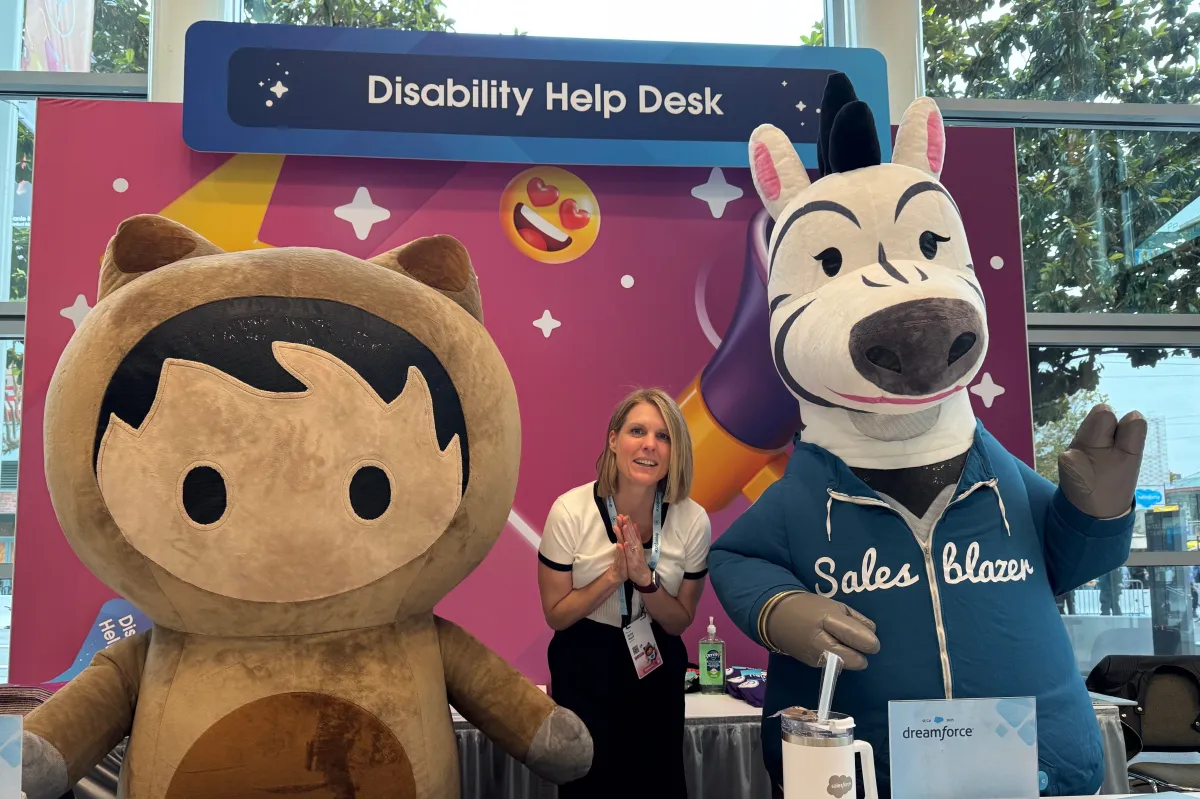
The challenge of delivering seamless accessibility support at large-scale events has long been a logistical hurdle. Salesforce recently unveiled a significant leap forward, demonstrating how agentic AI can fundamentally transform this experience. By deploying an Agentforce-powered channel expert at its Dreamforce Disability Help Desk, the company has established a new benchmark for responsive and personalized accessibility services. This initiative not only streamlines operations but also redefines what inclusive event participation can look like for attendees with diverse needs.
Historically, providing comprehensive accessibility support at major events like Dreamforce has been a high-touch, labor-intensive endeavor. The Disability Help Desk, established in 2019, aimed to centralize assistance for the 1.3 billion people globally living with disabilities, a significant portion of whom attend such events. While essential, human-led support faced inherent limitations: response times could stretch from minutes to hours, and repetitive inquiries often consumed valuable staff time. This bottleneck meant that complex, real-time coordination requests, which truly require human empathy and judgment, were often delayed, impacting the attendee experience.
Salesforce's solution involved integrating Agentforce, an agentic AI, into a Slack channel, effectively creating a "Channel Expert." This AI agent was meticulously trained on a curated knowledge base of event information, documentation, and past inquiries. Its primary function was to instantly address common, recurring questions, freeing human staff from routine tasks. Crucially, the system incorporated an automated escalation process, ensuring that any inquiry beyond the agent's scope was immediately routed to a human expert, maintaining a critical human-in-the-loop oversight.
Refining Agentic AI for Real-World Accessibility
The deployment yielded immediate, tangible results. The Agentforce channel expert successfully resolved 43% of all inquiries instantly, exceeding its 40% target. This meant questions like "Where is the quiet area in Moscone South?" or "What time does the accessible shuttle leave?" were answered without human intervention. The remaining 15% of inquiries, deemed too complex for the AI, were escalated to human staff, allowing them to focus on high-value tasks such as coordinating sighted guides or managing real-time accommodation adjustments. This strategic division of labor significantly improved overall response efficiency and attendee satisfaction.
However, the path to this success was iterative, underscoring a vital lesson in agentic AI development: human oversight and continuous refinement are non-negotiable. Initially, the agent struggled with vague responses and interpreting varied phrasing, highlighting the need for a robust and well-structured knowledge base. According to the announcement, Salesforce's Office of Accessibility team addressed this by strengthening the data, continuously testing, and even leveraging tools like Google Gemini to generate and test diverse question formulations. This iterative approach ensured the agent's accuracy and adaptability, proving that effective agentic AI accessibility is a journey of constant improvement, not a one-time deployment.