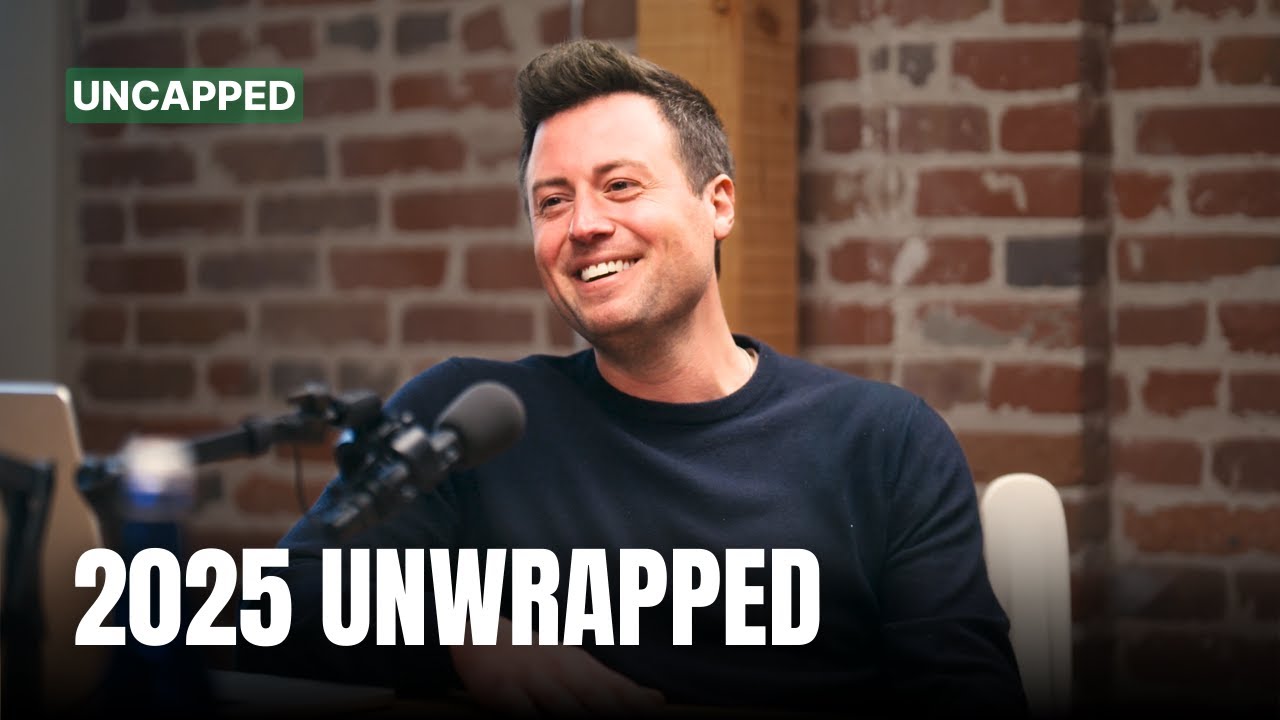
The highlight reel, featuring interviews conducted by Jack Altman of Alt Capital, gathered perspectives from tech luminaries including Marc Andreessen, Vinod Khosla, Brian Armstrong, and Dylan Field. The conversations spanned four critical themes: the future of AI, the complexities of building hard technology, the requisite mindset of successful founders, and evolving venture strategies. The common thread woven through these disparate discussions was the relentless pursuit of non-obvious, massively impactful outcomes.
Elad Gil, Investor at Gil Capital, grounded the discussion in historical perspective, noting that people frequently declare major trends "over" or "overhyped" prematurely. His lesson, particularly relevant to AI, is simple: "It's still early for a longer span than you would think." This sentiment was amplified by Khosla Ventures’ Vinod Khosla, who looked 15 years ahead, predicting an "era of abundance that's so large, it's really hard for people to imagine." Khosla contends that the need for human labor will eventually dissipate under the weight of this technological acceleration. Meanwhile, Vercel CEO Guillermo Rauch spoke of the "Next Internet"—a transition from HTTP to MCP (Multi-Agent Computation Protocol)—where the world becomes a collaboration between highly specialized AI agents, rather than one monolithic intelligence controlling all. This suggests that the coming years will not just see better tools, but entirely new computational architectures designed for intelligent collaboration.
The conversation shifted sharply when addressing the challenges of building hard technology, particularly in highly regulated sectors like defense. Shaun Maguire, Partner at Sequoia, pointed out that some hard tech categories depend entirely on single, visionary companies pushing the boundaries, citing SpaceX and Tesla as examples of market creation through sheer force of will. However, that force must be directed outward, a point emphasized by Anduril Co-Founder Trae Stephens.
Building hard tech requires more than just technical excellence. "This is not the field of dreams. If you build it, they do not come," Stephens asserted, describing the reality of government procurement.
Jordan Bramble, CEO of Antares, elaborated on this, arguing that success in defense tech relies less on passive product superiority and more on developing an "information edge," anticipating how budgets and strategic needs will evolve before the market demands a solution. This proactive approach contrasts sharply with the "build it and they will come" ethos often associated with pure software startups.
The founders’ segment revealed a shared philosophy centered on conviction and an almost ruthless commitment to excellence. Christina Cacioppo, CEO of Vanta, encapsulated the competitive nature of the market succinctly: "All's fair in love and capitalism." She noted that customers don't care if you were first; they care if you are the best solution today. This emphasis on maintaining quality and ambition was echoed by Qasar Younis, CEO of Applied Intuition, who stated his refusal to "lower my bar," fearing that mediocrity would inevitably follow. Coinbase CEO Brian Armstrong addressed the necessity of difficult, contrarian decisions in leadership. He explained that while one shouldn't seek out confrontation, "if you're in a position of leadership, it will occasionally become necessary for you to do something really difficult, which will piss off some large group of people, but it's the right thing to do for the company." This difficult conviction must be balanced by self-awareness; Figma CEO Dylan Field cautioned against becoming "too attached to the chip on your shoulder that you don't work through it."
The venture strategies segment explored the shifting dynamics between founders and their financial backers. Marc Andreessen of a16z was unequivocal about what founders truly seek from investors: "The thing that you want from your venture firm is power." This power, he suggested, acts as a "bridge loan" of brand and influence until the startup can establish its own gravitational pull. However, this power must be wielded strategically, often in a supporting role. Keith Rabois, Managing Director at Khosla Ventures, described the ideal relationship: "I think for the best founders, being a consigliere is like 99% of the value." This acknowledges that while capital is table stakes, strategic counsel and network access are the true differentiators. Conviction founder Sarah Guo spoke about the necessity of VCs taking significant risk on the non-obvious, often publishing their predictions knowing that some will "look very stupid," but that this clarity of thought is essential to find the next generational company. Benchmark’s Peter Fenton emphasized that in a crowded field, success often comes down to "one person who has this clarity," and the VC’s role is to act as an amplifier for that singular vision.
The interviews collectively underscore that the technological revolution, fueled by AI and hard tech, requires founders and investors to operate with heightened ambition, relentless competitive drive, and an unwavering commitment to clarity, regardless of the market noise or the difficulty of the path ahead.