Voice AI's Next Frontier: What Works in 2026

6 min read
Voice AI's Next Frontier: What Works in 2026
Latent Space
Visual TL;DR
Current Voice AIContext
sophisticated voice agents built on a three-step cascaded pipeline
From the article 9 mentionsIn a recent discussion on the future of voice AI, experts from leading companies like Decagon, Vapi, Retell AI, and Smallest AI convened to dissect the current landscape and future trajectory of building sophisticated voice agents.
Future: Hybrid ModelsEffect
combining strengths of different approaches for better performance
From the articleLooking ahead, the experts anticipate a hybrid future where different architectural approaches might coexist.
Cascaded PipelineCore
Speech-to-Text, LLM processing, then Text-to-Speech for responses
From the article 3 mentionsThe prevailing architecture for building advanced voice agents today involves a three-step cascaded process.
Voice AI in 2026Outcome
sophisticated, conversational AI experiences across diverse applications
From the article 8 mentionsBuilding effective voice agents involves a delicate balancing act between several critical factors.
Current Voice AIContext
sophisticated voice agents built on a three-step cascaded pipeline
From the article 9 mentionsIn a recent discussion on the future of voice AI, experts from leading companies like Decagon, Vapi, Retell AI, and Smallest AI convened to dissect the current landscape and future trajectory of building sophisticated voice agents.
Cascaded PipelineCore
Speech-to-Text, LLM processing, then Text-to-Speech for responses
From the article 3 mentionsThe prevailing architecture for building advanced voice agents today involves a three-step cascaded process.
ChallengesDriver
From the article 4 mentionsThe conversation, hosted as part of the "Forward Deployed" podcast series, highlighted the intricate challenges and emerging solutions in creating truly conversational AI experiences.
Voice-to-Voice ModelsContext
From the article 5 mentionsWhile voice-to-voice models are an area of active research, the consensus among the experts is that they are not yet robust enough for the nuanced interactions required in many applications.
Future: Hybrid ModelsEffect
combining strengths of different approaches for better performance
From the articleLooking ahead, the experts anticipate a hybrid future where different architectural approaches might coexist.
InterpretabilityEffect
understanding how AI makes decisions for trust and debugging
Voice AI in 2026Outcome
sophisticated, conversational AI experiences across diverse applications
From the article 8 mentionsBuilding effective voice agents involves a delicate balancing act between several critical factors.

Contents(4)

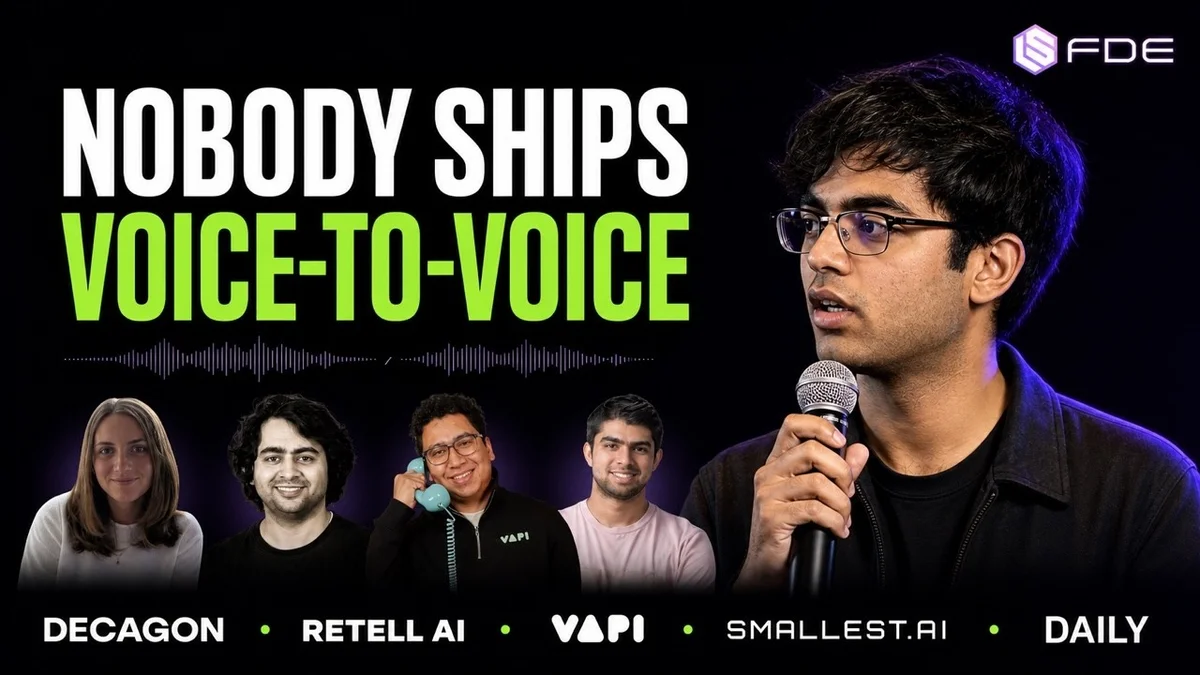
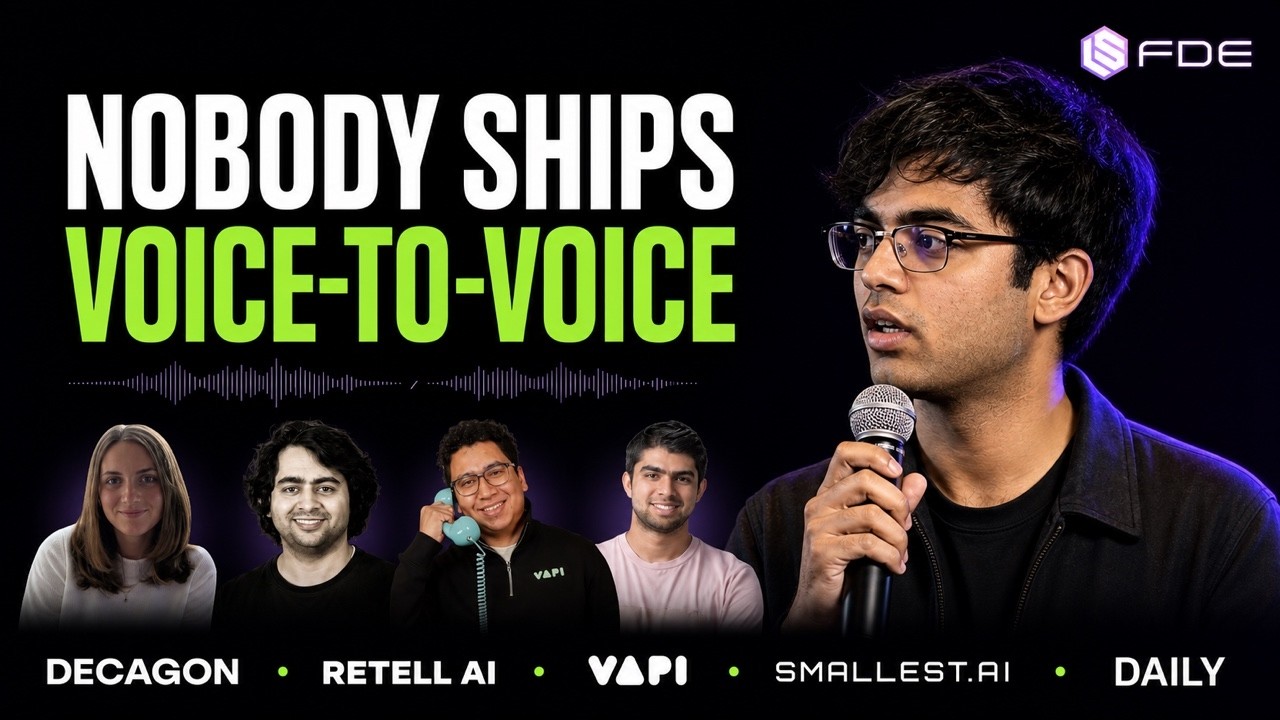
In a recent discussion on the future of voice AI, experts from leading companies like Decagon, Vapi, Retell AI, and Smallest AI convened to dissect the current landscape and future trajectory of building sophisticated voice agents. The conversation, hosted as part of the "Forward Deployed" podcast series, highlighted the intricate challenges and emerging solutions in creating truly conversational AI experiences.

Voice AI's Next Frontier: What Works in 2026 - Latent Space
Voice AI's Next Frontier: What Works in 2026 — from Latent Space

The Cascaded Pipeline: The Current Standard

The prevailing architecture for building advanced voice agents today involves a three-step cascaded process. As detailed by the panelists, this typically begins with converting spoken audio into text (Speech-to-Text), followed by processing that text through a Large Language Model (LLM) to understand intent and generate a response, and finally converting the LLM's text output back into speech (Text-to-Speech).

While voice-to-voice models are an area of active research, the consensus among the experts is that they are not yet robust enough for the nuanced interactions required in many applications. "The reality is those just are not super reliable right now," noted one speaker, emphasizing that the cascaded approach, despite its complexity, currently offers greater control and reliability.

Building effective voice agents involves a delicate balancing act between several critical factors. The panelists delved into the inherent trade-offs engineers face:

  • Intelligence vs. Latency: Achieving highly intelligent and contextually relevant responses often comes at the cost of increased latency. Engineers must optimize this balance based on the specific use case.
  • Reliability and Fallbacks: Given the potential for LLM infrastructure to experience downtime, robust voice agents require fallback mechanisms, or "waterfalls of models," to ensure continuous operation.
  • Turn-Taking: What might seem like a simple problem, knowing when to speak versus when to listen, is a complex challenge in voice AI. Distinguishing between a pause for thought and the end of a turn is crucial for natural conversation flow.

From Enterprise to Consumer: Diverse Applications

The discussion touched upon the wide range of applications for voice AI, from enterprise solutions focused on customer support and call centers, to more experimental deployments like a voice agent built for the World's Fair. The sheer volume of spending in areas like call centers highlights the massive potential for voice AI to improve efficiency and customer experience, provided the technology can overcome its current limitations.

One of the key insights shared was the distinction between inbound and outbound use cases. While inbound calls offer more context about the user's intent, outbound calls, such as debt collection, often face the challenge of users hanging up immediately upon realizing they are interacting with a bot. Solving for this user drop-off is a critical area of development.

The Future: Hybrid Models and Interpretability

Looking ahead, the experts anticipate a hybrid future where different architectural approaches might coexist. While cascaded models offer control, the pursuit of more natural, human-like interactions will likely drive further innovation in speech-to-speech models. A key area of research is ensuring these advanced models remain interpretable, moving beyond black-box systems to understand where they might falter.

Furthermore, the ability to handle diverse languages, accents, and background noise remains a significant focus. While noise cancellation is improving, the nuances of multilingual support and accent variations continue to push the boundaries of current speech technology.

The conversation underscored the rapid evolution of voice AI, emphasizing that while significant progress has been made, critical challenges in reliability, latency, and natural interaction still require dedicated engineering and research efforts.

© 2026 StartupHub.ai. All rights reserved. Do not enter, scrape, copy, reproduce, or republish this article in whole or in part. Use as input to AI training, fine-tuning, retrieval-augmented generation, or any machine-learning system is prohibited without written license. Substantially-similar derivative works will be pursued to the fullest extent of applicable copyright, database, and computer-misuse laws. See our terms.