


Razorpay's Rise: From Startup Struggles to India's Payments Leader

Razorpay's Rise: From Startup Struggles to India's Payments Leader
YC

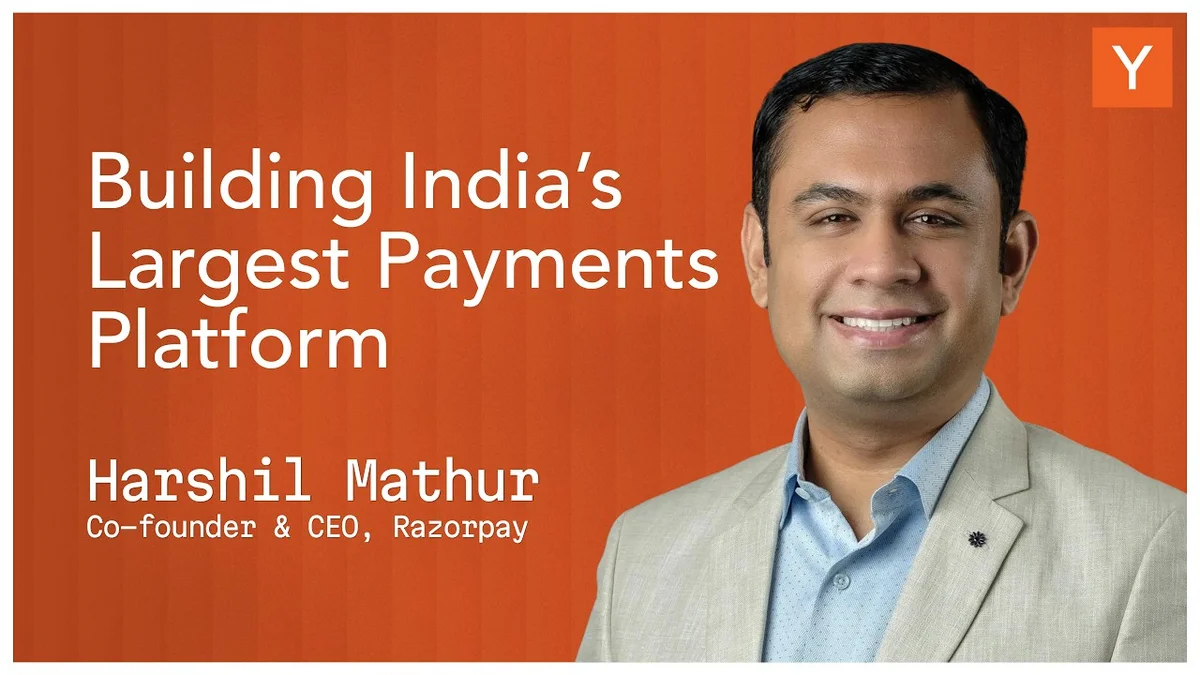
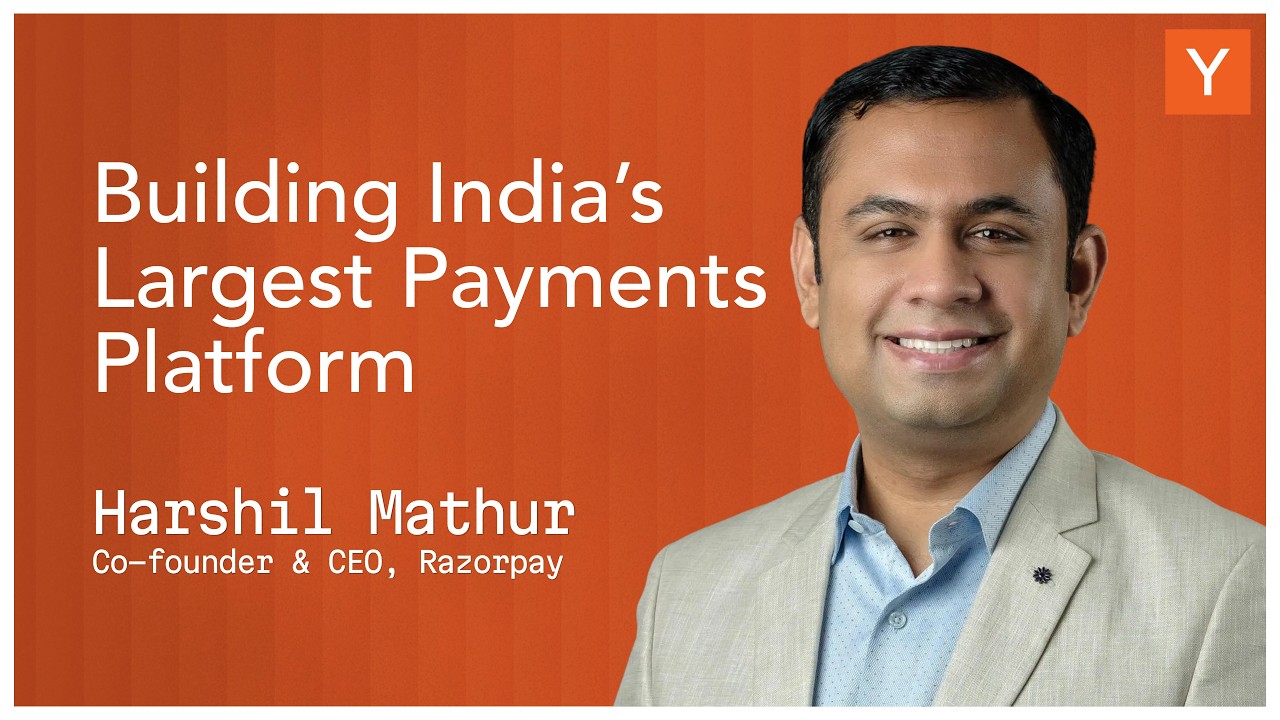
In the bustling world of Indian startups, Razorpay has emerged as a titan in the payments sector, achieving the status of India's largest payments company. This remarkable ascent, detailed in a recent discussion with co-founder Harshil Mathur, highlights a journey marked by early struggles, strategic pivots, and an unwavering focus on customer trust and innovation. Mathur, a techie by background, never initially envisioned a career in finance, but a personal encounter with the complexities of payment processing in India sparked an entrepreneurial fire.

From Coding Passion to Payment Problem-Solving

Mathur's journey into entrepreneurship began not with a grand plan to revolutionize payments, but with a passion for coding and building. While working at an oil company, he found himself dedicating his weekends and evenings to side projects, one of which was a social community platform. It was during the process of accepting payments for this platform that Mathur encountered the significant hurdles and poor user experiences prevalent in India's payment landscape at the time. He observed that accepting digital payments was far more complicated than accepting cash, a paradox that struck him as counterintuitive in the age of burgeoning digital technology.
Related startups

The full discussion can be found on YC's YouTube channel.

How Razorpay Became India’s Largest Payments Company - YC
How Razorpay Became India’s Largest Payments Company — from YC

This realization led him to investigate the market and discover that many startups faced similar challenges. The existing payment gateways were designed for large enterprises, not for the agile, experimental needs of startups. This gap in the market became the fertile ground for what would eventually become Razorpay. Mathur and his co-founder initially considered targeting educational institutions for payment processing, given the significant volume of fee collections. However, they soon found that these institutions were less receptive to digital solutions and were accustomed to traditional, often inefficient, methods.

Pivoting to Startups and Embracing UPI

The pivot towards startups proved to be a pivotal moment. Working in a co-working space, they had direct access to a community of founders facing the same payment challenges. By offering a solution tailored to their needs, Razorpay began to gain traction. A significant turning point came with the rise of UPI (Unified Payments Interface). While many established players were hesitant to adopt this new technology, Razorpay saw its potential. In April 2016, Razorpay became one of the first companies in India to integrate with UPI, a move that predated many of the country's largest banks' adoption. This strategic foresight, coupled with the subsequent demonetization event in November 2016, propelled Razorpay forward. As larger banks struggled to adapt, Razorpay, with its existing UPI infrastructure, was uniquely positioned to onboard a significant number of merchants, solidifying its early market advantage.

Navigating Crises and Building Trust

The path to becoming India's largest payments company was not without its near-death experiences. Mathur recounted a critical moment when, just a week before their Y Combinator demo day, the bank that was supposed to enable their live transactions pulled out due to a customer complaint. This left Razorpay in a precarious position, with many merchants relying on their service. In the face of this crisis, the team's response was crucial. Instead of shutting down or becoming unresponsive, they proactively contacted every single customer, explained the situation, and worked tirelessly to secure a new banking partner. This commitment to transparency and customer support, even in the darkest hours, built immense trust and loyalty. Mathur emphasized that in the B2B and financial services space, trust is paramount, and the human element of customer support, even when it's inefficient, is irreplaceable.

The Role of AI and Future Outlook

Looking ahead, Mathur highlighted the transformative impact of AI on the business. Razorpay is actively integrating AI not to replace human interaction, but to enhance it, particularly in customer support. The company believes that while AI can automate many processes, the human touch remains essential for building deep customer relationships and trust. The ability to leverage AI to manage teams and focus on core product innovation, rather than getting bogged down in micro-management, is a key advantage. Mathur stressed that in the fast-paced tech landscape, agility and the ability to adapt are crucial. Companies that are slow to embrace change and rely solely on existing advantages risk being left behind. Razorpay's journey, from its humble beginnings to its current leadership position, is a testament to its resilience, customer-centricity, and strategic foresight.

© 2026 StartupHub.ai. All rights reserved. Do not enter, scrape, copy, reproduce, or republish this article in whole or in part. Use as input to AI training, fine-tuning, retrieval-augmented generation, or any machine-learning system is prohibited without written license. Substantially-similar derivative works will be pursued to the fullest extent of applicable copyright, database, and computer-misuse laws. See our terms.