

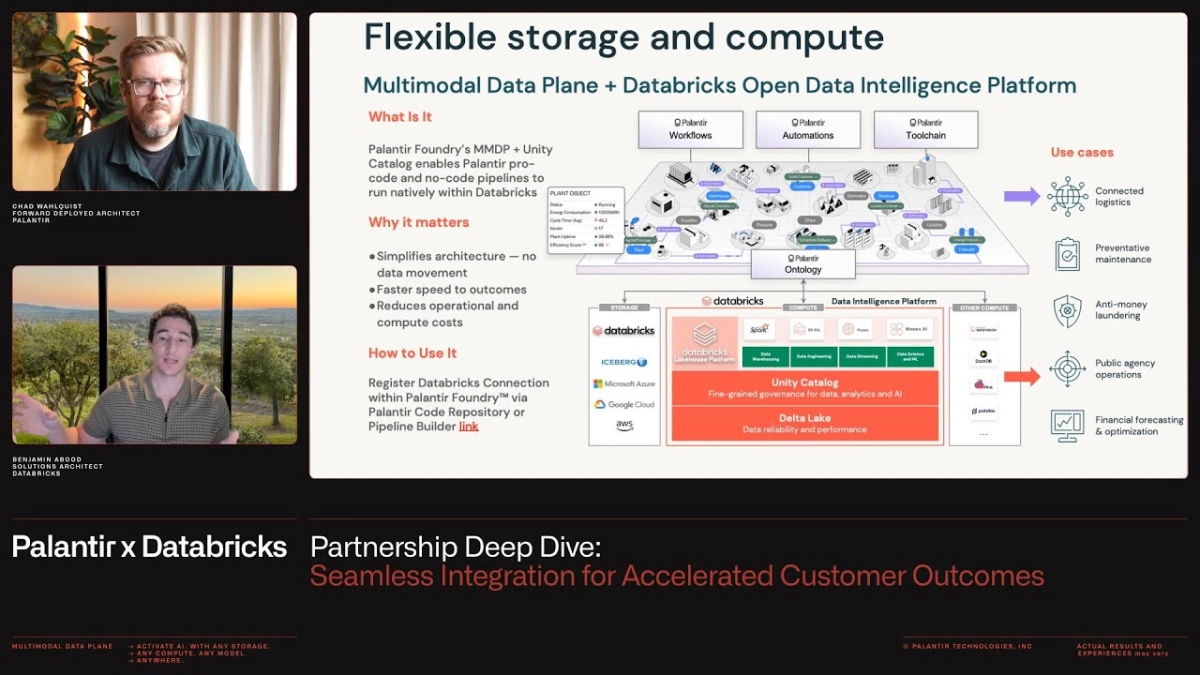
The future of operational artificial intelligence hinges not just on sophisticated models, but on eliminating the architectural friction that plagues most enterprise data stacks. This was the central theme of a recent deep dive presentation detailing the collaboration between Palantir and Databricks, demonstrating how two of the industry’s most powerful platforms are integrating at the foundational level to accelerate customer outcomes. The partnership is a direct response to a common reality: customers were already utilizing both Palantir Foundry and the Databricks Open Data Intelligence Platform side-by-side, but the lack of seamless interoperability created unnecessary complexity and latency.
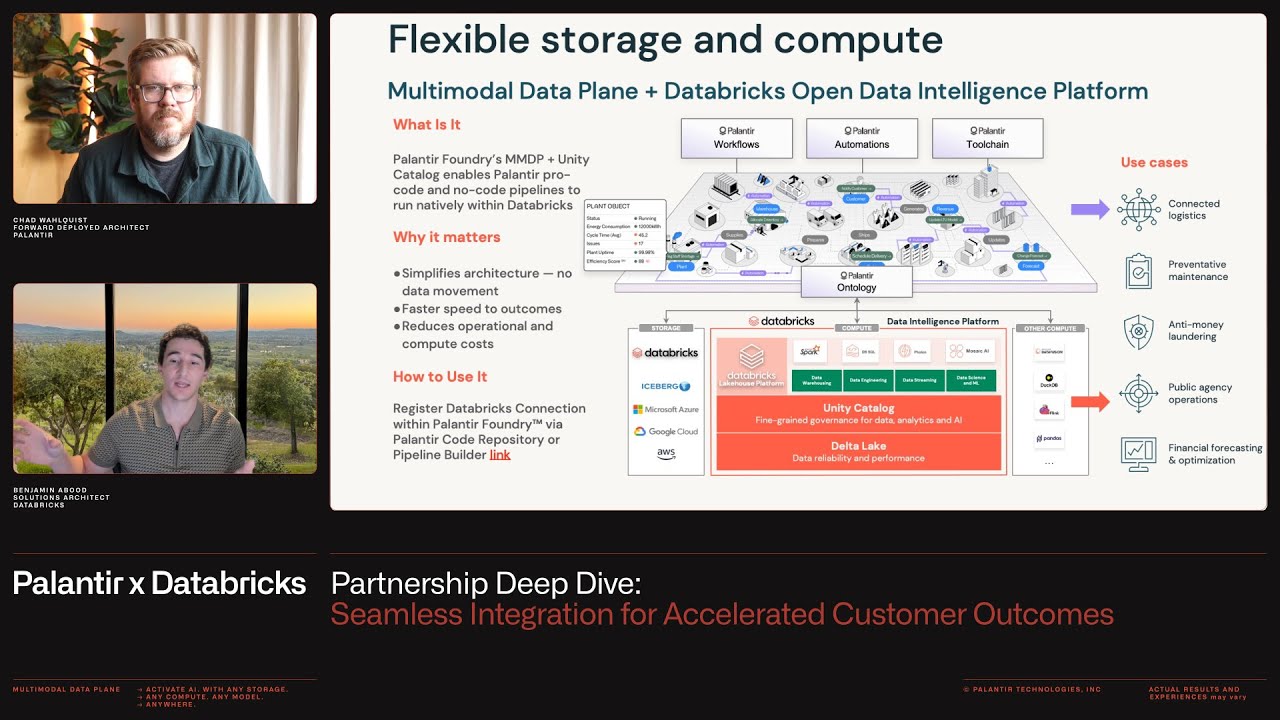
Chad Walkowski, a Deployed Architect at Palantir, and Ben Abood, an Architect at Databricks, jointly presented the technical pillars of the newly deepened integration. They emphasized that the collaboration was inherently “customer-driven,” born from joint executive discussions last year centered on how to resolve the impedance mismatch between the two ecosystems. The integration focuses on four key pillars: Data Federation, Governance, Compute, and AI & Workflows, all designed to deliver value quicker by removing the necessity of moving and copying data across platforms.
The primary technical breakthrough lies in achieving true bi-directional interoperability. Historically, integrating such disparate platforms required cumbersome ETL (Extract, Transform, Load) pipelines, leading to data duplication, increased storage costs, and stale information. Databricks’ Unity Catalog acts as the unified governance layer, allowing Palantir Foundry to register Databricks tables as "Virtual Tables" directly within its environment. This mechanism means that Foundry can access and utilize data residing in the Databricks Lakehouse without physically moving it.
“Really, this is the synchronous bi-directional integration backward and forward so that I can have data in Databricks and register it in Palantir, I can create data in Palantir, register it in Databricks, and move those back and forth seamlessly, all with a unified catalog and governance around it,” Walkowski explained. This architectural simplification is paramount.
The core advantage is immediate, secure data sharing and simplified governance. Databricks’ Unity Catalog manages the fine-grained access control permissions, which are enforced when data is federated into Foundry. Palantir leverages service principal and workload identity federation for authentication, ensuring that Foundry accesses data in Databricks only with the necessary permissions, eliminating the need for hard-coded credentials or secrets.