

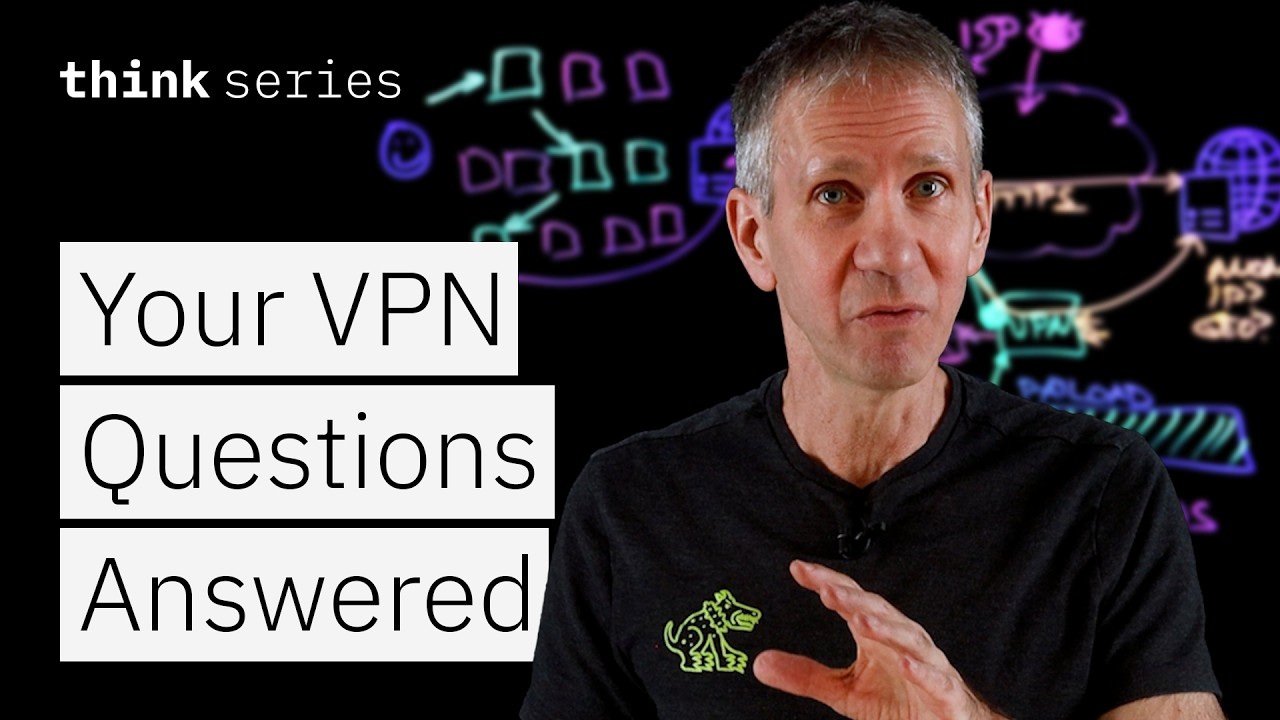
Jeff Crume, a Distinguished Engineer at IBM, revisits the topic of online privacy in a follow-up video to his previous discussion on virtual private networks (VPNs). This video aims to correct a misconception from the earlier video and further clarify the nuances of personal privacy in the digital realm, specifically contrasting the functionalities and benefits of VPNs with the Tor network.
Understanding the Core Concepts
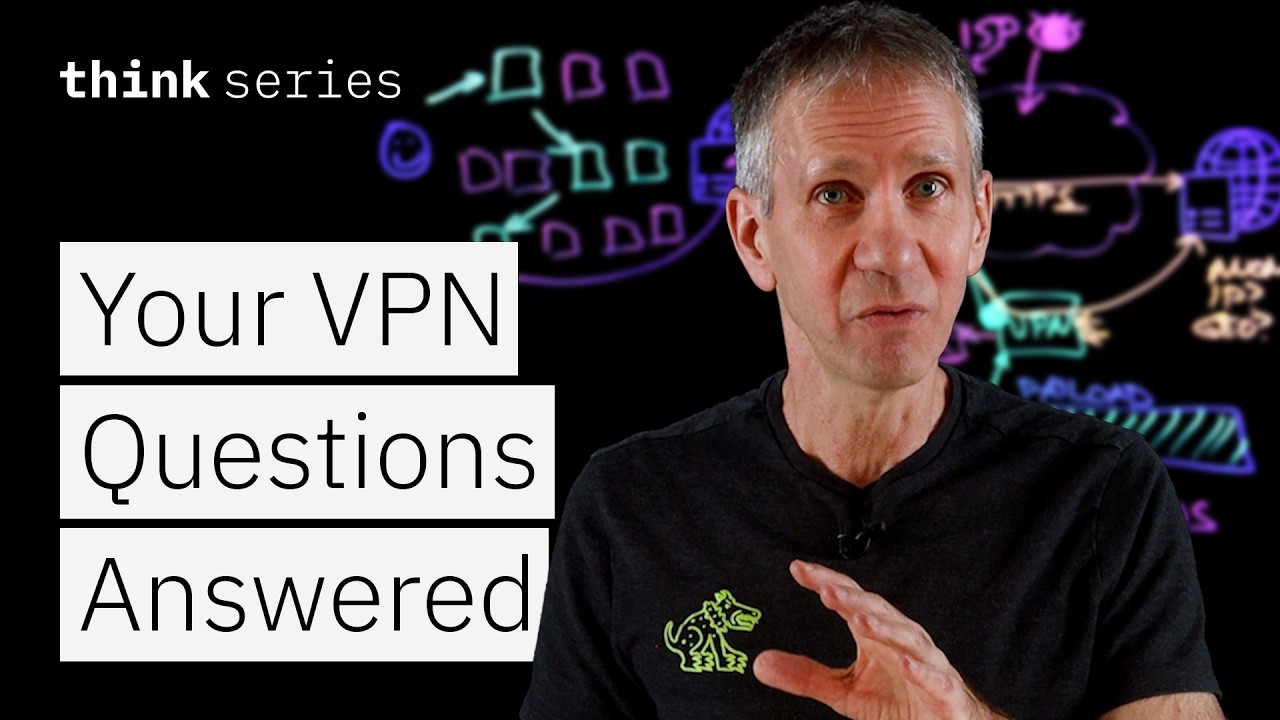
Crume begins by reiterating the basic function of a VPN: to encrypt your internet traffic, thereby preventing your Internet Service Provider (ISP) from seeing your online activities. He illustrates this with a simple diagram showing a user connecting to a website via HTTPS, with the traffic passing through a cloud representing the internet. He emphasizes that while HTTPS encrypts the data itself, making it unreadable to intermediaries, it doesn't hide the destination or the fact that you are connecting to a specific IP address.
A VPN, as Crume explains, adds another layer of privacy. When using a VPN, your traffic is routed through a VPN server. This means that your ISP can only see that you are connected to the VPN server, not the final destination of your traffic. Similarly, the website you visit sees the IP address of the VPN server, not your own, thus masking your location and identity. This is particularly important for protecting sensitive information like passwords and personal data from both your ISP and any potential eavesdroppers on the network.
The full discussion can be found on IBM's YouTube channel.
The Role of End-to-End Encryption
Crume highlights that while HTTPS encrypts the data in transit, it does not inherently protect your metadata, such as the IP addresses you connect to and the frequency of those connections. This is where a VPN becomes crucial, as it encrypts all your traffic, including this metadata, from your ISP.
Addressing Misconceptions and Introducing Tor
The video then pivots to address a key point of clarification and introduces the Tor network. Crume corrects a potential misunderstanding from his previous video, stating that while HTTPS encrypts the content of your communication, it doesn't hide the IP addresses or the sites you visit from your ISP. The primary function of a VPN is to add anonymity by masking your IP address and encrypting your entire internet connection.
Crume then introduces the Tor network as a more advanced tool for privacy and anonymity. He illustrates Tor's operation by showing the user's traffic being routed through multiple, distinct relay nodes. Each relay node only knows the IP address of the previous node and the IP address of the next node. This multi-layered encryption and routing process makes it significantly harder to trace the origin of the traffic.
VPN vs. Tor: A Comparative Analysis
Crume provides a comparative breakdown of VPNs and Tor based on several key factors:
- Anonymity: While VPNs offer a good level of privacy by masking your IP address, Tor is designed for a higher degree of anonymity. The multiple relays in the Tor network mean that no single node knows both your IP address and the destination website.
- Speed: VPNs generally offer faster speeds because they typically route traffic through fewer servers and use more efficient encryption protocols. Tor's multi-hop routing, while enhancing anonymity, inherently slows down the connection. Crume notes that for activities like streaming or downloading large files, a VPN is often the preferred choice due to speed.
- Simplicity: VPNs are generally easier to set up and use, requiring a simple software installation and connection. Tor, while also user-friendly with its dedicated browser, can be perceived as more complex due to its underlying architecture.
- Security: Both VPNs and Tor employ encryption to secure your data. However, Tor's layered encryption and distributed network are designed to protect against sophisticated surveillance methods.
- Use Cases: VPNs are suitable for everyday privacy, bypassing geo-restrictions, and securing public Wi-Fi connections. Tor is better suited for users who require a higher level of anonymity, such as journalists, whistleblowers, or activists operating in restrictive environments, or for accessing the dark web.
Crume also touches upon the potential risks associated with free VPN services, suggesting that they might monetize user data by selling it to third parties, thus compromising the very privacy they claim to offer. He implies that users should be cautious and opt for reputable, paid VPN services if privacy is a primary concern.
The Takeaway: Choosing the Right Tool
In conclusion, Crume emphasizes that the choice between a VPN and Tor depends on the individual's specific needs and threat model. A VPN offers a good balance of privacy, speed, and ease of use for general online activities. Tor, while slower, provides a superior level of anonymity for users who need to protect their identity and activity from pervasive surveillance. He advises users to understand the trade-offs and choose the tool that best aligns with their privacy goals.
