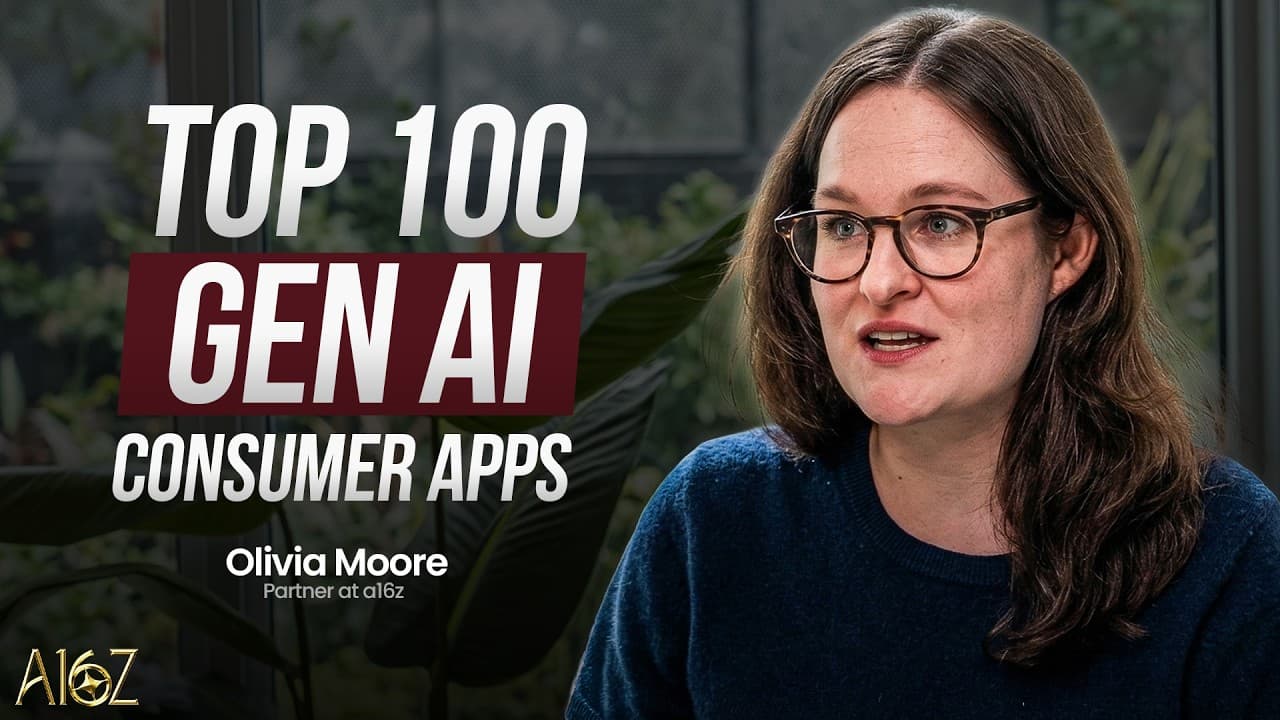
In a recent discussion, Anish Acharya, General Partner at a16z, and Olivia Moore, Partner at a16z, delved into the burgeoning landscape of generative AI consumer applications. Their conversation highlighted the immense growth and evolving adoption patterns of these tools, underscoring a dynamic period for the AI startup ecosystem.
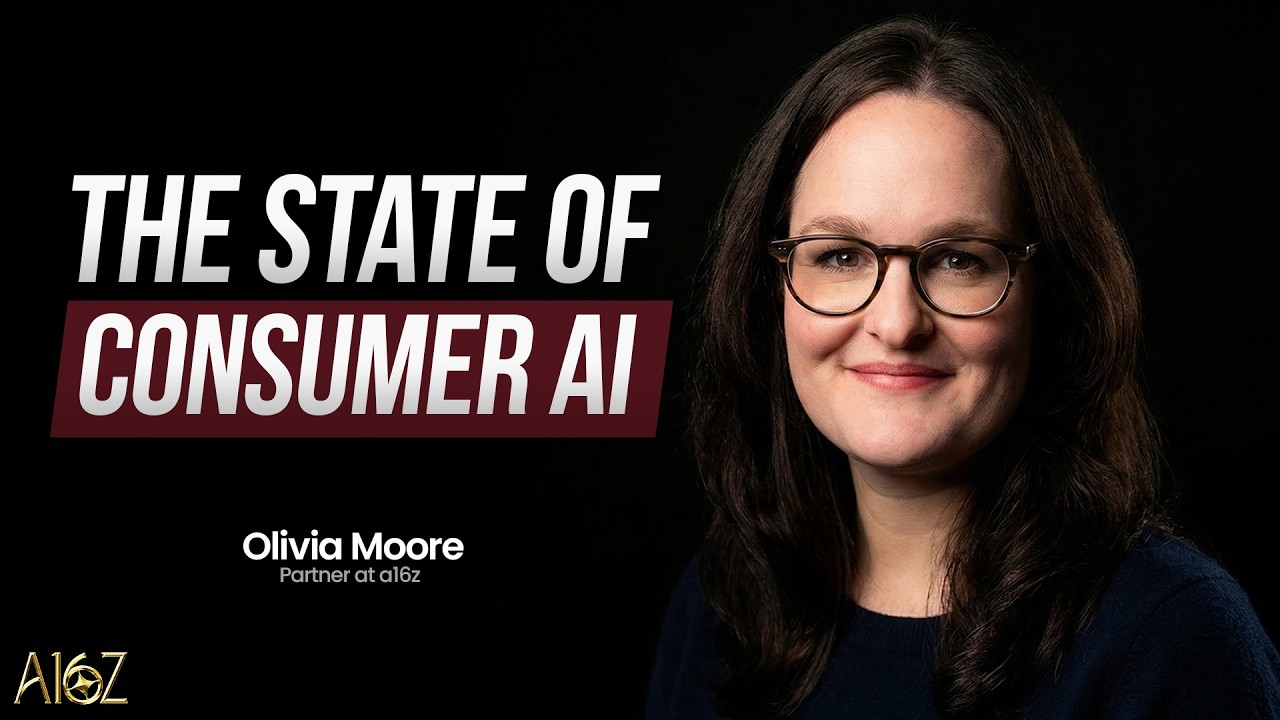
Key Figures in AI Investment
Anish Acharya, as a General Partner at Andreessen Horowitz (a16z), is a prominent figure in venture capital, focusing on investments in the technology sector, particularly AI. His insights are crucial for understanding the investment trends and the potential of emerging technologies. Olivia Moore, also a Partner at a16z, brings her expertise to bear on identifying and nurturing promising startups, with a keen eye on how technology impacts consumer behavior and market dynamics.
The Generative AI Consumer App Landscape
The discussion centered around the 'Top 100 GenAI Consumer Apps' report, a recurring analysis that tracks the growth and adoption of AI-powered applications. Acharya noted that this is the most exciting time of the year because the latest edition of the report is being released, showcasing significant shifts and trends.
Moore elaborated on the report's findings, emphasizing the substantial growth observed since its initial release in 2023. She highlighted that while the overall market is expanding, the competition is intensifying, with both established players and new entrants vying for user attention. Specifically, she pointed out that ChatGPT, Gemini, and Claude are leading the charge, not only in terms of user numbers but also in their ability to retain users and foster deeper engagement.
Shifting User Behavior and AI Integration
A key theme was the evolving user behavior and the increasing integration of AI into everyday digital experiences. Moore stated, "In many ways, like so much has changed, and there's been just an incredible amount of growth since the first time we put out this list in 2023." She further elaborated on the subtle yet significant shifts observed, noting that while the core AI models are foundational, the way users interact with them and the new applications being built around them are what truly define the market's trajectory.
The conversation touched upon the phenomenon of "legacy apps" that are now incorporating AI, a trend observed in their reports. Moore mentioned, "This was actually the first issue that we included products that were AI-native as well as AI-native players." This indicates a broader market maturation where AI is no longer just a niche feature but a core component of many popular applications.
The Rise of AI-Enhanced Platforms
The report's data revealed that many previously non-AI-centric applications have now become significantly AI-enhanced. Moore cited examples like Canva and Notion, noting that "things like Canva, Notion, Freepik, Doubao, Janitor AI, Quark, Sumo... Notion actually announced that now they think half of their ARR is driven by AI features, which is very cool." This integration of AI into established workflows suggests a powerful network effect, where users who are already familiar with these platforms are readily adopting the new AI capabilities.
Geographic Variations in AI Adoption
The discussion also explored the global adoption of AI, highlighting significant regional differences. Acharya pointed out the data showing that "More Texans use ChatGPT for free than total people use Claude in the US, so we have a differently-shaped problem than they do." This observation, while specific, points to broader trends in how AI adoption varies based on cultural factors, market penetration, and potentially the availability of certain AI models or features in different regions.
The report also included a heatmap illustrating AI adoption scores by country, revealing that Singapore, Hong Kong, and the UAE lead in AI adoption, while the US ranks at number 20. This data suggests that while large markets like the US have significant AI usage, smaller, tech-forward nations are often at the forefront of adoption, potentially due to focused government initiatives and a highly tech-savvy population.
Key Takeaways and Future Outlook
The conversation underscored several key themes: the consolidation of AI capabilities within major platforms, the emergence of niche AI tools, and the growing importance of multimodal AI. Acharya and Moore agreed that the AI market is still in its early stages, with significant potential for further innovation and disruption.
The data presented indicates a strong consumer appetite for AI tools, particularly those that offer tangible benefits in productivity, creativity, and daily tasks. The continued investment and development in this space suggest that AI will play an increasingly central role in the digital economy, shaping how we interact with technology and each other.