
• StartupHub.ai
    StartupHub.aiAI Intelligence
Discover
  • Home
  • Search
  • Trending
  • News
Intelligence
  • Market Analysis
  • Comparison
  • Market Map Maker
    New
Workspace
  • Email Validator
  • Pricing
Company
  • About
  • Editorial
  • Terms
  • Privacy
  1. Home
  2. AI News
  3. Meta Hires Goldman Banker To Manage The Financial Risks Of Its Aggressive AI Build
  1. Home
  2. AI News
  3. AI Video
  4. Meta Hires Goldman Banker to Manage the Financial Risks of its Aggressive AI Build
Ai video

Meta Hires Goldman Banker to Manage the Financial Risks of its Aggressive AI Build

Startuphub.ai Staff
Startuphub.ai Staff
Jan 12 at 8:23 PM4 min read
Meta Hires Goldman Banker to Manage the Financial Risks of its Aggressive AI Build

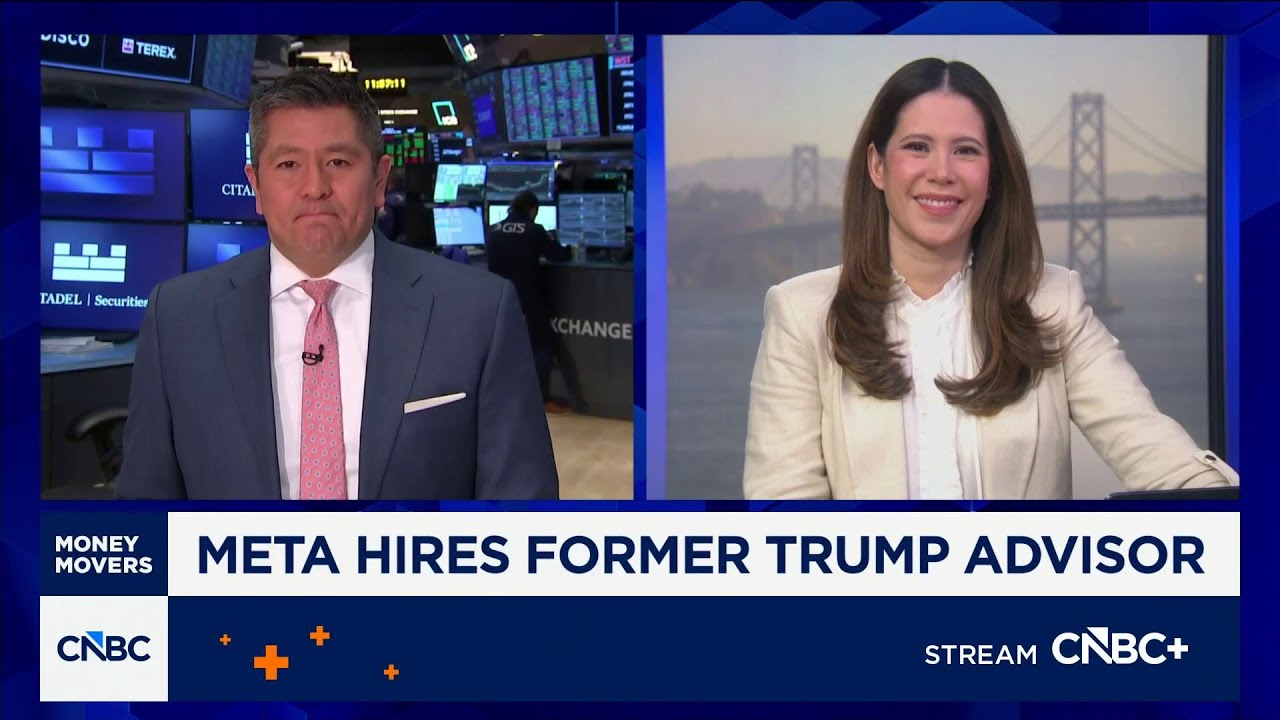
Meta Platforms’ appointment of former Goldman Sachs partner and Trump administration advisor Dina Powell McCormick as President and Vice Chair is a strategic move that speaks volumes about the shifting economic realities of the AI race. As detailed by CNBC’s Deirdre Bosa on Money Movers, this hiring signals that Mark Zuckerberg recognizes the company’s new bottleneck is no longer purely technological or product-focused, but centered squarely on capital allocation, execution risk, and navigating the geopolitical complexities inherent in massive infrastructure build-outs. McCormick’s deep background in finance and strategic government relations positions her as the essential operator Meta needs to manage its unprecedented investment strategy.

The context for this high-profile hire is Meta’s dramatic shift in capital expenditure. The company is currently spending far more aggressively on infrastructure, specifically Capex and R&D as a share of revenue, than any of its hyper-scaler peers, and far exceeding the S&P 500 median. This is a crucial distinction that Bosa highlights: Meta has transitioned from a high-margin, asset-lite company into one whose cost structure now resembles a heavy infrastructure player. Critically, however, it lacks the foundational revenue stream that typically offsets this spending for its peers. As Bosa noted, Meta now looks like a hyper-scaler, “but without the cloud revenue to actually offset it.” This immense, front-loaded capital commitment—driven by the necessity of acquiring GPUs and building data centers to train and deploy massive AI models—introduces substantial execution risk that requires a unique financial and strategic skillset.

This is precisely where McCormick’s pedigree comes into play. With 16 years in senior leadership roles at Goldman Sachs, managing sovereign and strategic investment relationships, followed by executive positions in private investment firms and a stint as Deputy National Security Advisor for strategy under President Trump, she brings a combination of sophisticated financial structuring expertise and high-level political acumen. Meta’s AI infrastructure push necessitates structuring large pools of capital, often through complex mechanisms like joint ventures, long-dated operating leases, and specialized funding vehicles, specifically designed to push CapEx off the immediate balance sheet. As Bosa summarized, “Powell McCormick’s background is exactly where Meta’s new bottlenecks are.” She is tasked not only with optimizing the financial engineering of the build-out but also with clearing the political and regulatory paths necessary for projects of this scale, a critical function given the increasing scrutiny global governments place on technology giants and AI development.

The strategic divergence in the mega-tech landscape is becoming increasingly stark, placing Meta’s infrastructure-heavy bet in high relief. Meta is choosing the path of vertical integration and heavy investment, betting that ownership of the entire AI stack—from chips to models to consumer applications—will be the defining factor of long-term dominance. This contrasts sharply with the "Buy" strategy being employed by other giants. This morning’s news that Apple, an organization historically focused on maintaining high margins and asset lightness, has partnered with Google to use its Gemini models for Apple’s next generation of AI-powered Siri capabilities illustrates this split perfectly. “This sets up a clear contrast in megacap strategy,” Bosa explained. “Apple is opting out of the most capital intensive part of the race, while Meta is pushing deeper.”

The immediate market reaction suggests investors are currently favoring the less capital-intensive route. Companies that can plug into existing AI capabilities without reshaping their entire cost structure—like Alphabet, which has seen superior stock performance over the last six months—are being rewarded. Alphabet, while also spending heavily, possesses clearer pathways to monetization through its existing world-class models and its cloud division, which now includes new revenue streams like the Apple partnership. Meta, by contrast, must still prove that its enormous relative spend—which includes both infrastructure and high-priced talent—can translate into returns that are more than just incremental ad gains. The challenge for Dina Powell McCormick and Mark Zuckerberg now is converting this colossal investment into defensible, high-margin revenue streams, validating the strategic decision to build everything rather than buy or partner.

#AI
#Artificial Intelligence
#Meta hires a
#Technology

AI Daily Digest

Get the most important AI news daily.

GoogleSequoiaOpenAIa16z
+40k readers