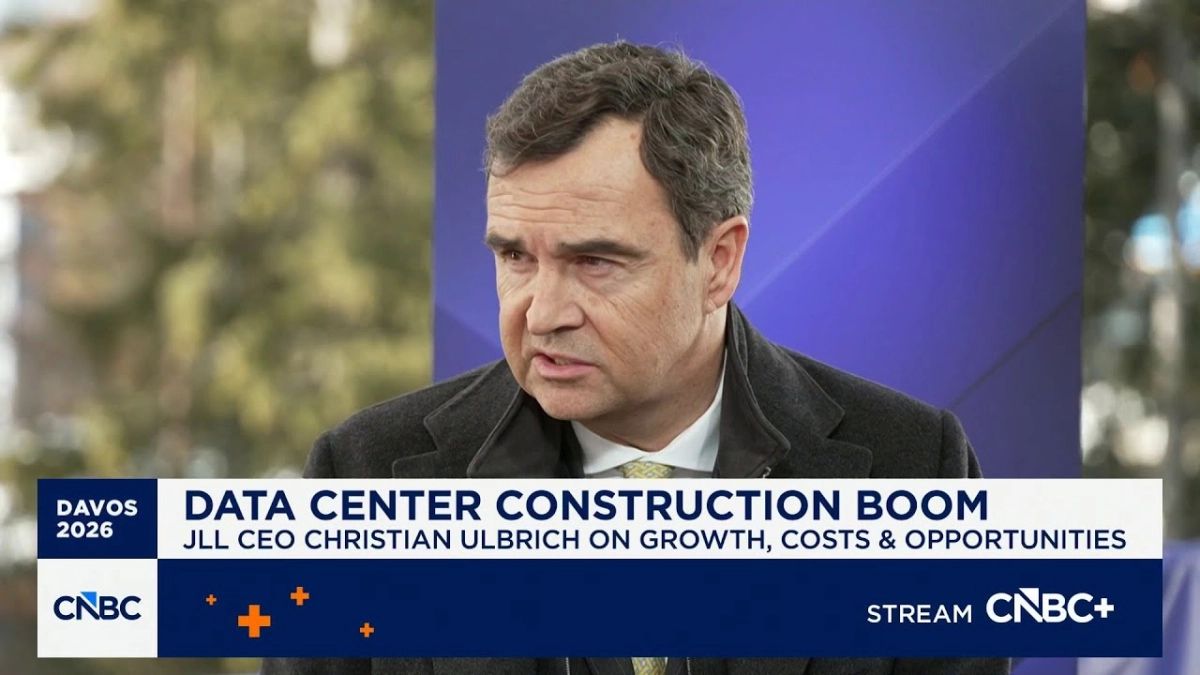
The unprecedented demand for artificial intelligence infrastructure is creating a profound, bifurcated reality in the global real estate market: while traditional commercial and residential sectors struggle under high interest rates and affordability crises, the data center segment is experiencing a construction boom so intense that its primary constraint is no longer capital, but electricity. This divergence explains the remarkable resilience of firms positioned to service the AI build-out, such as JLL. Christian Ulbrich, CEO of the global commercial real estate firm, spoke with CNBC’s Squawk Box at the World Economic Forum in Davos, discussing the explosive growth of data center construction, the resulting power constraints, and the broader challenges facing commercial and residential real estate affordability.
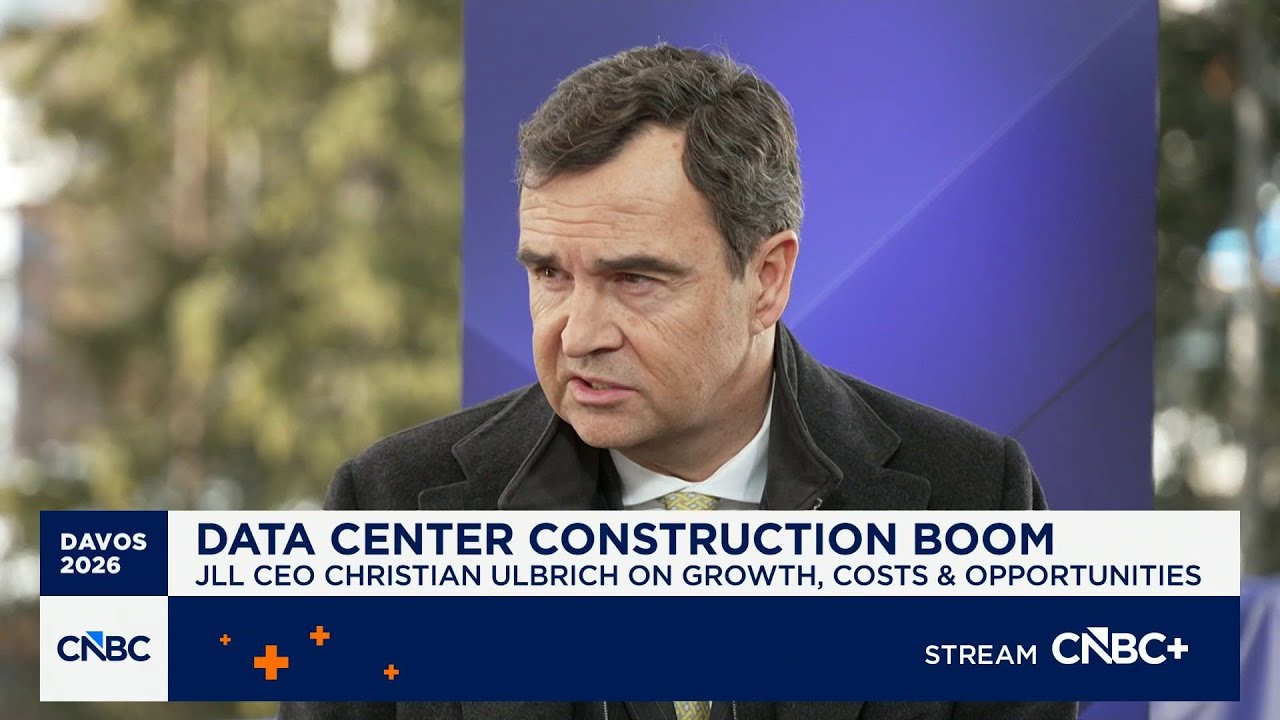
Ulbrich’s firm, Jones Lang LaSalle (JLL), has seen its stock rise significantly even as the broader S&P Real Estate Index remained flat, a performance he attributes directly to their successful engagement with high-growth corporate clients. JLL’s model is crucial to understanding this success: they act as a service provider, managing, designing, and project-managing over 340 data centers globally, but they neither own the physical assets nor bear the full capital risk. This consultative, asset-light approach allows JLL to capitalize on the massive infrastructure spending by hyperscalers and large enterprises without being weighed down by the debt and valuation issues plaguing traditional office or retail property owners.
The scale of the current data center expansion is immense, fueled almost entirely by the computational requirements of generative AI models. However, this growth has hit a critical infrastructural bottleneck. Ulbrich clarifies the fundamental obstacle facing the sector, stating plainly: "Capital is not the constraint... the constraint around data center is power." The sheer energy needed to run and cool these facilities, often demanding capacity equivalent to small cities, has made access to reliable, scalable power the single most valuable resource in site selection. This challenge is compounded by the lengthy timelines required to permit and construct new power plants, meaning that developers are now aggressively seeking sites that already have strong grid access, even if they are geographically unconventional.
This power scarcity is fundamentally reshaping global real estate development patterns. Data centers are increasingly moving away from traditional urban or suburban hubs where power grids are strained and local communities are pushing back against the massive resource consumption. Ulbrich notes that finding suitable locations means looking for geographies "where the legal environment allows you to push it through quite easily, so in the Middle East and other places." This search for power and regulatory ease dictates that data centers are often built on repurposed industrial sites or in areas with robust existing or planned energy infrastructure. The need for land, water (for cooling), and power are the "three big topics" driving site selection, creating a new geopolitical map for digital infrastructure.
While JLL enjoys tailwinds from the AI boom, Ulbrich was also pressed on the broader, more troubled segments of the real estate market, particularly residential housing affordability, a hot-button issue in many global cities. When asked about the impact of institutional investors buying up single-family homes, a topic recently addressed by political leaders, Ulbrich downplayed their overall influence on market prices, noting that institutional purchases accounted for roughly 1.2% of new buys last year. He stressed that the institutional ownership of rental properties remains a small fraction of the total housing stock.