

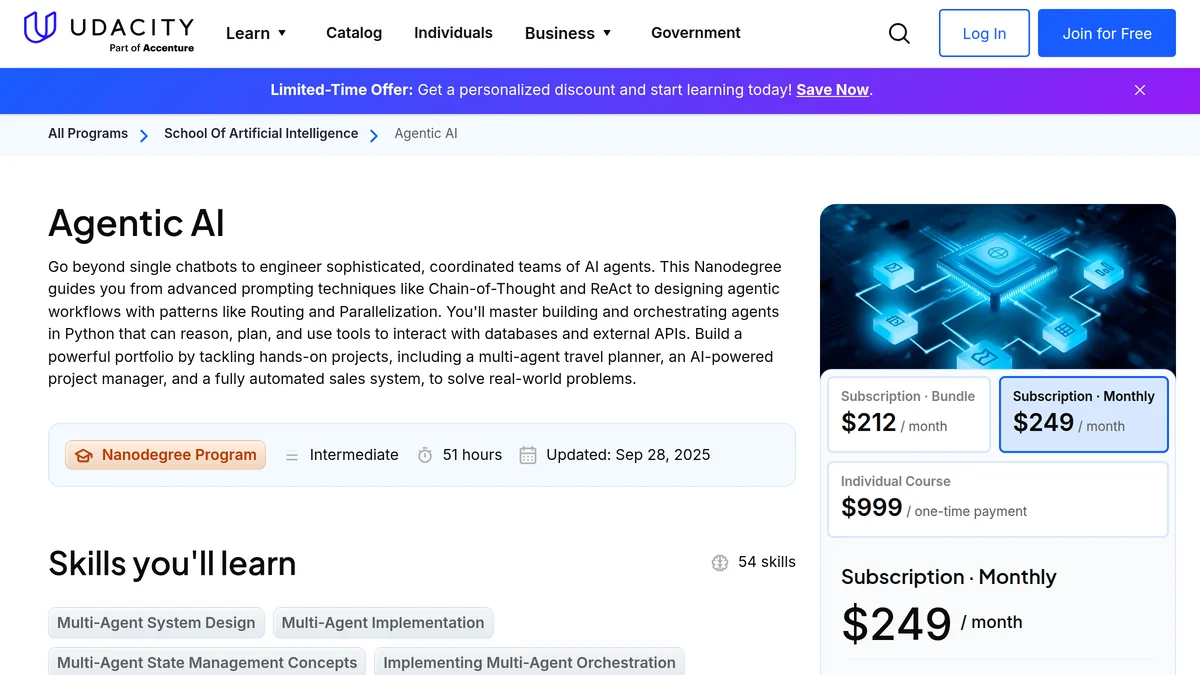
Udacity, a name synonymous with accessible tech education, is taking its model to the next level. The company, now part of Accenture, has launched an accredited Master of Science in Artificial Intelligence. This is a fully recognized master's degree, developed in partnership with Woolf, an institution accredited through the European Credit Transfer and Accumulation System (ECTS) and recognized in over 60 countries.
The headline feature? A price tag as low as $3,500. This radically undercuts the typical $60,000-plus annual cost of many traditional master's programs, positioning the Udacity AI Master's as a direct challenge to the financial barriers of advanced education. Udacity CEO Kai Roemmelt emphasizes this shift, stating, "This evolution into accredited degree programs represents the natural next step, giving our learners not just the skills that employers demand, but also the formal recognition that opens doors globally."
The program arrives at a critical juncture for the AI industry. Despite widespread adoption, Udacity's research indicates a significant skills gap: 90% of workers use AI tools, but three out of four abandon them mid-task due to a lack of proficiency or trust. This contributes to a stark reality where only 5% of GenAI initiatives currently show a measurable profit and loss impact. Yet, C-suite leaders remain bullish, with 67% viewing AI as a revenue driver and 90% planning increased investments this year, according to an Accenture Pulse of Change Report. This creates a lucrative demand for skilled AI professionals, with companies willing to pay a 25% premium for those with advanced AI capabilities.
A Master's Built for the Modern Workforce
The Udacity AI Master's is designed to directly address this skills crisis without demanding a career pause. It leverages Udacity's hallmark project-based curriculum, which has powered its Nanodegree programs for years. Students will complete 12 Nanodegree programs plus a capstone project, totaling approximately 2,250 hours, the standard workload for a European master's degree. This flexible, self-paced structure allows working professionals and career changers to integrate learning into their lives.
A key innovation is the "Recognition of Prior Learning," allowing current and former Udacity students to apply previously completed Nanodegree programs toward their master's, potentially accelerating their path to graduation. Dr. Joshua Broggi, Rector and President of Woolf, highlights the synergy: "Udacity’s expertise in high-impact, project-based learning pairs naturally with Woolf’s accredited degree infrastructure. The result is a world-class master’s program that meets students where they are, wherever they are."