


Starcloud CEO: Space Compute Cheaper Than Earth in 5-10 Years

Starcloud CEO Philip Johnston argues space-based data centers will be cheaper than Earth's within 5-10 years due to abundant solar power and lower costs.

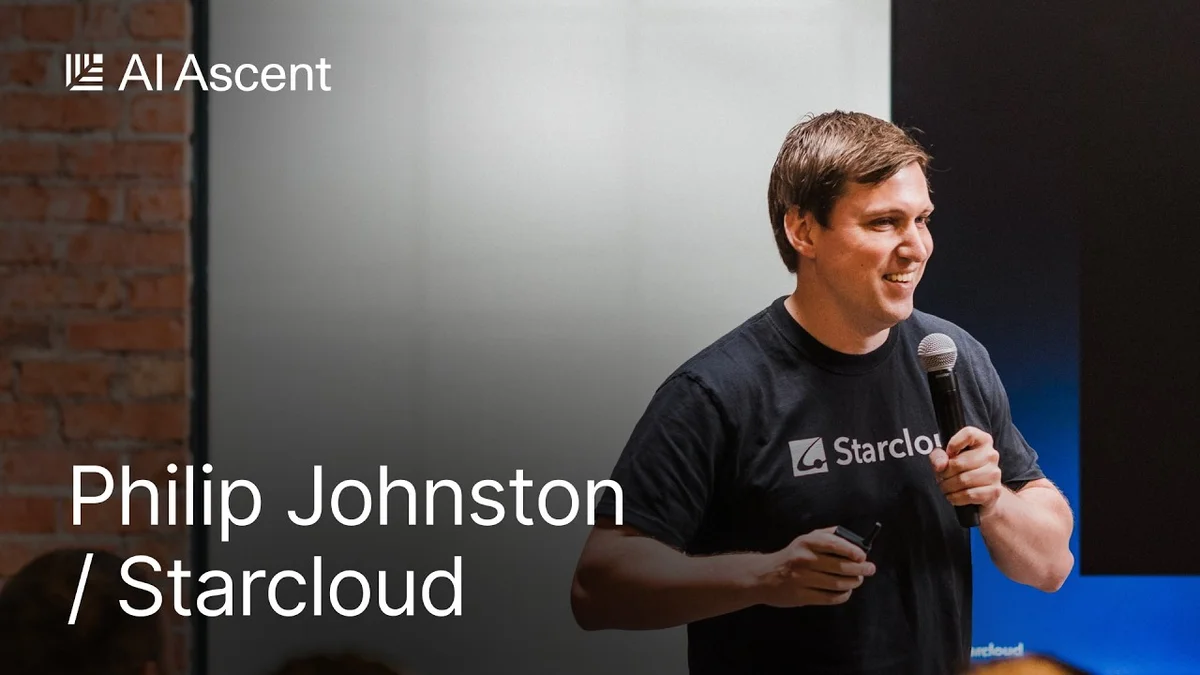
Philip Johnston presenting on data centers in space at AI Ascent.
Image credit: StartupHub.ai· Sequoia Capital

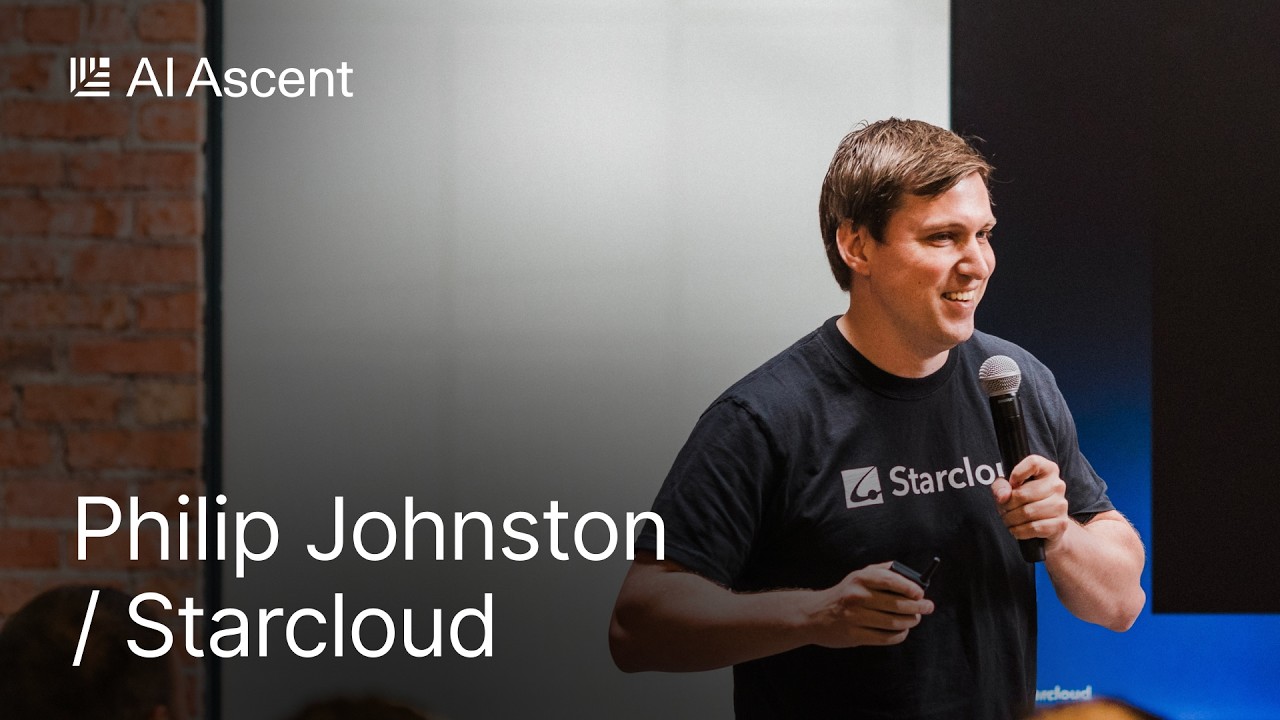
Philip Johnston, co-founder and CEO of Starcloud, presented a compelling vision for the future of computing infrastructure: data centers in space. Speaking at an AI Ascent event, Johnston argued that within the next 5-10 years, running compute in space will become more cost-effective than on Earth, primarily due to the abundance of solar energy and the unique advantages of the space environment.
Starcloud CEO: Space Compute Cheaper Than Earth in 5-10 Years - Sequoia Capital
Starcloud CEO: Space Compute Cheaper Than Earth in 5-10 Years — from Sequoia Capital

The Case for Space Data Centers

Johnston highlighted that Starcloud is actively developing space-based data centers, with a focus on overcoming the perceived challenges of thermal dissipation and radiation tolerance. He noted that their early work involved utilizing GPUs in ways they weren't originally designed for, including the deployment of Star Cloud 1, which featured Nvidia's H100 chip. This demonstrated the feasibility of running state-of-the-art hardware in space, a feat previously thought impossible by many.

Related startups

Cost Advantages of Space Compute

A significant portion of Johnston's argument centered on cost comparisons. He explained that building solar power projects on Earth incurs substantial costs for land, battery storage for nighttime power, and the solar cells themselves. In contrast, space-based solar projects benefit from continuous 24/7 solar exposure, eliminating the need for battery backup. Furthermore, Johnston stated that 1 square meter of solar panel in space generates eight times the energy of its Earth-bound counterpart. While launch costs remain a factor, Johnston projected that with the advent of reusable rockets like SpaceX's Starship, which aims for a launch cost of $10-$20 per kilogram, the break-even point for space-based compute will be achieved when launch costs fall below $500 per kilogram, representing a tenfold reduction.

Addressing Space Challenges

Johnston also touched upon the technical challenges, particularly heat dissipation and radiation. He explained that while space is a vacuum with a very low ambient temperature (3 Kelvin), dissipating heat generated by powerful processors requires a large surface area. He cited the Stefan-Boltzmann law, noting that increasing the operating temperature of components can reduce the required radiator surface area. Starcloud is reportedly working with Nvidia to develop hardware that can operate at higher temperatures with lower failure rates.

Regarding radiation, Johnston mentioned that Starcloud conducts extensive ground testing using cyclotrons and particle accelerators to simulate the space environment. This data informs their decisions on shielding and software development to mitigate the effects of radiation and cosmic rays.

Future Infrastructure and Collision Avoidance

Starcloud is currently developing a constellation of 88,000 satellites, aiming to deploy approximately 20 GW of compute capacity. Johnston emphasized that this project represents a monumental step in infrastructure development, potentially dwarfing previous endeavors. He also addressed the concern of orbital congestion, explaining that their initial satellites will operate at lower altitudes (around 400 km) where natural deorbiting occurs within months, minimizing collision risks. For higher orbits, they are developing sophisticated collision avoidance systems. He noted that SpaceX's successful operation of 10,000 satellites without a single collision demonstrates the viability of managing dense orbital traffic.

Johnston concluded by posing a question to the audience about when they believe space-based computing will become cheaper than terrestrial options, with the majority anticipating this shift within the next 5-10 years.

© 2026 StartupHub.ai. All rights reserved. Do not enter, scrape, copy, reproduce, or republish this article in whole or in part. Use as input to AI training, fine-tuning, retrieval-augmented generation, or any machine-learning system is prohibited without written license. Substantially-similar derivative works will be pursued to the fullest extent of applicable copyright, database, and computer-misuse laws. See our terms.