


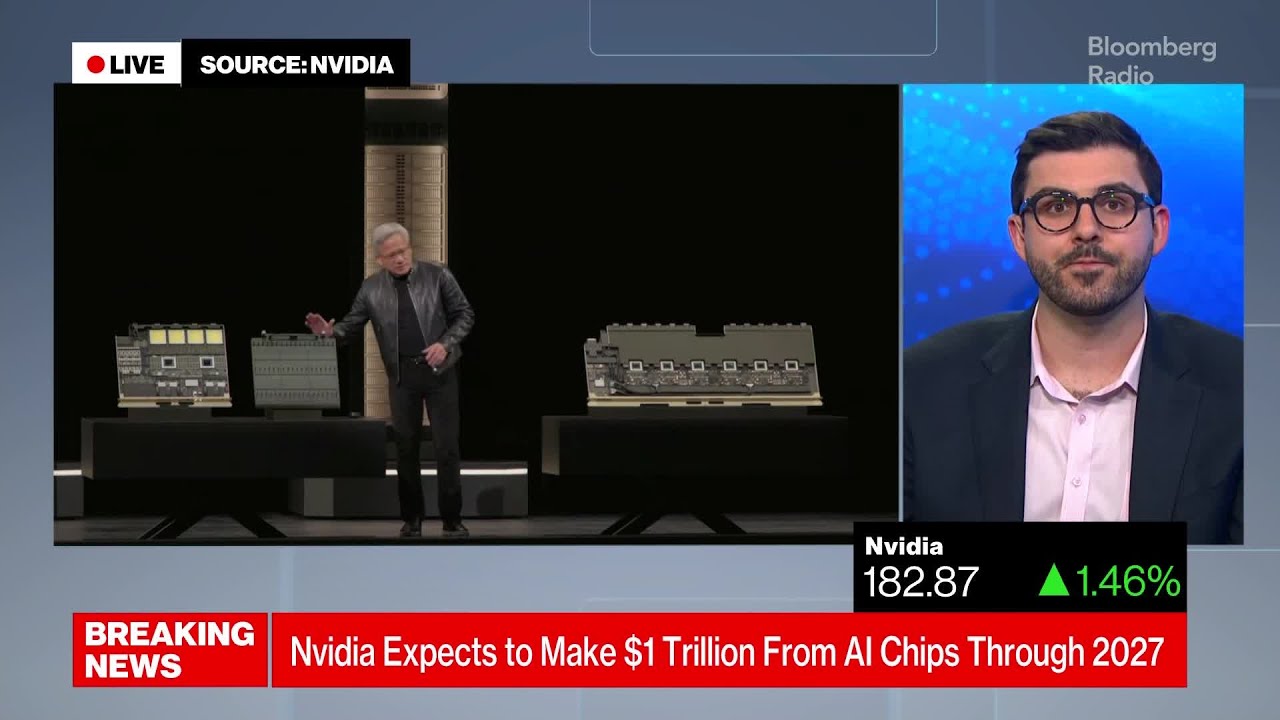
Nvidia is projecting an astonishing $1 trillion in revenue from its AI chips through 2027, a bold forecast that signals the escalating demand for its specialized hardware. This upward revision in guidance, shared by Bloomberg Radio's Ed Ludlow, highlights Nvidia's dominant position in the artificial intelligence hardware market and the immense growth potential of AI-driven computing.
The company's latest projections represent a substantial increase from its previous outlook, indicating a robust and sustained demand for its high-performance GPUs, which are crucial for training and running complex AI models. This forecast underscores the transformative impact of AI across various industries, from cloud computing and data centers to automotive and scientific research.
Nvidia's Ambitious AI Chip Revenue Target
Nvidia's CEO, Jensen Huang, has consistently positioned the company at the forefront of the AI revolution, and this latest revenue target reinforces that strategy. The $1 trillion figure, spanning from the present through fiscal year 2027, reflects a significant acceleration in anticipated sales. This projection is a substantial leap from earlier estimates, which were in the range of $500 billion. The company attributes this growth to the increasing adoption of its AI platforms and the expanding needs of hyperscale cloud providers and other enterprises for powerful computing solutions.
The full discussion can be found on Bloomberg Podcast's YouTube channel.
The Role of Blackwell and AI Infrastructure
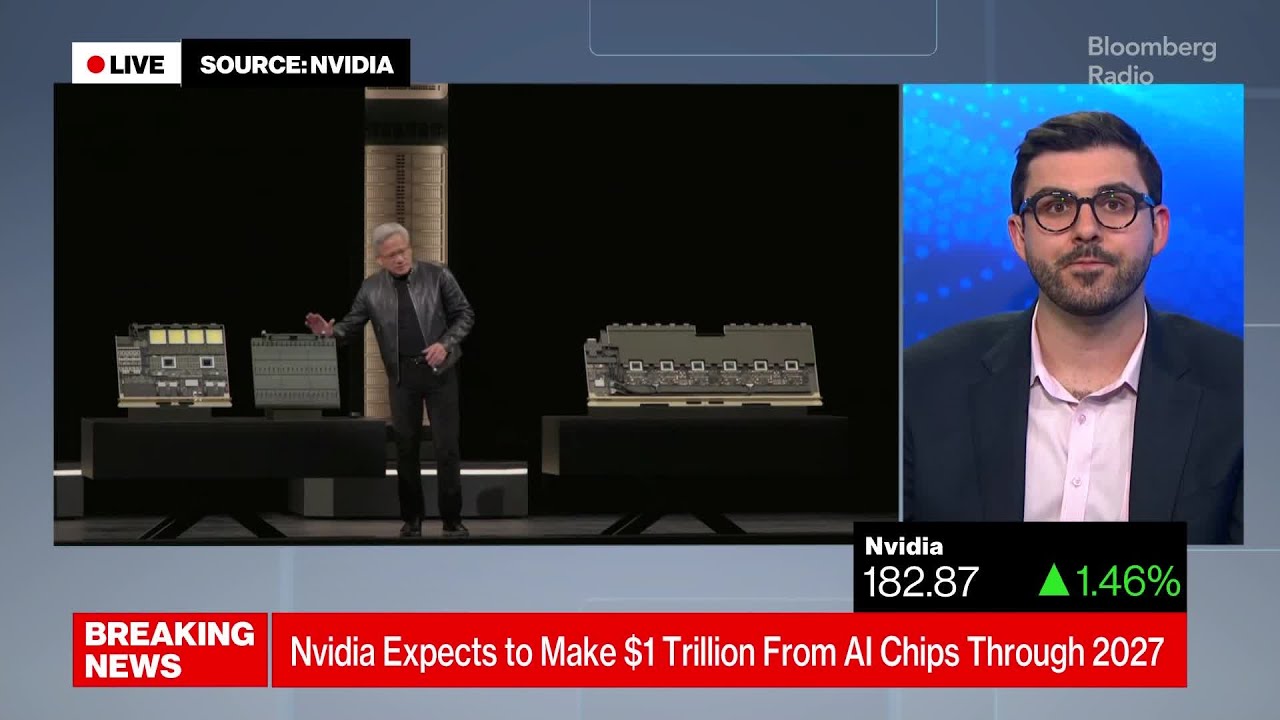
Central to Nvidia's growth strategy is its continuous innovation in hardware, exemplified by its next-generation Blackwell platform. Huang has underscored the importance of specialized architectures designed to optimize AI workloads, particularly for inference, which is becoming as critical as training. The company's ability to deliver these advanced solutions efficiently and at scale is paramount to achieving its ambitious revenue goals. The market's reaction to these projections will be closely observed, as it provides a key indicator of the broader AI hardware ecosystem's trajectory.