

Luel AI and Kled AI Alternatives: 6 Best Data-Earning Apps Reviewed (2026)
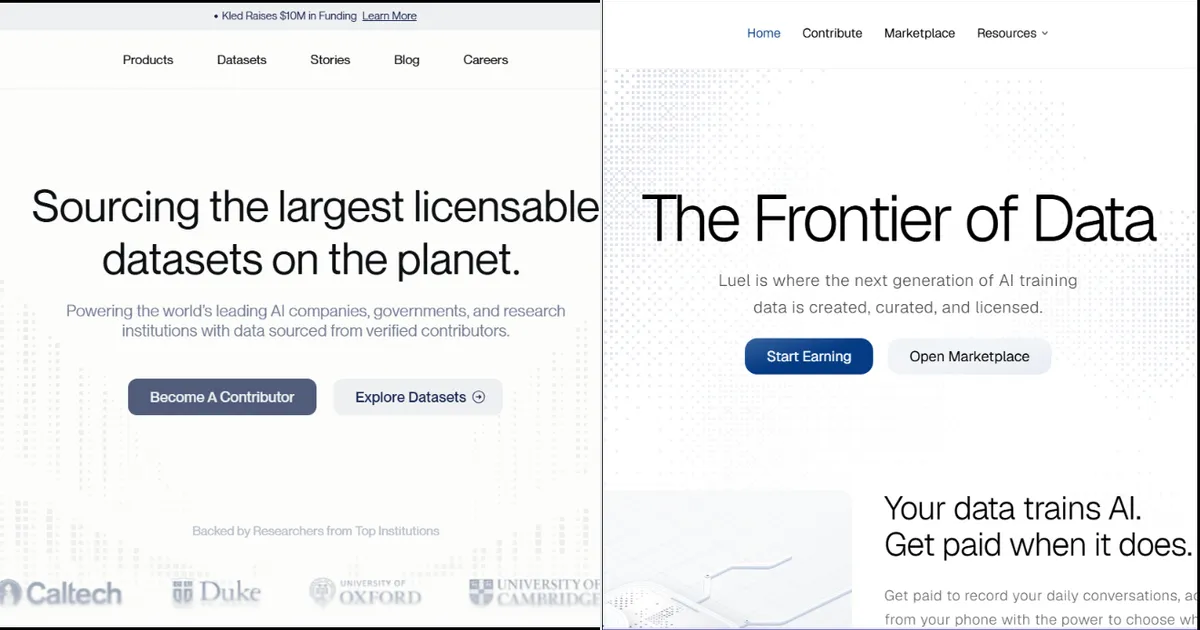
Short answer: if Luel AI keeps rejecting your videos for "script mismatch" and Kled AI blocked you because of where you live, the cleanest alternatives in 2026 are Silencio for passive audio, Neon Mobile for conversation, Toloka for microtasks, Wirestock for creators, and Mindrift for technical contributors. Below is a full review of both Luel and Kled, what they actually pay, where they fail, and how the six best alternatives stack up.
The 2026 AI Data Gig Economy
Foundation models need fresh, rights-cleared training data. Synthetic data covers the easy cases, but for voice, video of real environments, and natural conversation, AI labs are paying real people through marketplaces that look a lot like Uber: download an app, upload a clip, get paid in days. Apps like Luel AI, Kled AI, Silencio, and Neon Mobile have collectively pulled hundreds of thousands of contributors in the last twelve months, especially in Africa, Southeast Asia, and Eastern Europe where dollar payouts go further.
The catch is that these platforms vary wildly on payout reliability, country support, and which uploads actually get approved. Reviews on Trustpilot and Reddit are loud on both sides, with the same platform pulling five-star "best side hustle ever" praise next to one-star "banned without warning" complaints. This guide cuts through the noise.
Luel AI: Full Review
Luel AI is a rights-cleared multimodal training data marketplace founded in 2025 by William Namgyal and Inigo Lenderking. It graduated from Y Combinator's Winter 2026 batch, which gives it a level of institutional backing that most competitors lack. Luel sits between AI teams that need legally compliant training data and a global network of contributors who supply it through their phones.
How Luel Works
Contributors record natural conversations, monologues, task demonstrations, voice samples, and short videos of daily-life moments. Each request comes with a script or prompt: read this sentence, describe what you see, record yourself cooking. Submissions are reviewed by Luel's quality system, and approved clips are bundled into structured datasets that AI labs license. The legal heavy lifting is on Luel's side, contributors sign a one-time agreement and get paid per approved clip.
Luel AI Earnings Potential
Public payout data points to about $0.50 per minute for approved video and voice clips, with bonus tiers for high-demand task types. A focused contributor uploading thirty to sixty minutes of approved material per week clears $60 to $120 monthly. The realistic ceiling is around $300 to $500 a month for someone treating it as a real side hustle.
Payment Methods
Luel pays via Venmo or Stripe with a stated 2 to 7 day turnaround. No crypto, no gift cards, no minimum thresholds beyond a small processing floor. This is one of Luel's strongest cards, the payout rails are mainstream and faster than most competitors.
Luel AI Reviews
Trustpilot reviews for Luel are mixed. The positive side highlights the clear terms, fast Venmo payouts, and Y Combinator credibility. The negative side is more pointed:
- "Script mismatch" bans. Contributors report being suspended after multiple submissions, with the rejection reason listed as "script mismatch" even when the recording followed the prompt.
- Inconsistent approvals. Two clips of similar quality get different verdicts, with no human reviewer feedback explaining why.
- Task scarcity. Available tasks fluctuate. When the queue empties, contributors are left checking the app for days waiting for new work.
Luel AI Verdict
Luel is the cleanest product in this category but the moderation system is opaque. If your account stays in good standing, expect $60 to $150 a month for casual use, with a real ceiling around $500. If you get flagged for script mismatch, the appeal process is slow.
Kled AI: Full Review
Kled AI is a decentralized data marketplace built on the Solana blockchain by Nitrility Inc. Unlike Luel, Kled is mobile-only (iOS first, Android second), focused primarily on photos rather than video, and operates with a hybrid payout model that mixes USD with the platform's own KLED token.
How Kled Works
Users download the Kled app and upload images: selfies, environment shots, objects, scenes. The system strips personally identifiable information, labels the content, and licenses the curated dataset to AI buyers. Sellers get ongoing payouts as their data is used, which is the structural improvement over Luel's pay-per-clip model. In theory, an image uploaded today can keep earning for months.
Kled AI Earnings Potential
Reported per-image rates are lower than Luel's per-minute video rate, in the range of $0.01 to $0.05 per accepted upload, with bonus pools when an image is licensed multiple times. The volume game is real: motivated users upload several hundred photos per week. The earnings ceiling is highly variable, with the most active contributors reporting $150 to $400 a month before the token-side speculation.
The token angle adds another dimension. KLED token holders can stake for revenue share, and contributors sometimes opt to receive a percentage of payouts in KLED rather than USD, betting that the token appreciates. This is upside in a bull market and a discount in a bear one.
Payment Methods
USD via in-app wallet, KLED token to a Solana address, or a hybrid split. Referral program pays 10 percent of any referred contributor's lifetime earnings, which is unusually generous and produces obvious incentive distortions.
Kled AI Reviews and the Nigeria Block
Kled has had a rougher 2026 than Luel. In early 2026, Kled blocked the entire country of Nigeria after claiming a 95 percent fraud rate among Nigerian uploaders. The decision was controversial. Many legitimate contributors lost access overnight, and the methodology behind the 95 percent claim was never publicly audited. Nigerian users have since migrated to Luel, Silencio, and Toloka.
Trustpilot ratings tilt more negative than Luel's, with frequent complaints about delayed payouts, rejected images without explanation, and the token value dropping below realistic withdrawal thresholds for small accounts. The referral system also draws fire for incentivizing pyramid-style recruitment over honest data submission.
