

SpaceX's AI Bets and Starlink's Growth in First Earnings Call

SpaceX's first earnings call as a public company highlights Starlink's continued revenue strength and the significant growth potential of its AI compute rental business.

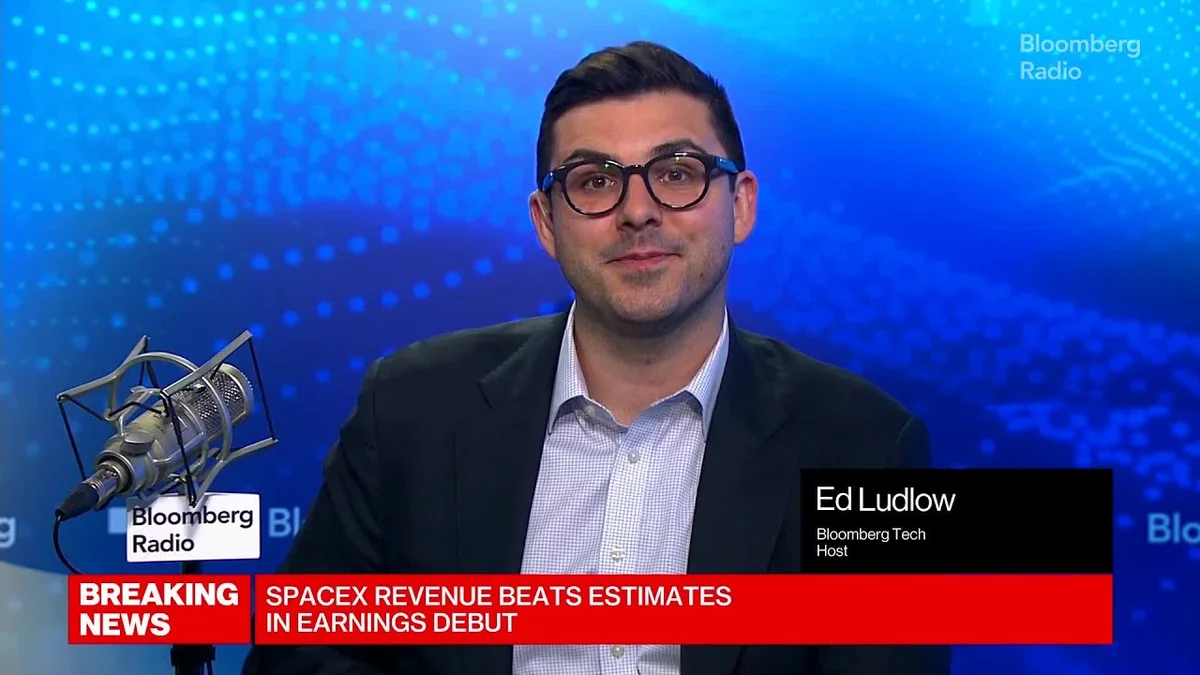
Ed Ludlow and Mandeep Singh discussing SpaceX earnings on Bloomberg Radio.
Ed Ludlow and Mandeep Singh discuss SpaceX's financial performance and AI strategy.· Bloomberg Podcast
Visual TL;DR
SpaceX Public EarningsContext
From the article 3 mentionsSpaceX has reported its first quarterly earnings since becoming a public company, offering investors a clearer view into its diverse business segments.
Starlink Dominant RevenueCore
continues as primary revenue driver and cash cow, exceeding estimates
From the article 3 mentionsWhile Starlink continues to be the dominant force in revenue and cash generation, the company's foray into renting out its substantial AI compute capacity is emerging as a significant growth area.
AI Compute RentalsCore
emerging as a significant growth area, renting Nvidia GPUs
From the article 4 mentionsThis strategy is proving to be a strong business for them, with companies like Anthropic and Google engaging in these compute rental agreements.
Multiple Data CentersContext
established facilities like Colossus One, Two, and Three for compute capacity
From the article 3 mentionsSpaceX is actively renting out its compute capacity, including multiple generations of Nvidia GPUs housed in its data centers, to other technology companies.
Improved AI EconomicsEffect
From the articleHowever, a key takeaway from the report is the significant improvement and growth in the economics of its AI infrastructure business.
Future Growth PotentialOutcome
highlights significant growth potential for both Starlink and AI compute
From the articleThis backlog indicates strong future revenue potential, particularly from AI infrastructure services.
$47.5 Billion BacklogOutcome
company reports a substantial backlog, indicating strong future demand
From the article 7 mentionsSpaceX reported a backlog of $47.5 billion, with a significant portion attributed to its AI segment.
Contents(4)

SpaceX has reported its first quarterly earnings since becoming a public company, offering investors a clearer view into its diverse business segments. While Starlink continues to be the dominant force in revenue and cash generation, the company's foray into renting out its substantial AI compute capacity is emerging as a significant growth area.

During its inaugural earnings call, SpaceX revealed that its overall revenue and sales surpassed consensus estimates. Starlink remains the company's primary revenue driver and cash cow. However, a key takeaway from the report is the significant improvement and growth in the economics of its AI infrastructure business. SpaceX is actively renting out its compute capacity, including multiple generations of Nvidia GPUs housed in its data centers, to other technology companies.

The Power of AI Compute Rentals

The company has established several data centers, such as Colossus One, Two, and Three. Initially built for its own model development and training, SpaceX found that renting this capacity to external clients was a more effective use. This strategy is proving to be a strong business for them, with companies like Anthropic and Google engaging in these compute rental agreements. Mandeep Singh, Global Head of Technology Research at Bloomberg Intelligence, highlighted the significance of these deals, noting that Anthropic alone is expected to pay SpaceX approximately $1.25 billion per month. These deals, along with a similar agreement with Google, are projected to provide a substantial bump to SpaceX's revenue in the coming quarters, with an estimated $6 billion increase from these two partnerships alone in the next quarter.

The full discussion can be found on Bloomberg Podcast's YouTube channel.

SpaceX's Big AI Spending Puts Damper on First Earnings Since IPO - Bloomberg Podcast
SpaceX's Big AI Spending Puts Damper on First Earnings Since IPO, from Bloomberg Podcast

A $47.5 Billion Backlog and Future Growth

SpaceX reported a backlog of $47.5 billion, with a significant portion attributed to its AI segment. This backlog indicates strong future revenue potential, particularly from AI infrastructure services. Singh projects that this backlog will fuel accelerating top-line growth for SpaceX over the next three to four quarters, potentially leading to margin improvements as well. This growth trajectory is seen as a positive sign for investors, drawing parallels to companies like Palantir, which has seen similar investor enthusiasm driven by accelerating growth.

Challenges and Investor Outlook

Despite the positive revenue and backlog figures, concerns remain regarding the company's valuation, which is described as "still a little crazy." However, the accelerating growth and improving margins in its AI business could help justify this valuation. The initial earnings report also revealed that while Starlink's revenue was strong, its subscriber growth slightly missed consensus estimates. This particular metric is likely to be a key focus during the earnings call, alongside the details of the substantial backlog.

Ed Ludlow, host of Bloomberg Tech, noted that this earnings report provides the first real picture of SpaceX's business beyond IPO prospectus data. The company's ability to rapidly build out data centers and pivot to renting compute capacity demonstrates a strategic agility that could be crucial for its future success in the competitive AI infrastructure market.

© 2026 StartupHub.ai. All rights reserved. You may not republish this article in full without a license. Search engines and AI research tools may crawl and summarize for reference. Bulk reproduction or model training requires a license. See our terms.
Daniel Singer

Written by

Daniel Singer

Editor, StartupHub.ai

Daniel Singer is the editor of StartupHub.ai, a technology expert and thought leader on AI and its applications across sectors, from fintech and healthcare to developer tooling and consumer software. He writes and tests the tools covered here thoroughly and regularly, and built StartupHub.ai to give founders, operators and buyers a clearer read on what they are actually being sold.