

Researchers in Japan have uncovered how the domesticated silkworm moth (Bombyx mori) utilizes wing fanning to manipulate airflow, enhancing its ability to detect pheromones. This discovery offers a potential framework for improving odor detection systems in robotic applications, such as drones and robots tasked with locating odor sources in complex environments. The significance of this research lies in its potential to revolutionize how robots perform tasks that require olfactory sensing, such as locating victims in search-and-rescue missions or detecting hazardous substances.
The silkworm moth, which lost the ability to fly due to domestication, has evolved unique mechanisms to detect pheromones. Despite being flightless, male silkworm moths flap their wings, a behavior called fanning, when searching for the pheromone signals emitted by females. Researchers hypothesized that this fanning action enhances airflow, improving the moths' detection capability. However, until now, the effect of wing fanning on odor detection had not been quantified.
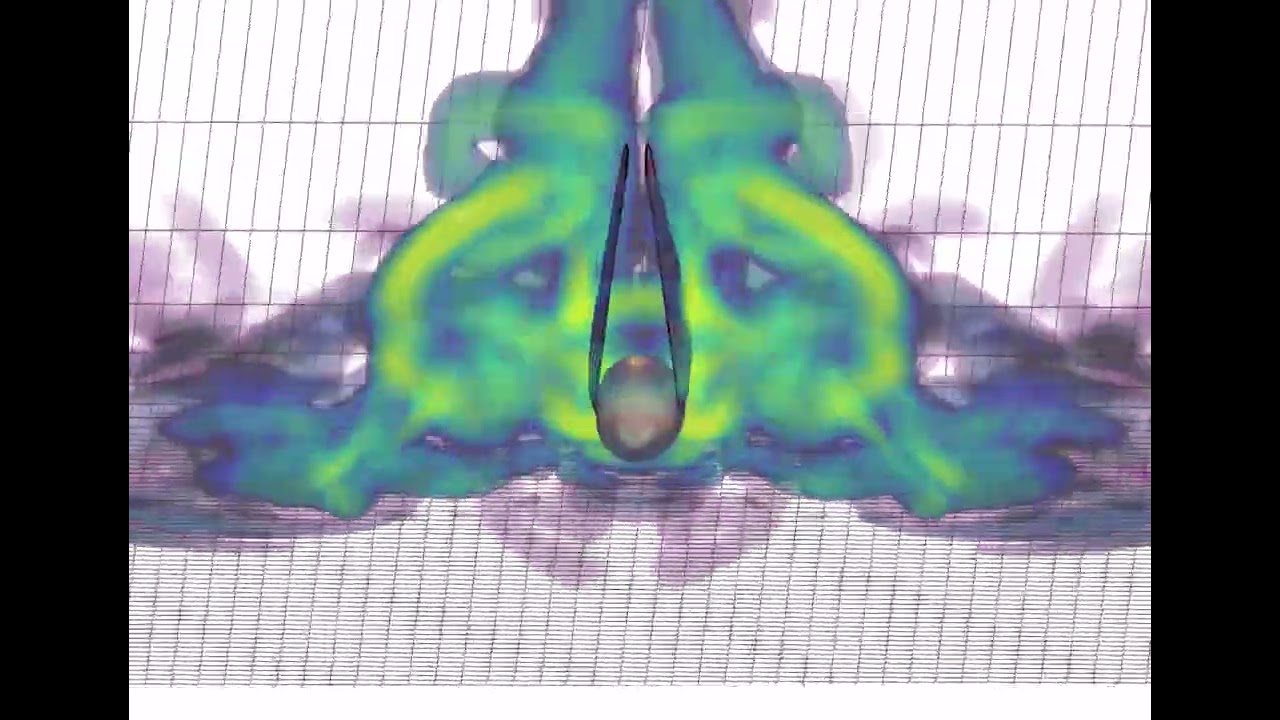
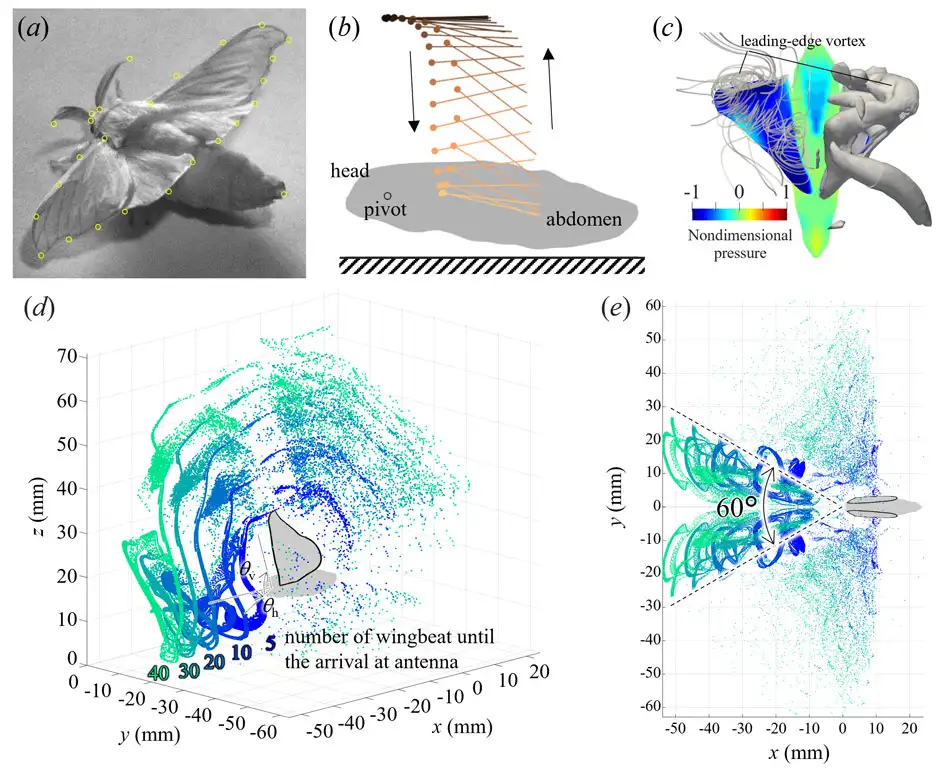
The research, led by Dr. Toshiyuki Nakata from the Graduate School of Engineering at Chiba University, involved a team of scientists including experts from Shinshu University, The University of Tokyo, and Chiba University. Using high-speed photogrammetry, they captured the aerodynamic impact of wing fanning, and then created a detailed computational model of the airflow and pheromone molecule movements. The results revealed that the moths selectively sample pheromones from the front, using body rotation combined with fanning to locate the source of the odor. This behavior is an efficient strategy for determining the direction of a pheromone plume.
The implications of these findings could significantly influence robotic technology, particularly in odor source localization. The study highlights the importance of creating directional airflow for flying robots tasked with odor detection. By carefully adjusting the drone's orientation and configuring its propellers and odor sensors, robots can better detect and locate odor sources, much like silkworm moths. The researchers envision drones equipped with similar bio-inspired mechanisms, potentially aiding in scenarios such as emergency search-and-rescue operations, where rapid and accurate odor detection is critical.
The study also emphasizes the need to consider environmental factors, like airflow turbulence, when designing odor-detecting robots. While robots today rely primarily on vision and auditory sensors, olfactory sensing could enhance their capability in tasks where human or other biological cues are crucial, as shown by the use of search dogs in disaster situations. Incorporating olfactory sensing into robotics could lead to more effective and versatile autonomous systems, capable of performing in environments where traditional sensors might fail.