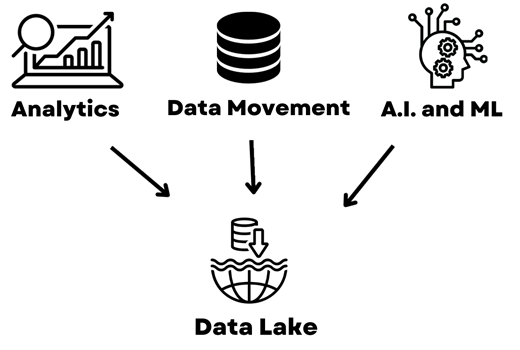
Data is king in today’s world, as companies need data to gain insights and an advantage over their competitors. A common challenge with data is that there is simply too much of it, and companies do not know where to start. Data can be spread across various disconnected systems and technologies, from databases to spreadsheets to file systems, etc. Additionally, all of the formats can be quite different also (structured and unstructured), which is another challenge!
To have any hope of getting this data together and analyzing it, a centralized solution is required, and this is where the concept of a Data Lake comes in.
A Data Lake is often defined as:
“ .. a centralized repository that allows you to store all your structured and unstructured data at any scale. You can store your data as-is, without having first to structure the data, and run different types of analytics, from dashboards and visualizations to big data processing, real-time analytics, and machine learning to guide better decisions.”
The advantages of a data lake are many such as:
- Improved insight into customers allows companies to focus their strategies better.
- Ability to test products using huge amounts of historical data. Companies can actually test the chances of a product succeeding by checking historical data via analysis tools.
- Reducing costs as a Data Lake will enable them to identify where possible inefficiencies are present in their operational processes.
- Empower Machine Learning and A.I. systems which require large amounts of data to train their models
How do Data Lakes work?
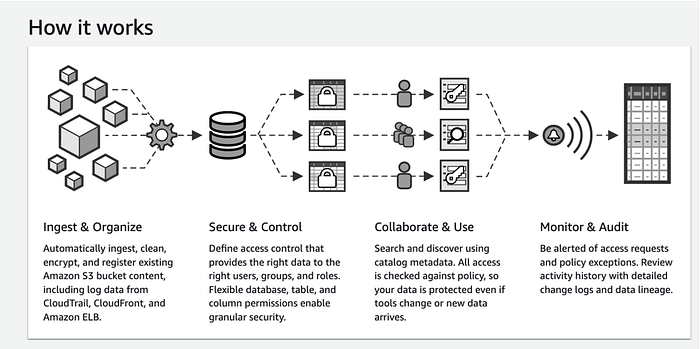
Before we get into securing a Data Lake, let us take a look at its essential components: