


Tenacity Venture Capital founder Ben Narasin told CNBC Television that Anthropic grew third quarter revenue 45% from the prior quarter, according to the company, even as its targeted IPO valuation slipped to $1.5 trillion from $2 trillion, as investors described. Narasin said the company 9x’d revenue last year and is on track to 11x it this year, a pace he said he has never seen hold at scale without decay.
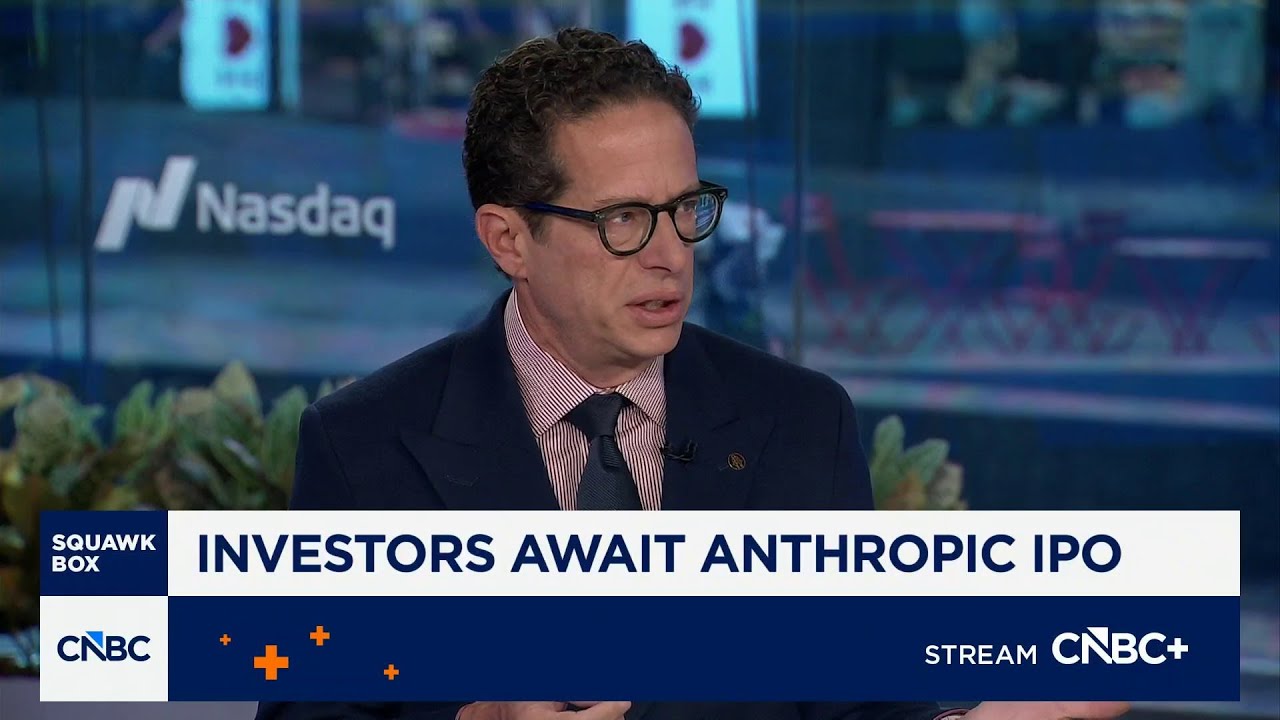
That pricing wobble has history. Narasin said Anthropic was discussed at around $1 trillion only a couple months ago before talk moved to $2 trillion, and now back to $1.5 trillion. Before the 45% quarterly print could matter, the 9x and 11x annual jumps had to be true, and he argued they make Anthropic the fastest growing business by revenue in modern history. What the numbers do not show is the base. The transcript gives growth multiples and a sequential percentage, not absolute revenue, margins or burn, so durability is still inferred from rate alone. The same $500 billion swing matters beyond Anthropic, because it would shrink the paper gains that have inflated Amazon’s and Alphabet’s reported earnings, according to Yahoo Finance.
What still has to happen is physical. Narasin said the AI buildout will take far longer than priced in, citing a 30-month wait for turbines and backup generators, plus land, permitting and enough Nvidia chips, according to his comments on CNBC Television. He said trillions have already been raised so financing for data centers and private credit is okay for now, but a one point move in long-term bonds can ripple through that debt. He compared the spend to the California railroad. You can announce a trillion dollars, he said, it just takes longer and costs more than planned.
This will be bigger than electricity, Narasin said.
That frames his market read. Narasin said he reviewed 10,000 pitches over two years and funded six, and is now in documentation on his first deal in 15 to 18 months because AI is sucking up all the oxygen. He described two venture cohorts, mega rounds for brand-name spinouts and an unlimited queue of me-too AI wrappers, neither easy to underwrite. Public markets are acting like venture, he argued, invoking flower fidelity. Bees go exclusively to the best nectar until it is depleted, and investors are now crowding the same few names. He said he expects an OpenAI IPO next year and hopes it comes early to clean out the system, though he would not want to own these names at the IPO price. He said he bought SpaceX after the IPO on a down round in a tiny size to be an owner without paying the top.


