
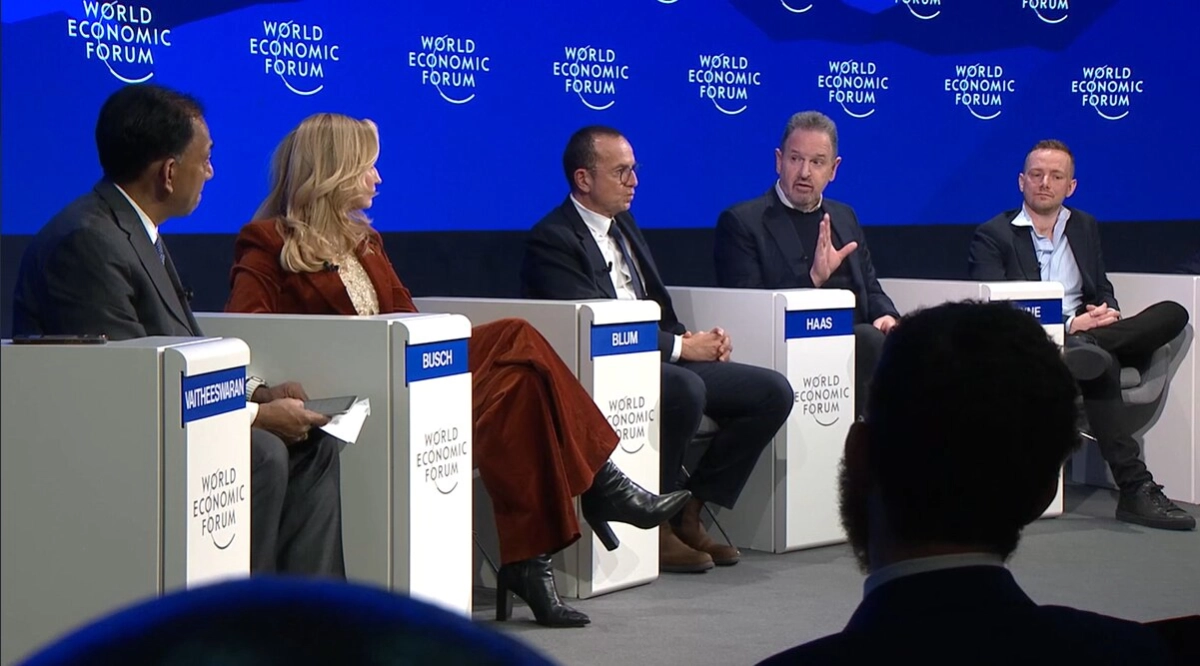
The global conversation around artificial intelligence has decisively shifted from focusing on its theoretical potential to grappling with its practical, real-world constraints. At the World Economic Forum (WEF) Annual Meeting in Davos 2026, technology leaders converged on a defining question: can the world sustainably scale the explosive growth of AI? Arm CEO Rene Haas confirmed during an exclusive Financial Times interview that the industry is hitting critical bottlenecks in compute capacity, memory, and, most urgently, AI energy consumption, forcing a fundamental architectural pivot. This realization is driving a mandate for smarter, more efficient compute distributed across the cloud, edge, and physical environments, signaling the end of the cloud-only AI paradigm.
Haas’s assessment that AI development is still in the "first 10 minutes" of its lifecycle underscores the massive scaling challenge ahead. Current hyperscale data centers, while foundational, cannot indefinitely absorb the exponential growth of complex AI workloads without crippling infrastructure and power grids. The industry consensus, highlighted in the WEF “Racing for Compute” panel, is that relying solely on massive centralized infrastructure is economically and environmentally untenable, necessitating immediate architectural changes. This shift is driven by the need for performance that balances cost and efficiency, especially as enterprises move from experimentation to mission-critical AI deployments.